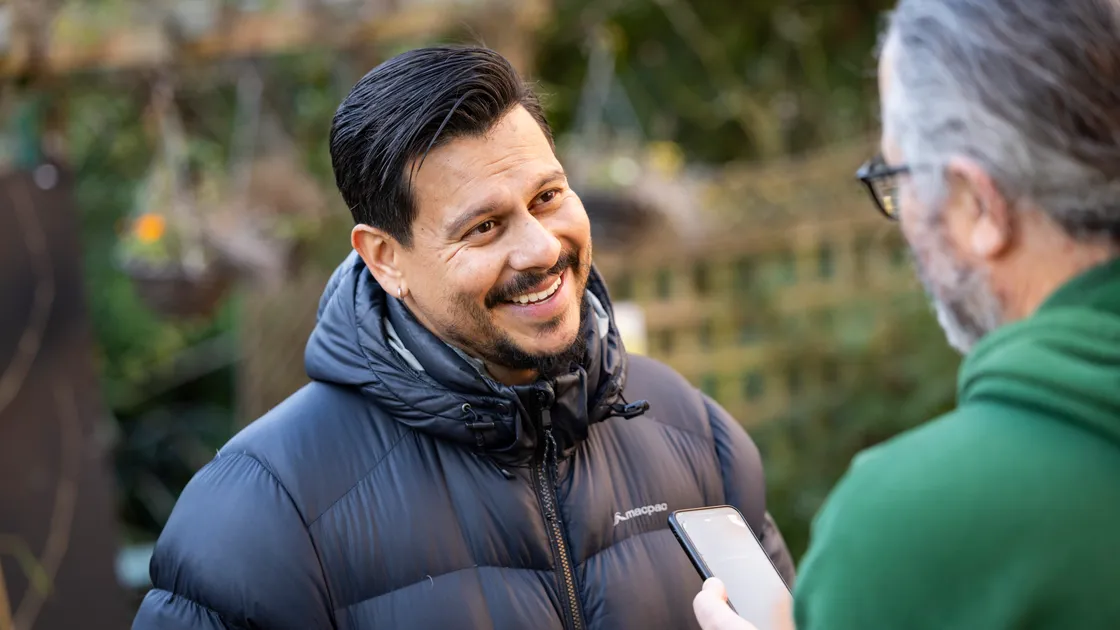
As he talks to me outside the cafe at a chilly Sausmarez Manor, visiting actor and film producer Jose Palma is indulging in a bit of visualisation.
‘When I was coming here, I read about The Story of Adele H and discovered that it was the first feature film to be filmed on Guernsey that had an Academy Award nomination,’ he tells me.
‘I remember coming here on the plane and reading that and thinking hopefully that won’t be the last time we can say that.’
The feature he saw in issue 43 of En Voyage was Shaun Shackleton’s piece about the 50th anniversary of Francois Truffaut’s biopic of Victor Hugo’s youngest daughter, played by Isabelle Adjani – the recipient of that Oscar nod, though she was pipped at the post by Louise Fletcher’s portrayal of Nurse Ratched in One Flew Over the Cuckoo’s Nest.
Half a century later, a posse of film-makers is hoping to bring the world’s attention back upon the little rock we call Guernsey, to tell the story of the man who helped to establish Jose’s cherished homeland as a sovereign nation.
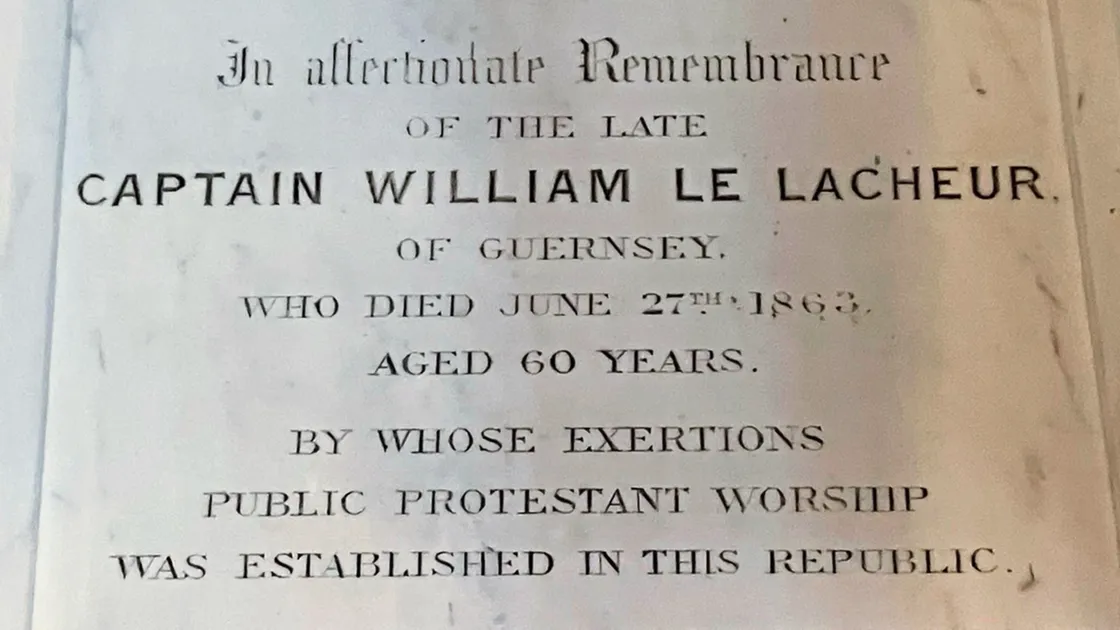
Costa Rica is the country it is today because of William Le Lacheur. The Guernseyman helped to establish a successful coffee export trade by dealing directly with small-scale growers there and taking the product to London. He influenced the religious landscape with his import of Protestant bibles. He facilitated the higher education of many of the country’s young men, and he even introduced a game called ‘football’. But most importantly of all, his ships and imported weaponry ensured that the fledgling nation could fend off an invasion by an army of American, German and French mercenaries led by William Walker, bent on taking over the country and reintroducing slavery, as they had done in Nicaragua.
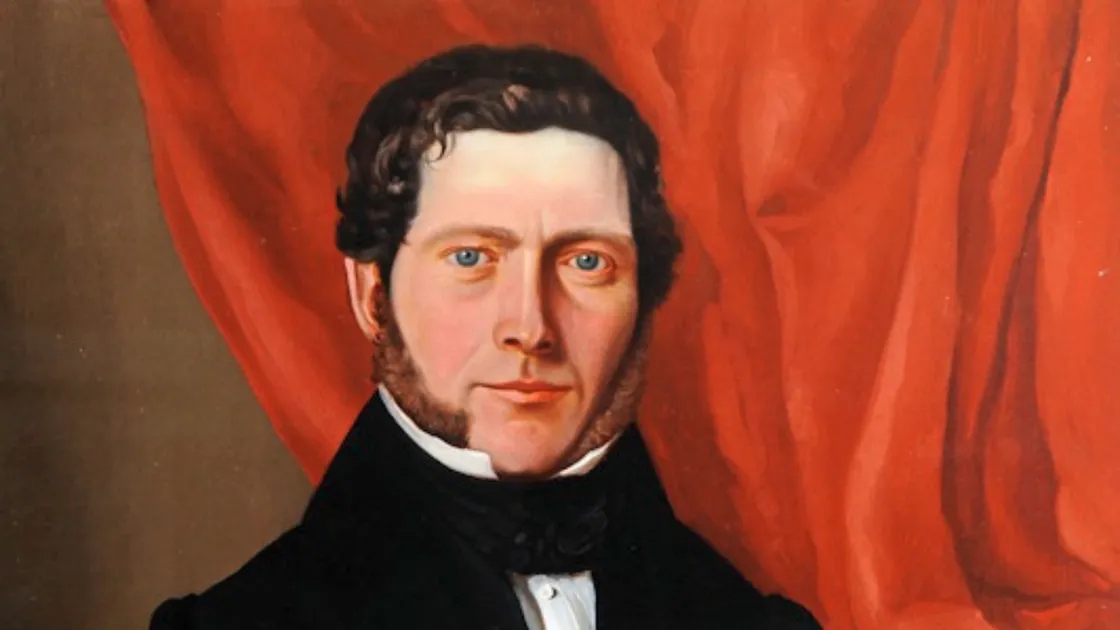
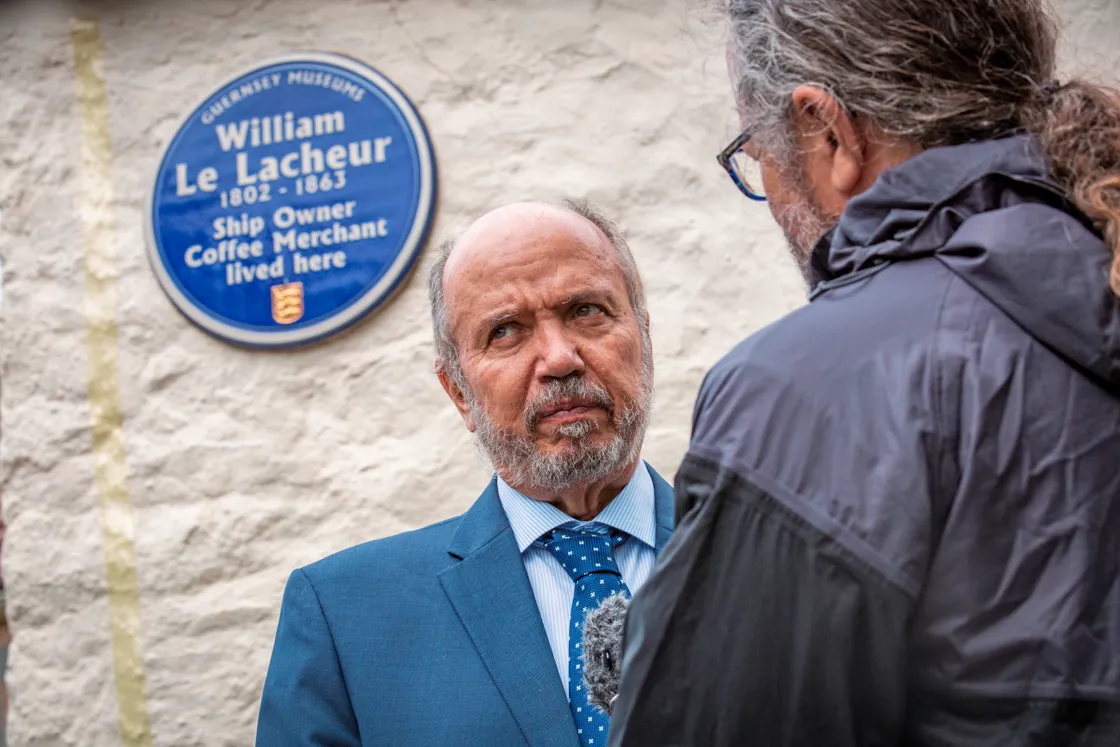
You don’t have to take my word for all of this. The Costa Rican ambassador to the UK has enthusiastically and painstakingly explained Le Lacheur’s remarkable contributions at every opportunity during his years in the role, including the unveiling of a blue plaque at L’Epinel in the Forest in 2022 and another at St Katherine Docks, London, in 2024. Indeed, it was the very same Rafael Ortiz Fabrega who approached Jose and his team with the story, hoping they would bite.
They certainly have.
‘The Ambassador loves history and knows history very well,’ says Jose.
‘He brought this story to us and it sparked our imagination and we asked ourselves “Why has this story never been told?” And we decided to change that narrative and tell it.’
Jose’s fellow producers are Deepak Sikka, who was a producer for The King’s Speech (2010) and Moon (2009), Jeremy Sheldon, who is also taking on the challenge of writing the script and Josh Harris, who was recently awarded best director at the British Horror Film Festival for his short film One Night Only (2023).
Their three-day mission in Guernsey aimed to scout some suitable locations, explore the degree of co-operation they can expect from the island’s government and fill in some of the historical details which will inform the narrative.
‘We feel a responsibility to make sure we’re going to do this right,’ says Jose.
‘Film-making takes a little bit of patience and the stages of making a film can sometimes take years, but we’re very motivated to make this happen as soon as possible. However, we cannot rush something this culturally significant for both locations. There are two sides to the story – there’s the Costa Rican side and then there’s the Guernsey involvement within the war and who William was. The planet is filled with these untold stories about untold heroes.’
For Jose, who has appeared in big budget movies such as The Batman (2022) and Venom: Let There Be Carnage (2021), as well as art-house productions like High Wire (2025) and Netflix TV series The Liberator (2020), this story is particularly precious.
‘This is a departure for me because there are very few stories like this being told,’ he says.
‘Superhero films are incredibly entertaining but the difference is that this time I’m telling a story about who I am as a Costa Rican. It’s our own history. I didn’t grow up with this, I grew up with North American and British movies – which were wonderful – but I’ve never seen my history reflected back. I’ve never seen someone who looked like me reflected back – a hero who existed and did wonderful things. It’s my responsibility to change that, if I have the chance. I want the next generation to see this story and ask “What other stories are out there? What other stories are in Guernsey? Let’s tell those”. Storytelling is what keeps a society going.’
He means this in a cultural sense, of course, but there is also a potential gain for the island’s economy due to the attention that a successful movie might bring, and with that in mind Ambassador Fabregas has put the team in touch with Economic Development president Sasha Kazantseva-Miller, who ‘has overwhelmingly welcomed us in such a beautiful way’, Jose reports. Indeed, fellow ED member Haley Camp is busy speaking to some of the other producers in the cafe as we talk.
Government support is likely to be more than useful to the project’s budgetary considerations but there is also the prospect of local creatives getting involved, especially with the island’s burgeoning film production scene taking such strides as it has done in recent years.
‘The scope is huge,’ says Jose, ‘because we’re going to need the participation of film-makers here and people who love to story-tell, whether it’s crews, production, actors – all these are going to be crucial for us once we get into the production side of this film. We want to be able to shoot here and work with people in Guernsey.’
Jose reels off some of the parties that have shown support of one kind or another, including Guernsey Museums and the Priaulx Library on this side of the Atlantic, and the Costa Rican Film Commission on the other.
As our all-too-brief conversation comes to an end, I turn to indicate the lean-to conservatory behind me, used 50 years ago as a location for a party scene in Truffaut’s film, in which Adele pursues her beloved Captain Albert Pinson, played by Bruce Robinson. Jose is suitably enamoured of the synchronicity.
Shooting is unlikely to begin much before 2027 and sometime in the following year seems like the most likely date of release. There is still much to do and many hurdles to clear but the visit to Guernsey has clearly fanned the flames of determination.
‘For us, this is more than just a film,’ says Jose.
‘It’s about honouring the legacy of Guernsey and Costa Rica and its people. Captain Le Lacheur’s contributions to Costa Rica were extraordinary and his legacy deserves to be preserved.’

Jeremy Sheldon has been writing screenplays for 15 years and before that spent a decade writing novels. He has also taught creative fiction at the University of Sussex and is himself a graduate of the famed creative-writing Master of Arts course at the University of East Anglia from which Booker prize winners Ian McEwan, Sir Kazuo Ishiguro and Anne Enright emerged.
With producers already visiting Guernsey and talking to States members, one could be forgiven for thinking the script for his Costa Rica origin story is all done and dusted, but Jeremy explains that day is still a long way off.
‘We are writing the story at the moment,’ he says.
‘The script development process takes much longer than I think most people realise – a year or maybe 18 months – and we’re at the very early stages of that process.’
With the script being based on a true story, ‘many of the elements are pre-defined’, he says, but the whole process is still fluid.
‘It’s exciting because in coming to Guernsey we’re already learning things we didn’t know, which can elevate our story – little details about the way ships were built, about the way William Le Lacheur operated his business and lived his life. That’s already adding creative value to our story.’
A visit to Costa Rica is also in the offing, where a similar process will be followed.
‘Then we can bring all that research detail back to the scripting process and deliver this really special story to the world,’ Jeremy says.
‘You only get one chance to tell this story for the first time and we can’t believe nobody has told it yet. The only story that comes close to it is 1066, with family and regime change, war and people fighting for their freedom. This is exactly the territory that we’re in with Black Gold [the film’s working title] and Costa Rica’s fight for its independence in the middle of the 19th century – and Guernsey’s role in that.’
Like actor and fellow producer Jose Palma, Jeremy becomes more animated the more he explains his cinematic mission.
‘People can’t understand why Guernsey and Costa Rica are connected until you understand the story of William Le Lacheur and then you suddenly realise that these two countries are moulded together and grew together, through William’s bravery, through his nobility, through the Costa Rican president’s bravery, nobility and morality as well – Juan Mora was his name – and we believe that they were an extraordinary brotherhood.’
Jeremy admits that the information he has already picked up during his research, added to the flurry of facts and background knowledge picked up in Guernsey – with more to come in Costa Rica – is ‘a lot to keep in one’s mind’ as he develops his screenplay.
‘But it’s a joy,’ he says. ‘That’s the joy of the job.’
So does this mean there is scope – despite the historical facts being there for all to see – for Jeremy to continue exploring what his telling is actually going to be ‘about’, creatively?
He responds by revealing that conversations just hours earlier between the visiting party and their hosts have moved him to focus on an ‘island mentality’ and how that may have informed Le Lacheur’s actions.
‘An island mentality forces you to decide whether you are going to take the brave steps of going beyond what is familiar, beyond what is known,’ he says.
‘Even now, going beyond the familiar is fairly arresting but in those days, to travel round South America and come up the west coast of the continent, not knowing what was on the other side – not having done it before – that’s extraordinary. So that is the human principle we want to put at the centre of this story – how far are you prepared to go, to believe in yourself? How far do you believe in the reasons for doing what you’re doing? And is that enough?’
He has seized on this reasoning because it works for those on both sides of the Atlantic during the 1850s, when the story is set.
‘Do they just capitulate, do they strike a deal with these North Americans who’ve already conquered Nicaragua and are trying to reinstitute slavery? There was the temptation to strike a deal with these villains but actually the country did stand up to this invading force. The Costa Rican army was outnumbered and out-gunned, initially. And it was William Le Lacheur and his ships that helped them even the odds, with cutting-edge, new guns from the Crimean War – running blockades to bring those supplies to the Costa Ricans – and that helped secure the country’s independence, which they still enjoy today.’
With the impetus for making the film having come from the Costa Rican ambassador to the UK, and with tour guide Gill Girard and various historians going to great lengths to inform the film-makers, it strikes me that Jeremy carries quite a burden of responsibility to stay true to the historically established facts.
‘The responsibility is huge and it cannot be frivolous,’ he says.
‘Everyone has a view as to how much licence one can take with the truth. We discussed this with Gill and she expressed her disappointment when historical films play fast and loose with the truth. We are very much committed to the truth. What I did say was that storytellers do sometimes want to shift or blur the lines of truth, not to be frivolous with the facts but because they know it will amplify the emotional impact of the story for a modern audience. Not everyone is a historian but we do connect with human stories and that emotional impact can keep the story alive.’
Whichever route Jeremy navigates through this tale, the result promises to be one of the most exciting cinematic events Guernsey has seen in half a century, bringing the world’s eyes to a Guernsey hero, showcasing the island’s creative industry in the process and, perhaps, acting as a launchpad for one lucky actor.
‘We keep wanting to find a Guernsey actor we haven’t thought of to play William,’ says Jeremy, ‘but so far, we haven’t quite found that person.’