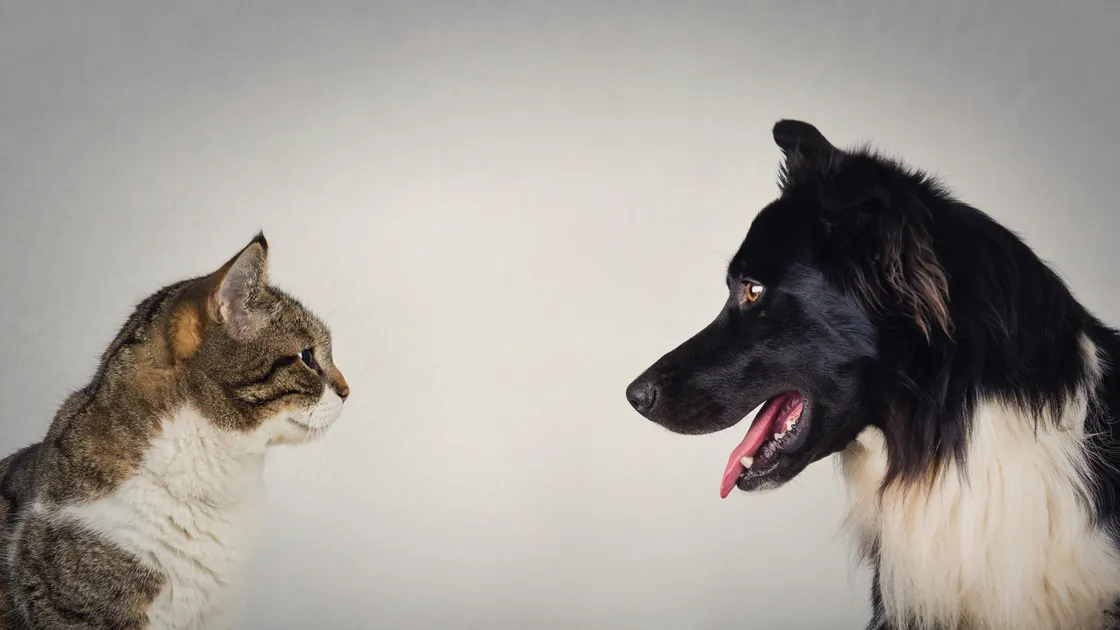
I think it was last week that I said, ‘cats are not just small dogs’. This is actually a phrase that was drummed into us at veterinary school, and for good reason*. For years, it was assumed that cats were pretty much the same as dogs – same diseases, same treatments – but times are changing, and we’re becoming more and more aware of what’s different. I thought it might be fun to highlight some of the major differences between cats and dogs here for you, starting with diet and the digestive system.
Teeth
Did you know different species have different numbers of teeth? Cats have 30 adult teeth, while dogs have 42. The main difference comes from molars and premolars – dogs have more of these teeth for chewing vegetation and grains and crunching bones of large prey, while cats don’t have or need them.
Eating frequency
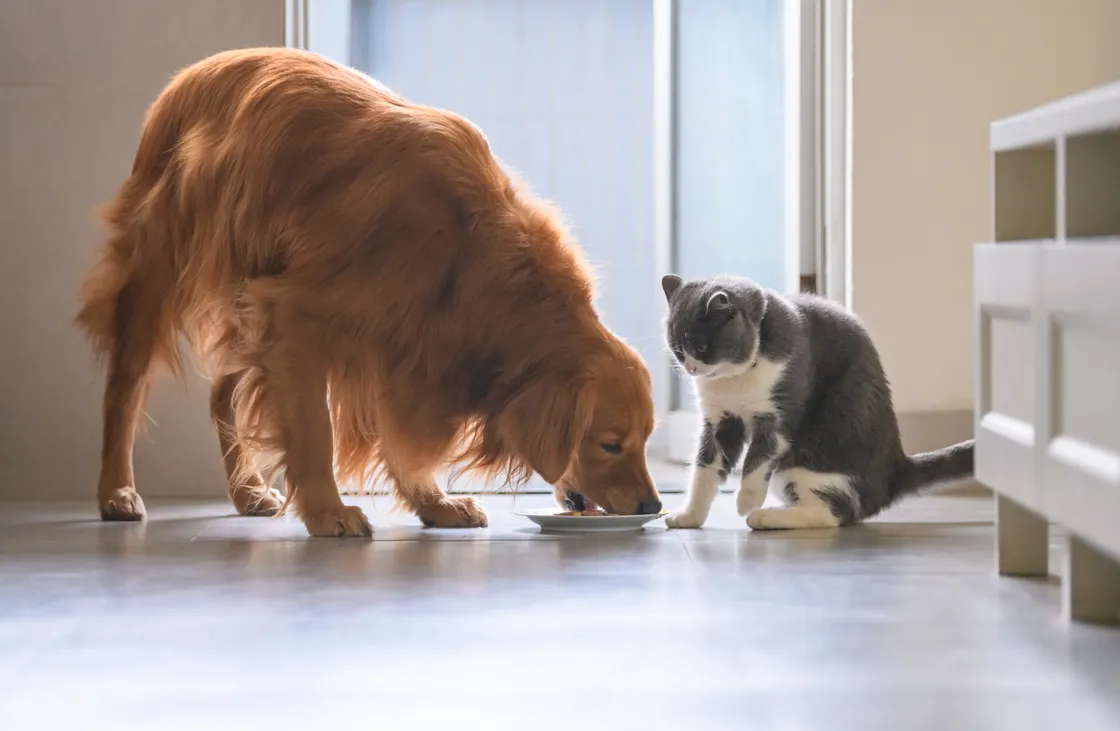
Cats are solitary species, who hunt small prey all day long. They’re therefore adapted to eating small meals frequently throughout the day, with more at dusk and dawn. In fact, cats might eat up to 20 small meals per day. Their stomach volume is small, and the feeling of satiety (fullness) doesn’t impact their hunting behaviour – with such a small meal it doesn’t take long for the full feeling to go, after all.
Dogs, on the other hand, are descendants of wolf-like animals – they hunt large prey as a team, feasting for several days after a successful kill (eating up to 10kg at a time) and then potentially going without for several days or even weeks. Wolves scavenge in between kills, eating whatever they can find. In other words, dogs eat well past fullness and until their stomach is fit to burst – and domesticated dogs may do the same at the next meal, and the next, making obesity a problem.
Diet
Although we think of the wolf pack hunting elk, they’re just as likely to go through bins, chew roots, or forage in other ways. In fact, some sources think they hunt meat more due to human persecution, competition, and habitat restriction as it is due to true species preference. They can – and do – survive on meat-free diets, making them facultative carnivores. Our domesticated dogs are even more capable of digesting and utilising plant-based foods due to changes in their genome that allow better carbohydrate digestion. Thousands of years of living with humans has seen to that. They’re therefore usually considered as omnivores.
Meanwhile, cats are obligate carnivores – they cannot survive without eating meat. While they can digest carbohydrates and can get some nutrition from them, they can’t taste fruity sweetness, which often draws us humans to carbs. When left to their own devices, cats choose a high protein, moderate-fat meal.
As different as oil and water, really.
*Another excellent one was ‘when you hear hooves, think horses not zebra’ – in other words, common things are common and one shouldn’t get too excited chasing rare diagnoses before ruling out common ones.