As the world turns its attention to the excitement, passion and spectacle of the Fifa World Cup 2026, football fever is likely to sweep across Britain and inspire people to lace up their boots and head onto the pitch.
While this huge tournament celebrates elite skill and will undoubtedly provide some unforgettable moments, the real beauty of the game lies in what it can do for everyday players – both physically and mentally.
Whether it’s a competitive local league match or a casual kickabout with friends in a park, here are seven ways football can boost your mind and body…
1. Improves cardiovascular fitness
‘Football involves repeated bouts of jogging, sprinting, changing direction and recovering which makes it a form of natural interval training,’ says Dr Sam Botchey, consultant in musculoskeletal, sport, and exercise medicine at HCA UK at The Shard.
‘Unlike steady-state exercise, in football you are repeatedly challenging the heart and lungs at different intensities, and that can improve your cardiovascular fitness significantly.’
2. Strengthens muscles and bones
‘When you are sprinting, jumping, tackling and decelerating in football, it loads the body in multiple directions so is great for all of your muscles, tendons and bones, which as we grow older becomes more and more important,’ notes Botchey.
‘Playing football can particularly help preserve your lower-limb strength by heavily engaging muscles such as your quadriceps and calves.’
3. Improves balance and coordination
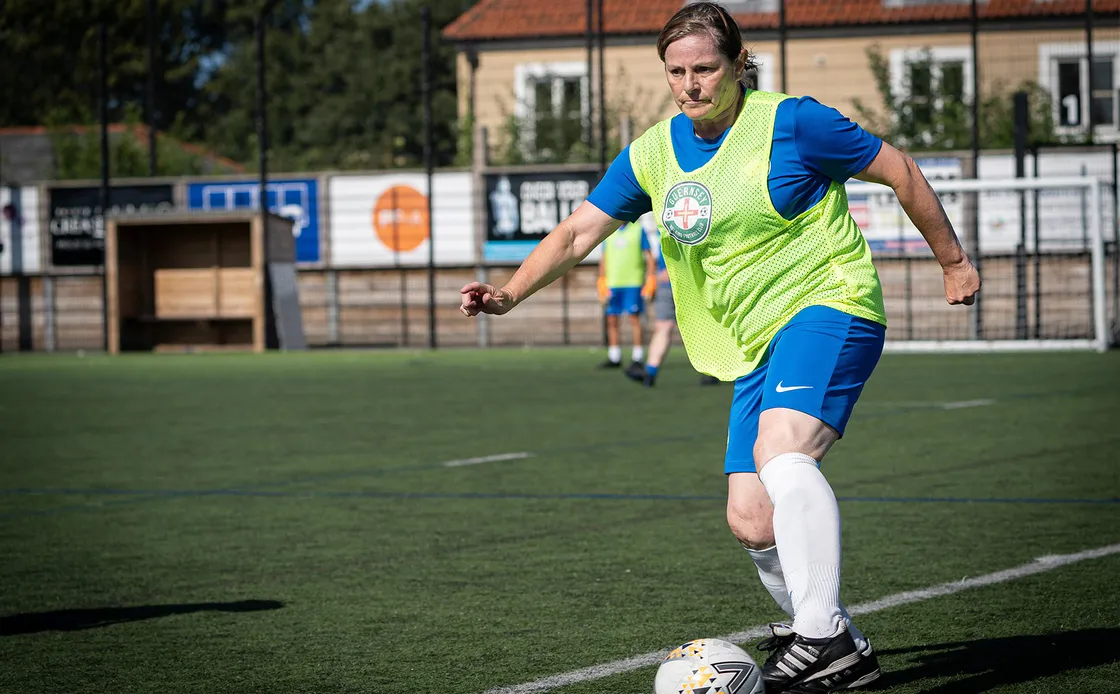
‘Football can really help improve your balance and coordination because the brain and body have to constantly work together while playing,’ says Botchey.
‘During a game you are scanning, trying to control the ball and trying to avoid your opponents, which trains the body to react because you’re making lots of decisions whilst exercising, which is excellent for balance.
‘Playing football is also really useful for developing neuromuscular control, confidence in your movement and proprioception, which is the ability to know where you are in a space.’
4. Aids weight management
Regular participation in football can also help aid weight management.
‘Due to the fact that football is varied and is often high-energy, it can contribute to improved body composition, improved insulin sensitivity and can even improve fat loss when you combine good nutrition alongside the amount of calories you’re burning while playing football regularly,’ explains Botchey.
The enjoyment factor plays a big role in this.
‘When people enjoy playing football, they’re more likely to sustain it compared to a repetitive activity that they don’t enjoy, and that’s what helps people lose weight,’ highlights Botchey.

5. Teaches resilience
‘Football also teaches players about emotional control and resilience,’ says Botchey. ‘When you are losing a game 5-0 and manage to come back to 5-5, you learn resilience that you only get from learning what loss feels like and learning how to recover from mistakes.’
6. Fosters social connection
‘Football is a social currency which brings people together,’ says Danny Potter, football coaching and performance programme lead at the University of Chichester.
‘Players make friends for life within the game of football because of the amount of time that they spend with teammates in training and in game time. Throughout a season, players develop cohesion and support each other on and off the pitch.
‘There’s also a sense of shared responsibility in a team sport like football where you’ll get the support of other players to encourage you to keep going.’

7. Boosts mood
‘Football can be a really great release for people,’ says Potter. ‘It’s a physical activity that takes people away from screens and other stressful areas of life.’
Botchey agrees and adds: ‘The routine of being part of a football team can help give people a sense of purpose and achievement which are powerful things for mood, stress regulation and mental wellbeing.’
How to get started
If you are interested in joining a team, Potter recommends getting in touch with your local FA (Football Association).
Different teams cater to different ages, levels and needs.
One of the biggest advantages of football is that it requires minimal equipment.
‘You can just put a ball on land anywhere and start playing which makes it so accessible,’ says Potter.
Starting small and building up gradually is a good way to avoid injuries when diving into football.
‘Football is fantastic for your health, but make sure that you build up what you are doing gradually,’ advises Botchey. ‘The World Cup is going to motivate lots of people to get involved in football, but it’s important to remember that most recreational injuries happen when someone suddenly goes from doing very little to a lot at a high intensity.
‘Therefore, it’s important to make sure you get a good warm-up in and progressively return to play. I would also recommend doing some strength work and balance work alongside football training.’
Guernsey Football association: www.guernseyfa.com
Guernsey Walking Football Club: www.gwfc.gg
Women’s and girls’ football on the rise
Women's and girls’ football in Guernsey is also enjoying its most successful period yet thanks to visible success at the top of the game, growing participation and sustained local investment from partners such as Sure.
Since Sure partnered with the GFA Community Programme in 2024, the initiative – which provides football-based PE lessons, lunch clubs and after-school sessions – has delivered coaching and development sessions to more than 724 girls.
That investment is helping create a generation of players inspired by success on and off the island. Guernsey contested the Women’s Muratti trophy in May, Maya Le Tissier has enjoyed a stellar season for Manchester United, and the Guernsey FC Women’s team recorded a strong showing in their debut season in the national league pyramid.
Scarlett Kenneally is women & girls football development officer at the Guernsey FA and played in the Muratti side. She said: ‘Seeing players succeed at the highest level gives young girls something to aspire to and helps them believe their own ambitions are possible. It’s a real driver for getting involved and giving football a go.’
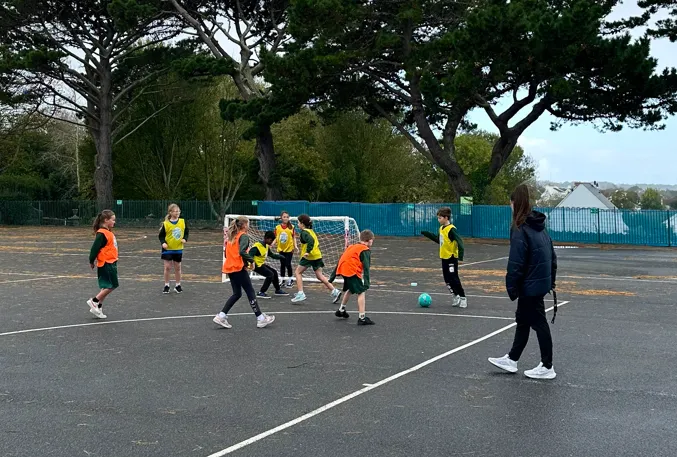
Demand for girls’ football continues to rise, particularly at school level, with four Wildcats programmes now established, some already at capacity. Earlier this year, more than 250 girls aged 9–15 took part in school festivals at Victoria Park.
Over the past decade, Guernsey FA has transformed the opportunities available to girls locally through the creation of a clear and accessible pathway from early introduction through to senior football. Programmes such as Wildcats, Just Play and SQUAD now provide consistent entry points, with progression into the Mourant Girls Academy and GFC Women’s squad for those looking to develop further.
Regular sessions, familiar environments and clear progression routes are now central to how the game is delivered, helping girls build confidence, develop skills and feel part of a team. This consistency is key to retention, with more players staying involved for longer.
Scarlett added: ‘Frequent sessions really make the difference. That’s where confidence grows, friendships form, and girls start to feel part of something, which is what keeps them coming back and benefiting from a clear pathway through to senior football.’
Looking ahead, the focus is on maintaining momentum beyond the WSL and local season, with a continued programme of sessions, festivals and fixtures, including the Cherry Godfrey Cup this month.
The long-term ambition remains clear: to ensure every girl in Guernsey can access football, build confidence through sport, and stay involved for as long as they choose.