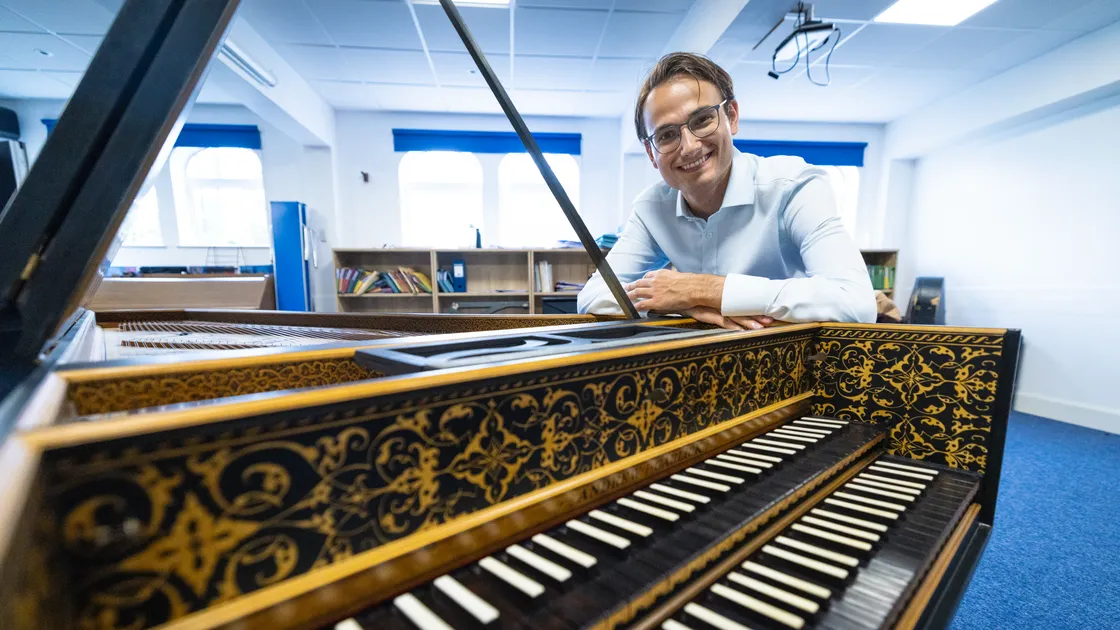
As he opens up the lid of the harpsichord which sits in the music room of his old school, Francois Cloete reflects on what this specific instrument has opened up for him.
‘This was made by one of very few harpsichord makers in England – Andrew Garlick – back in the 1970s,’ he tells me, before describing its journey to Guernsey in the back of a car, after it was spotted sitting in a shop in Headington in Oxford.
‘It’s an amazing instrument because it enables so much music-making – particularly baroque music,’ Francois says.
‘A harpsichord is the centre of musical activity in baroque music. So having the harpsichord on the island opens so many possibilities, and it’s those possibilities that have enabled me to develop as a musician.’
It’s fair to say that that development has been extensive. Having learned to play the piano throughout his time at Beechwood and then for a few years at the college itself, Francois – born in 2002 – currently holds the position of organ scholar at Westminster Abbey.
‘At the abbey, I’m always working with the choir, with other singers and with the music department, accompanying, and all of these musical skills really came to me through the harpsichord, chamber music and baroque collaboration.’
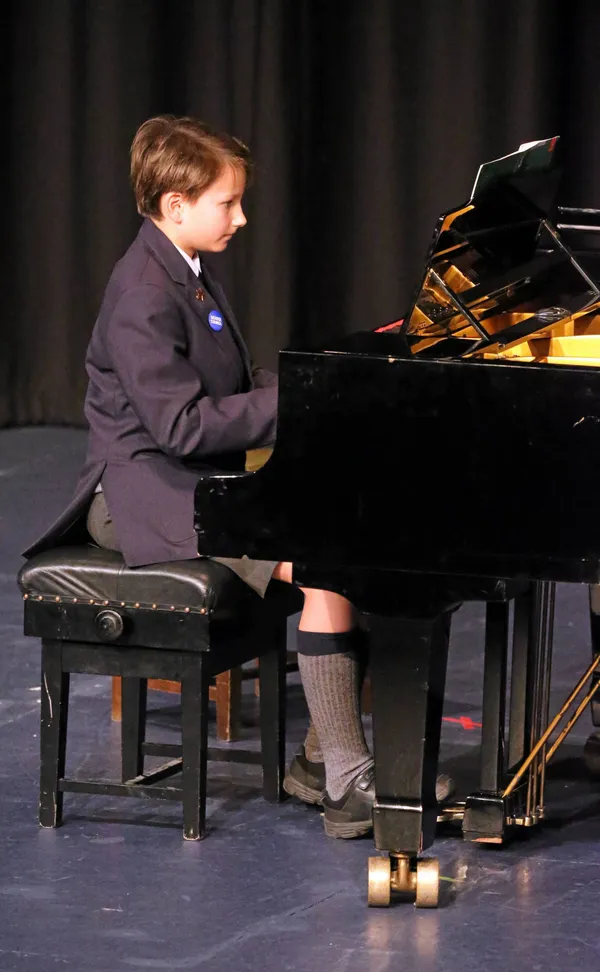
Francois gleefully recalls his discovery of this particular harpsichord ‘tucked away in a corner’ at Elizabeth College when he arrived there aged 11. He had already been playing piano for four years. Indeed, a search for his name on our system throws up many eisteddfod photos and reports of his early successes, such as winning the Elizabeth Webb Cup for under-12 jazz piano.
‘I’d been playing Bach,’ he says, ‘and turning to this instrument helped me rediscover all this music that I thought I knew on the piano, but it all completely changed. It all became much richer, much more articulate and I quickly became very captivated by the sound of it. I wanted to learn as much about it as possible.’
Francois makes it clear that the change was not just an alteration of style or tone, but something much more comprehensive.
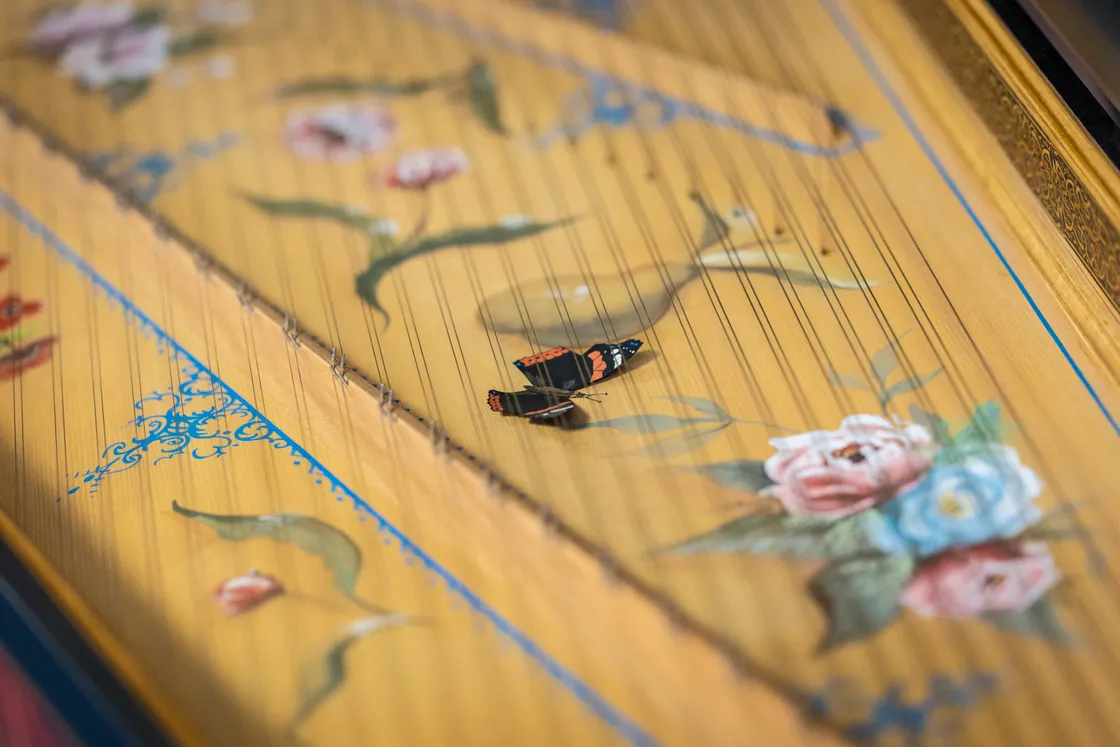
‘When describing the differences between a piano and a harpsichord, most people say “Oh, the piano can do dynamics”,’ he says, ‘and yes, if you press a piano key harder, it makes a louder sound, whereas the harpsichord plucks the strings in the same way regardless of how hard you hit the key. It can’t do dynamics and most people see that as a limitation. But actually the harpsichord has amazing resonance of sound because we’ve got this beautiful soundboard here.’
Francois accompanies his explanation with bursts of music, revelling in what he calls the ‘rich, sensuous sound’ of the instrument.
‘It’s like eating rich chocolate – it’s a very luxurious experience,’ he says.
‘As players we do everything we can to bring out as much vibration in the instrument as possible – holding all the notes in a phrase. This particular harpsichord is very good at that, because Andrew Garlick modelled it on an instrument by a French maker called [Jean-Claude] Goujon who was making harpsichords in the mid-18th century, and at that time, in the French royal court, these big, luscious harpsichords were very popular.’
But that’s not all the harpsichord has ever done for baroque music, Francois explains.
‘It can also be a very rhythmic instrument,’ he says.
‘You can be very precise with the attack, so in ensembles, it’s almost like a drum kit. If you compare it with a jazz band, this would be your piano and your drum kit in one – it’s the rhythm section. It’s what keeps the groove going and it grounds the whole ensemble.’
Such was Francois’ progress with his piano and harpsichord playing, that he left Elizabeth College early, aged 15, to take up a scholarship at Wells Cathedral School. From there, following tuition from the Royal College of Music’s chair of historical keyboard instruments, Terry Charlston, he went on to study music at Merton College, Oxford.
‘That involved both study and performance,’ Francois explains, ‘and the harpsichord remained part of my musical growth and my development of collaborative and leadership skills.’
And it’s these skills that qualified him to take up the prestigious role at Westminster Abbey.
‘It’s a very humbling experience,’ he says.
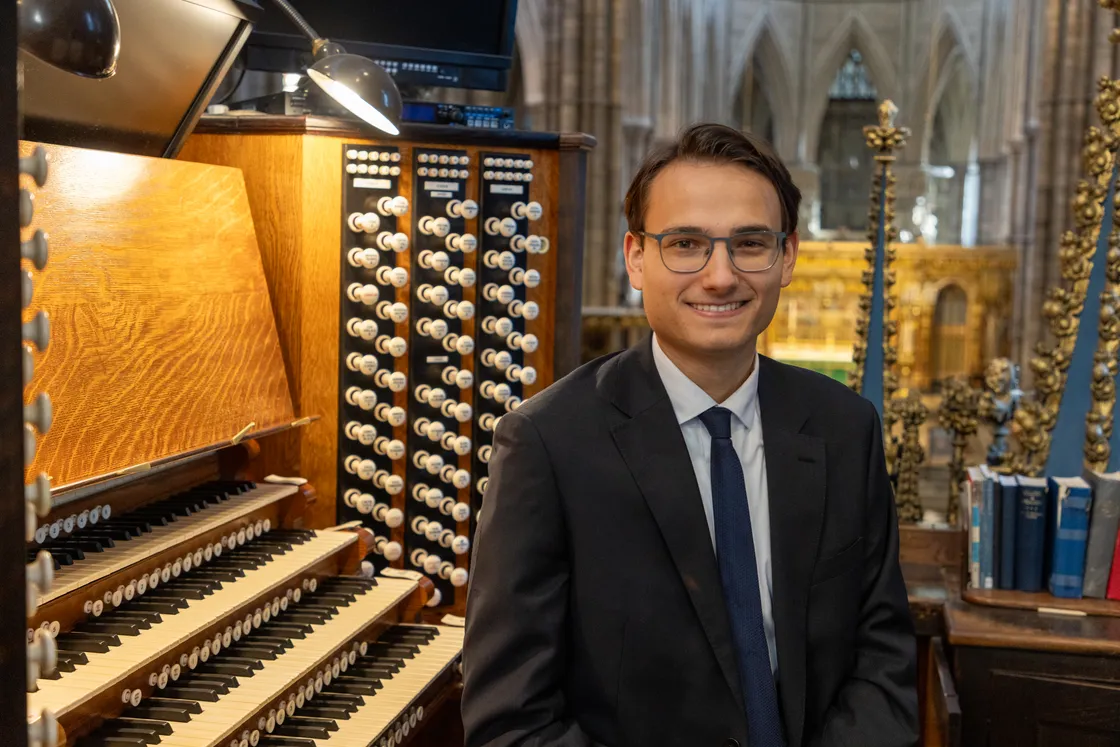
‘Sometimes I still can’t quite believe that I work there. You feel a great sense of responsibility and I’ve been able to play for some quite big services. I played for Anzac Day [25 April] and we had Princess Kate in for that one, along with the ambassadors for Australia and New Zealand and the Royal Irish Guards – so we had a brass band up in the loft and there were 2,000 people there. You really feel a sense of duty and responsibility working there. I will miss the daily office of evensong and I will miss that department, which makes music to such a high standard.’
And why will he miss it? Because he’s moving on again – this time to undertake a PhD back at Oxford, while continuing in his role as assistant organist at Merton College.
‘I look forward to broadening my horizons in a range of different directions,’ says Francois.
‘I’ll be doing academic research, looking at 20th-century music, directing and singing.’
It all equates to a rather intrepid and seemingly fearless race through the musical ranks for Francois, but from his perspective, the story of progress has more nuance. He describes his younger self as ‘shy and not particularly sociable’.
‘I did find performing quite scary, growing up,’ he says.
‘What’s got me over it, partially, is playing with other musicians and finding that I can make friends through music. It’s how I made friends at school and it’s still how I make friends and connect with people. Also, as a performer, you immerse yourself in the music that you’re playing and you are completely absorbed by the score in front of you, and then the audience sort of disappears, almost.’
He admits that this might be a phenomenon unique to organists, as they are ‘slightly tucked away in our organ lofts’.
But Francois will not be tucked away when he performs at Elizabeth College on the evening of Thursday 30 July, not least because he’ll be playing that same Garlick harpsichord. The recital is intended to inspire any budding young keyboard players who might have some of that same curiosity that got him hooked a little over a decade ago. It is also a fundraiser for the upkeep of the instrument itself.
‘These instruments are very delicate and very fragile and need to be maintained very carefully,’ says Francois.
‘The piano is a machine of the industrial age – it’s a cast-iron frame with thick strings, whereas the harpsichord is all wood and glue and thin strings. So if things break – and I’ve broken things myself, it can’t be helped – the time comes when you can no longer do DIY repairs. So we try to get Andrew Garlick to come over and service the instrument every once in a while but Guernsey being Guernsey, there are all sorts of costs incurred flying them over and finding somewhere to stay and paying for their time.’
Francois played a similar concert last year at the same venue, with a performance of Bach’s Goldberg Variations.
‘It’s a monumental work – the longest single harpsichord work in the whole repertoire,’ he says with some relish.
‘This year, I thought I would explore a rather different direction. The title is French Connections and the idea is that in the 17th and 18th centuries, Frenchness was not just a national, political identity. It was a whole way of making music. It was connected to dance, to movement and to grace, and a noble, genteel spirit. The style travelled far beyond French borders. Bach was very influenced by the French style – I’ll be playing one of his French suites – Henry Purcell, that quintessential English composer, also wrote suites in the French style, so I’ll be playing one of those. And then I’ll be playing some of the mainstream French repertoire by Francois Couperin and Jacquet de la Guerre, who was a really notable woman harpsichordist, which was a very rare thing in her time. Her music is really amazing as well.’
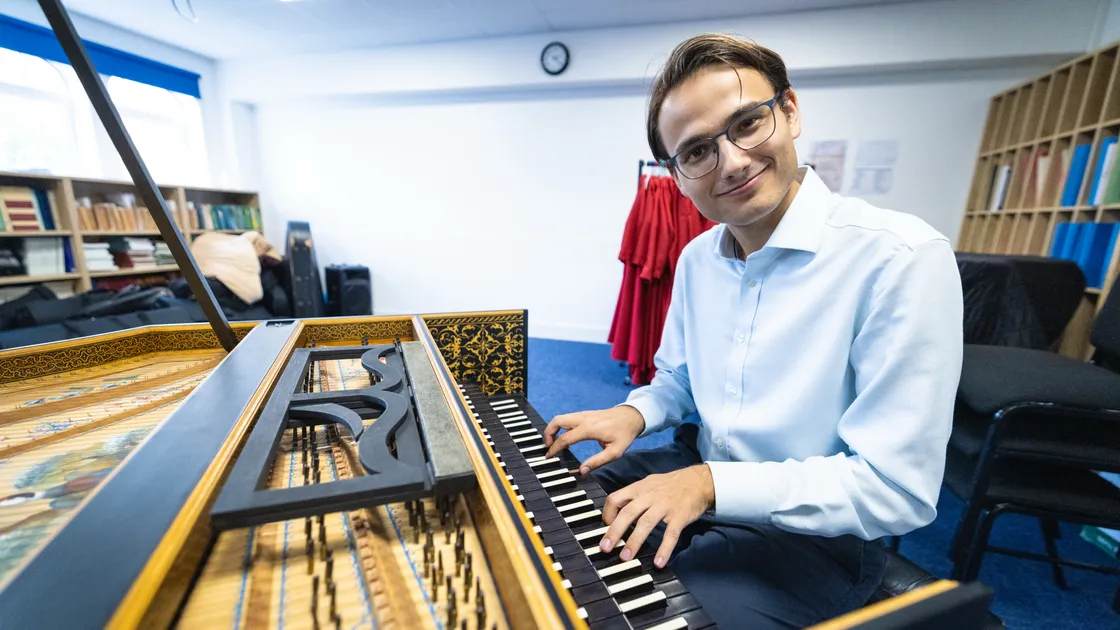
Francois explains that it’s the French influence on Garlick when fashioned this double-manual harpsichord which has inspired the choice of theme – rather than any lineage on his own part. He may have a French looking name, but his ancestry is South African.
He doesn’t anticipate too many nerves.
‘Once you’ve been on radio broadcasts and TV and played for the royal family, the other stuff is slightly less stressful,’ he says.
But coming back to Guernsey to perform is important to Francois, and playing this particular instrument doubly so.
‘This harpsichord has lots and lots of gadgets, which means that it’s a really exciting concert instrument to play,’ he says.
‘You can always surprise your audiences and take them to different places.’
And oh, the places they might go!
‘Reflecting on my own musical journey, the harpsichord was such a big part of my development as a musician, connecting with other musicians, doing chamber music. My vision is that this harpsichord will enable that sort of development for future generations of islanders. That’s really important to me. We need to preserve this instrument because it contributes so much to the possibilities of young people’s music-making and development in the Bailiwick.’
Francois Cloete’s harpsichord recital at Elizabeth College at 6.30pm on Thursday 30 July is entitled French Connections, and is a fundraiser for the Guernsey Harpsichord Trust. Francois has waived his fee for the event and the GHT is seeking donations of £25 or more to help defray the cost of insuring and maintaining the instrument.