The story of Les Blanc Bois is one of remarkable transformation, a tale of tragedy, farming, controversial cows, good and bad business, persistence, cruelty, starvation, survival, generosity and, nowadays, a modern-day gem combining health and recreation, and high-class care of older people.
It has not come easy and taken a very long time, but ultimately it has proved worth it, many times over.
But, you might ask, why Blanc Bois? Was there ever a white wood in this heart of the Castel parish?
Perhaps, is the answer from Margaret White, the Blanc Bois retirement estate resident who deeply researched the history of this country seat fronted by ultimate Guernsey status symbol – a granite archway at the head of what was known as a ‘cache’, or ‘chase’ as they refer to them in Jersey.
Guernsey’s first accurate map – the 1787 Duke of Richmond map – shows the original Blanc Bois farm buildings surrounded by trees, most likely cider apple orchards.
And as ‘bois’ can be interpreted as shrubs as well as trees, her view was that the place’s resident mix of hawthorn, elder and blackthorn could well have presented a picture that led to the name.
Les Blanc Bois dates back to the 15th century and initially belonged to the Fouaschin family, who in Nicholas Fouaschin, gave the island a bailiff in 1481.
By the mid 16th century the Fouaschins – a name long extinct in Guernsey – had sold up to a Jean Le Perre (also extinct here) and it remained in the Le Perre hands until 1816 when sold to Abraham Laine.
The stunning gateway, one of just three Guernsey examples of these ‘allees d’honneur’ as the French describe them, dates back to Pierre Le Perre’s time and as he died in 1656, it is fair to say this magnificent, but now redundant entrance, has survived well.
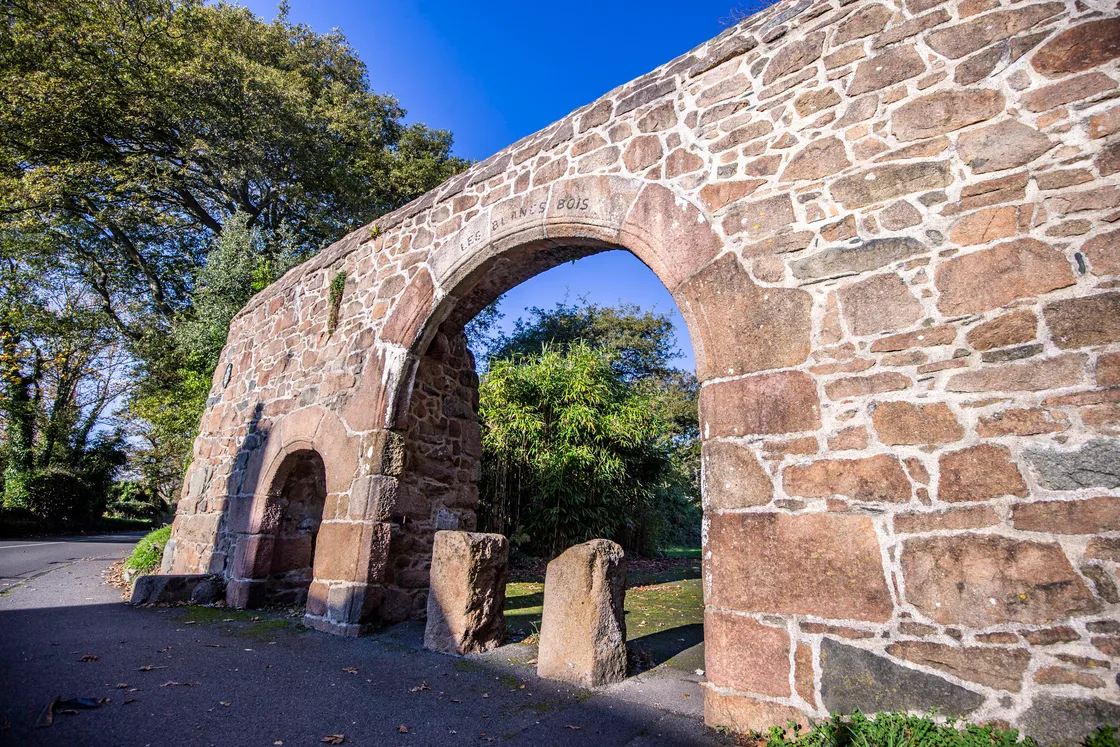
For many years it has been in the ownership of the National Trust who, like many others, would not have been impressed when, in 1973, a brewery lorry driver misjudged the space under the main arch and took a large chunk out of it.
This handsome double archway has long been fully restored, but like its Rohais counterpart, it is no longer the original height, with a century-plus of road improvements at the Rue Cohu reducing the gap by a full foot.
The Laine’s grip on Les Blanc Bois lasted barely four decades before it landed in the lap of the Hocarts, a family who already owned the Hougue du Pommier.
Without any sons, Abraham Laine’s daughter Elizabeth was the designated benefactor from his death and she would marry near neighbour Pierre Hocart from the other side of the Rue Charruee.
At some point the Blanc Bois house, no longer fully visible as part of the residential centre, was built as a fashionable Victorian residence and, for a lengthy spell, it would be the home of one Adolphus Hocart, jurat between 1907 and 1927.
Adolphus liked his cache so much his carriage was the only one permitted to use it, everyone else having to enter the grounds via the Rue Charruee.
The old boy liked to have his own way and that included enjoying possession of the Royal Guernsey Agricultural and Horticultural Society’s prestigious Challenge Cup, which his cow Nellie had won two years in succession at the Guernsey Farmers’ Show.
He wanted a hat-trick.
When Adolphus was debarred from competing for it, he took the presidents of both the RGAHS and Farmers’ Show to court in an attempt to sue their respective presidents.
With the Bailiff in the chair, Adolphus’s case did not get anywhere.
But Adolphus was used to knock-backs, the worst of which had arrived in the summer of 1900 with the tragic death of his 13-year-old son Cecil.
Despite his tender age, Cecil was regularly given the responsibility of turning off the water at the Blanc Bois mill on the edge of a disused quarry.
The mill was used to pump water for the Hocart greenhouses and one July evening Cecil headed off to do what was necessary. He never came back alive, drowning in a small seven-foot deep pond in the quarry bottom close to the foot of the mill.
Cecil, who had a habit of playing near the pond, must have slipped and could not swim.
Blanc Bois late summers in these late Victorian and early Edwardian times could be busy with the annual amassing of the his/her majesty’s tithes and champarts, a form of medieval seigneurial tax tied to agriculture and land use.
A share of the harvest was part and parcel of this tax and growers owing tithes and champarts were given 24 hours’ notice in the Guernsey Press before carting their produce to Les Blanc Bois.
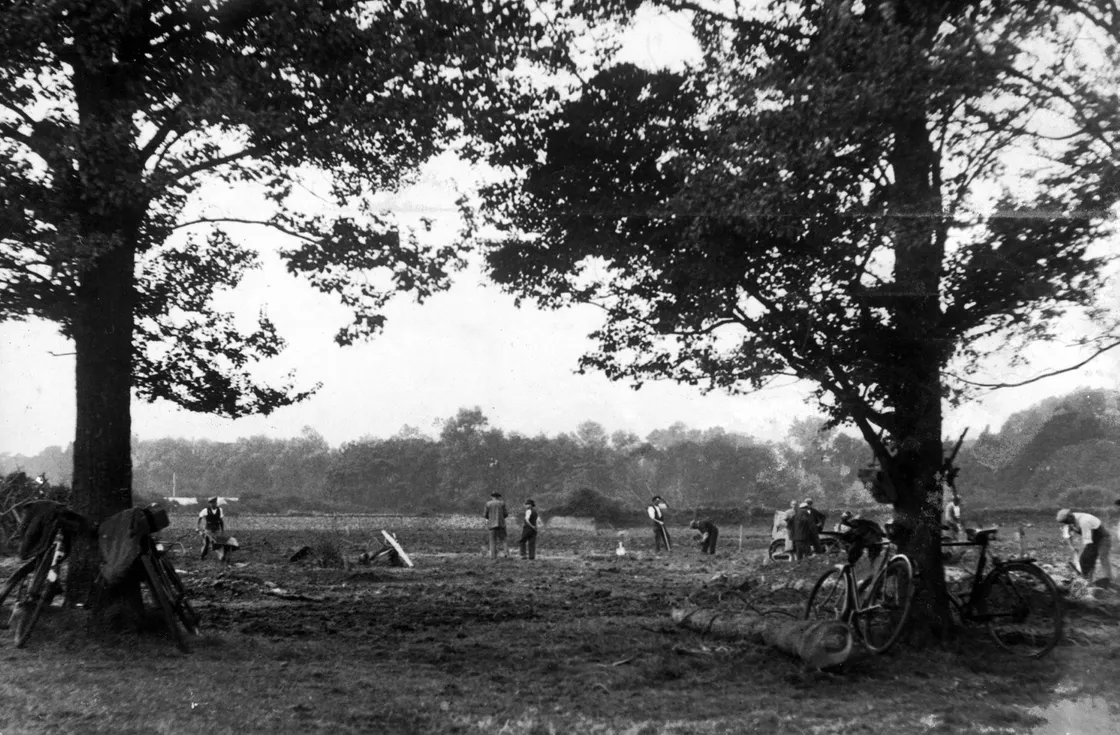
The 1930s heralded a new era for Blanc Bois.
With Adolphus having moved out, the Babbe family moved in as tenants on a long lease to run a guest house/small hotel and the farm, and as the decade closed, the adjacent fields owned by Jurat John Roussel were identified as the perfect spot for a much needed recreational field.
For approaching nine decades now, Roussel’s unwanted fields have played a significant role in the development of sport under the banner of KGV – short for King George V.
But, it is often overlooked that its naming only came into play after the original benefactor’s estate agreed to give way to a king.
Guernsey has had few, comparatively any, greater benefactors than the Rev. Peter Mignot and when he died in 1935 his will made provision for a Mignot memorial playing field and a committee was formed to find a suitable site for it.
Jurat Roussel’s fields were just that place but before the committee completed the purchase in 1936 they were invited to Government House where the Lt-Governor Major-General Sir Edward Broadbent nudged them towards an agreement where the Mignot Memorial fields be merged into His Majesty’s King George V Fund.
Immediately, the KGV Fund would benefit from a £2,000 injection from Mrs Mignot and a joint trustees committee representing the two funds formed.
The fields were ultimately bought for £1,600, a fraction of the amount that has been pushed into the sporting venue’s often slow and complicated progress over time.
The field was opened, not with a cricket match, but an athletics meeting in August 1939, soon followed by the inaugural cricket match and then football and hockey games before early promise was stymied by the arrival of those bloney Germans.
For two years they left KGV alone, but in 1942 a Teutonic land-grab turned the area into a slave camp for foreign workers.
To say the playing fields were wrecked over the concluding Occupation years, would be an understatement.
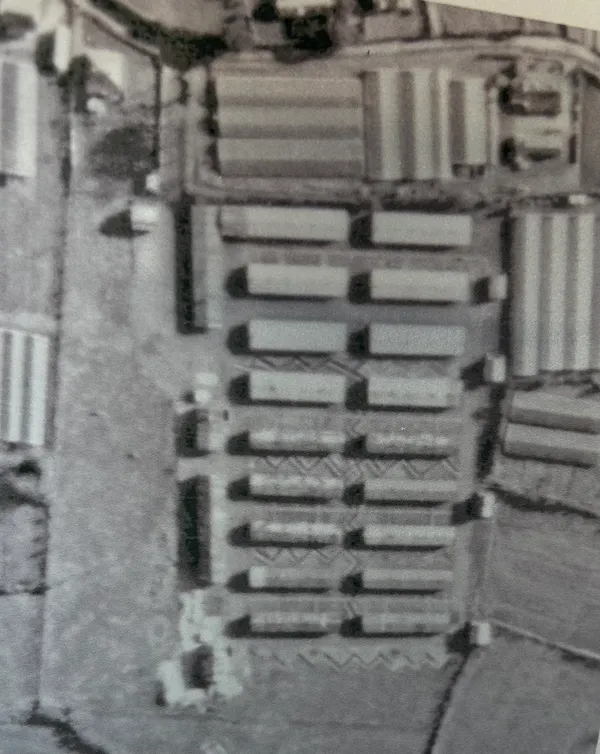
The Organisation Todt workers camp comprised a dozen-plus Nissen huts, some with concrete foundations and a series of deeply metalled roadways, and as the hundreds of starving workers trudged in and out on the way to building coastal fortifications, the late King’s ground built for health and enjoyment was now a sorry sight of human neglect.
Jack Babbe, who operated the adjacent vinery, pitied the starving so much he would sometimes launch tomatoes in their direction and even when the Germans departed, the restoration of KGV would prove a major and costly task.
To all intents and purposes, it was back to square one before the contractors J and D Norman’s estimate for restoration at the cost of £3,800 was accepted and the diggers which had hauled down many a hedge a decade earlier to create the playing area, were back at the Rue Cohu to tear up the concrete and metal and make way for the field to be re-sown in May 1948.
During this site rehab the money previously set aside for the building of a pavilion had been spent and for a few years after the war a remaining Nissen hut had to suffice for changing.
Then came the very generous offers from Mrs Mignot to cover the entire cost of a proper pavilion, the first of a series of sizeable donations to the cause of KGV over the next six decades.
Finally, with Mrs Mignot’s gift, the pressure to sell the field and look elsewhere was lifted and KGV could progress as it had intended.
Nothing has ever been easy down there though and today’s users of a cricket ground with turf that would not be out of place on an English county ground, simply don’t know how lucky they are to make use of a quite special facility.
Their predecessors in the 1960s often had to put up with an outfield where the grass was so long, that a hit into the deep outfield could spark a desperate search for the ball.
And if those handicaps caused by an untimely day of rain when the States Works tractor was booked for a cut, was not bad enough, then the dangerous black tarmac wicket laid down to replace the original pre-Occupation grass strip, added another level of physical concern.
It is fair to say that the KGV of 2026 is far removed from the ground that sportsmen of the immediate post-war years and through to the turn of the century experienced.
Gone are so many of the tall poplars which flanked three sides of the area.
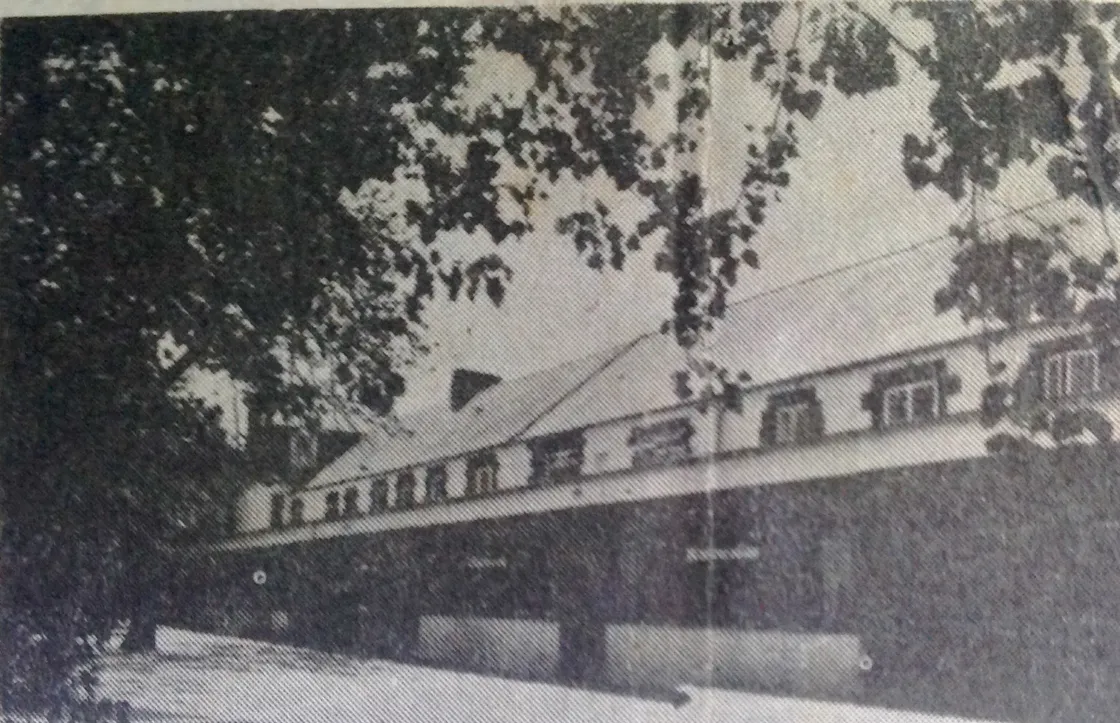
Gone are Babbe’s greenhouses that were regularly peppered by big hits behind square towards the old pavilion with its small movable scoreboard and metal numbers, hooked onto the wooden fascia in front of the pavilion entrance.
Gone is Mignot’s basic pavilion that tried so hard to be comfortable and welcoming, but never quite achieved it. Gone is the small, metal wall-plate to mark the Mignot involvement.
Gone is the old stone car park where farmer Jack Martel would park up his big blue Rover and sit to watch every evening cricket league game for seemingly an age.
Gone is the wooden ramp over the douit and little hut in the next door De Beauvoir vinery, where the key was hung to open up the Mignot pavilion.
Gone are the thigh-high grasses of the ground’s northwest corner.
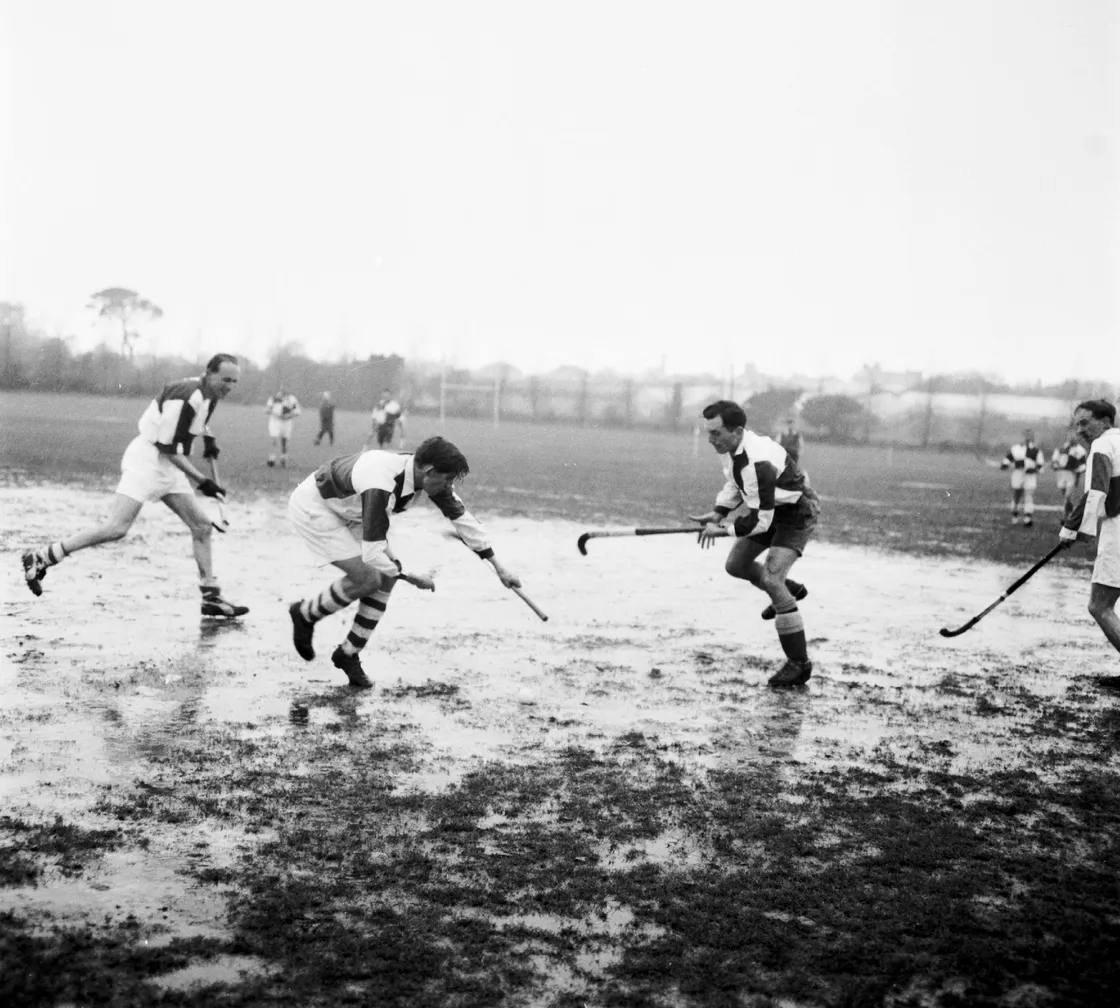
Gone are the muddy surfaces fit for Grammar School rugby, gone are the grass hockey pitches which for so long made the KGV a perfect home for the Guernsey Hockey Club before anyone invented a perfectly flat, artificial surface to take that sport forward.
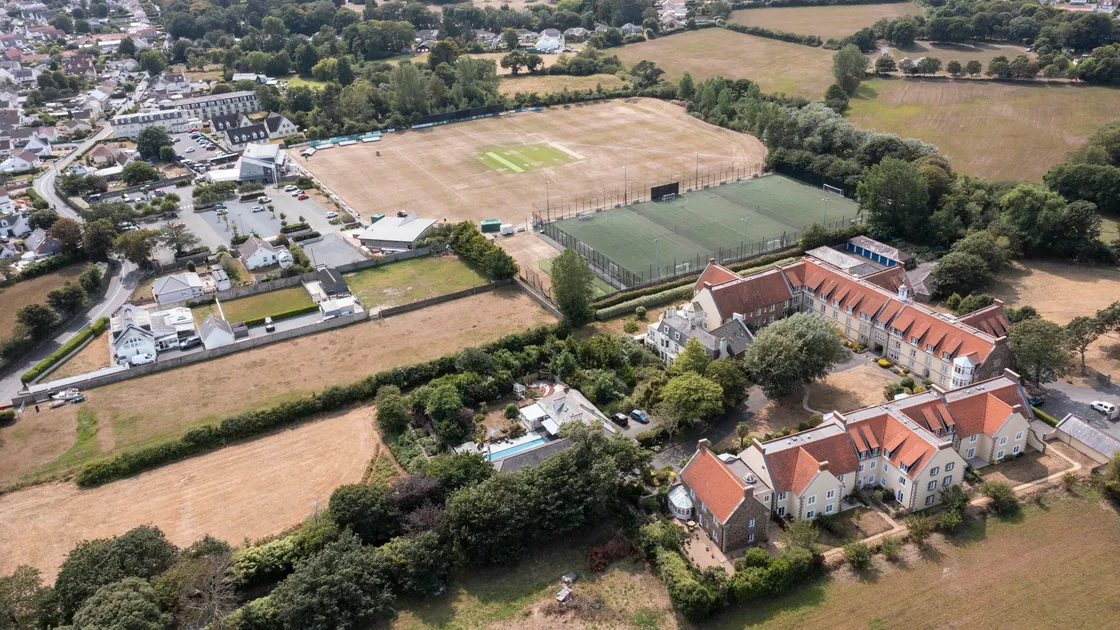
Nowadays, KGV benefits from two magnificent buildings, one from where players can change and emerge onto the playing area in one corner of the ground, and from the other gaze down on the action from a three-tiered multi-use clubhouse with offices.
And while the original 1986 build, largely funded by monies from a previously largely anonymous ‘Alan J B Tickle Fund’, failed to make full use of its size and in some areas lacked design quality, the Stuart Falla’s expertly-directed early 21st-century expensive renovation has remedied all those earlier faults in a stylish manner and running right around the property is the Dorothy Langlois Nature Trail, another valuable asset to the venue.
In a week where KGV has played host to the European U19 Cricket Championship qualifier, the transformation of John Roussel’s old fields and all-weather football pitch alongside the similarly stylish and accommodating retirement estate bordering the sports ground, appears, at least, almost complete.
The story of the other half of Blancs Bois, the commercial half where the little hotel transformed into the retirement complex, has not been so publicly visible, given than it was not run by trustees for the benefit of the island as a whole.
Quite what the Fouaschins, Le Perres, Laines and Adolphus Hocart would think of the land metamorphosis, we can only guess at.
Adolphus would be pleased that ‘his’ own archway is no longer being driven in and out of, and while the Whitewoods Hotel was fun while it lasted under the entrepreneurship of former bank manager Graham Nugent in the mid-1970s, you would have to say the development of the four-acre site into luxury living for retired over-55s, has been a success.
Part of Cognatum, a not-for-profit UK company that manages private luxury living for retirees, the Blanc Bois estate is set among four acres of land acquired 500 years ago by those Fouaschins when it was merely land and close to nothing else.
Gone are the old farm buildings, gone are the Babbe and Roussel greenhouses, gone are the apple cider orchards, tithes and champarts.
But Les Blanc Bois lives on and lives well in so many ways.