They crammed into every square inch.
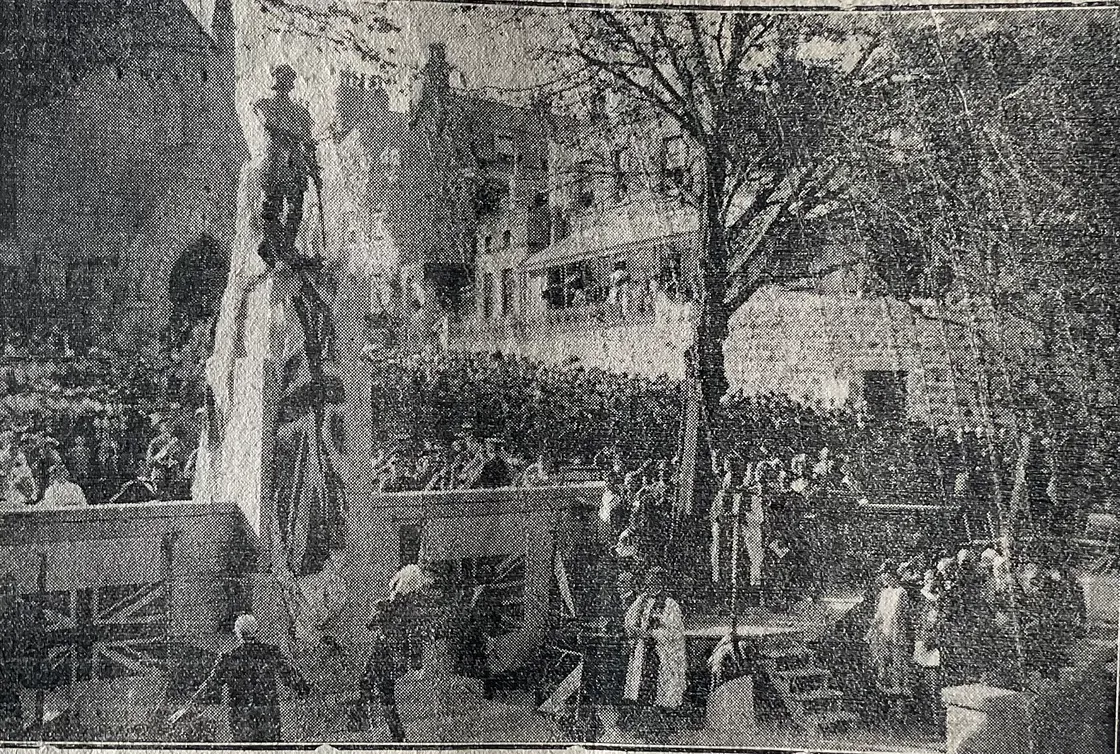
Guernsey has seen some huge gatherings over its history but none that combined size and silence like this one – the official unveiling of the Island War Memorial.
The day was Sunday 19 September 1926, the precise moment the bronze figure of St George being uncovered by the Lt-Governor was 4pm and alongside him was the man who had made it happen, Gervase Footit-Peek, co-founder and chairman of the Guernsey Evening Press.
To say Peek made it happen is, of course, shading the truth somewhat. THE man most responsible for the memorial was a headstrong Bosnian-Serb Gavrilo Princip and a stupid and frustrated German, Kaiser Wilhelm II who first pushed the buttons for the Great War to happen.
The result anywhere between 15 and 22 million dead across Europe, 910 of them Guernseymen who, with war finally over, needed never to be forgotten and honoured in style.
Just how many witnessed its official unveiling is unknown, but the few grainy images available suggest many thousands.
Smith Street was rammed from top to bottom and beyond the old plantation, squeezed between the Royal Court building, the looming St Paul’s Church and Old Government House Hotel on its northern flank, several hundred more unearthed a spot to watch the most solemn of proceedings.
A headcount was impossible but community pride oozed everywhere, that pride shared by Peek, the one man who, more than anyone on this little island, made it happen.
Gerve Peek, as he was more commonly known in island life, went to his Occupation-period grave a tired but, surely, wholly satisfied man.
His life had yielded a successful building business and the island’s leading newspaper, the latter a fitting and lasting memorial to a great life.
But as achievements go, his tour de force was the design, creation and actual build of our Island War Memorial, 100 years old this very month.
Guernsey would not wish to be without it and nor would Smith Street, which until the memorial had come along had long been topped off by a simple plantation, much like the North and South Esplanade plantations, but smaller.
Peek may well have walked past the Smith Street plantation hundreds of times since he had first published the Press in 1897 and although he did not have any close relatives lost to war between 1914 and 1918, he had seen from the columns of his own newspaper, which regularly published the faces of lost ones, how it pained island people.
Along with others, he set about commemorating those dead in the best way possible.
The First World War had been over fully nearly a year and a half when serious talk began over the erection of a suitable memorial for the island as a whole, not simply a parish by parish honour to lost folk.
Smith Street had often previously been suggested as a site for statues, including those of Queen Victoria which ended up in Candie Gardens.
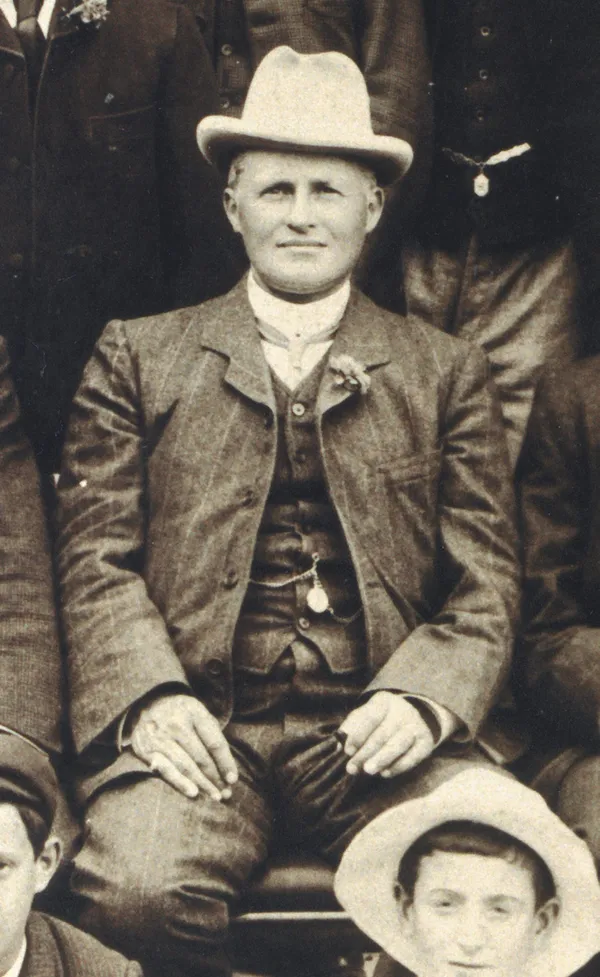
First man to suggest Smith Street was not Peek, but one Harold G Le Cheminant, a well-known shopkeeper, at a Central Hall meeting on 5 February 1920.
That gathering came up with many ideas, not least a Memorial Maternity Home, which found sizeable support.
Even an old age pension was recommended as a possible worthy memorial and six years on from that meeting such a boost to the island beat the opening of the Smith Street memorial by two months.
But Le Cheminant’s pleading for ‘something to look at’ on the site of the long established Smith Street plantation, won more than a few ears and the meeting ended with a decision to go forward with a feature memorial on a site to be decided.
Who, though, would decide?
A committee of course, and not a small one either.
It swelled to 16, including the bailiff, the dean, a string of reverends, the bailiff’s wife Lady Ozanne, and, among them, Peek.
The Press boss had long been regarded as someone to be trusted and immediately took on the additional role as committee treasurer.
Meanwhile, the matter of where the memorial should go and what it would look like, rumbled on.
Five possible sites were in the running: Les Cotils Belvedere, the roadway opposite the White Rock Weighbridge, the pedestal in front of the Market, the old burial ground at the bottom of Cornet Street, and the Smith Street plantation.
Of course, Guernsey being Guernsey, an outside expert or consultant would be required to take a view and in this case it was a chap called Gray West from the UK Board of World, a man ‘connected’ to the legendary Sir Edward Lutyens in the erection of the Whitehall cenotaph.
Perhaps taken in by the view, West was most enamoured by the Cotils spot where he proposed the erection of another cenotaph.
Counting against his idea was the fact that there was a very limited area available and it would be visible only from the sea.
One by one, three more sites were ruled out, leaving the top of Smith Street as the designated site, although it took until the autumn of 1921 to make the final decision.
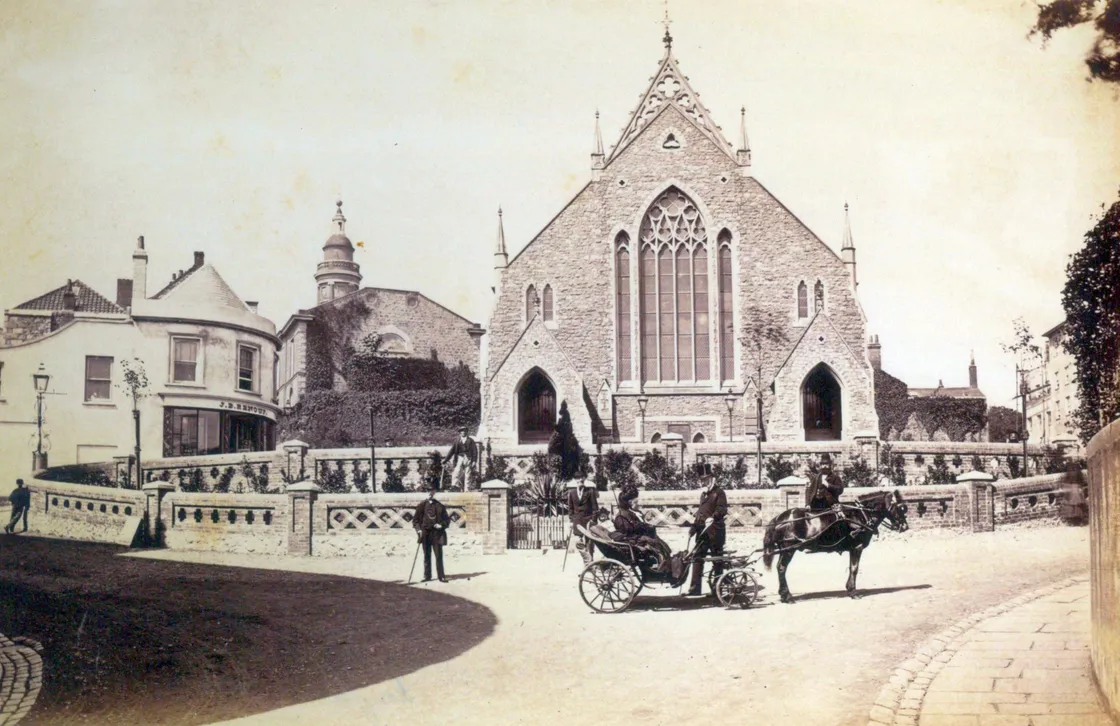
How it would look would take a while longer though.
That same meeting ruled out the idea of a cenotaph type of memorial and the Rev. E L Frossard pushed the idea of a cross of Guernsey granite, a suggestion that found considerable support island-wide largely because of its large double octagonal shaped base which would give plenty of space for the necessary tablets containing the names.
On 28 June 1922 the States was first asked for use of the site and rather than a simple ‘yes’ it was deferred for further consideration.
Two months later, the States rejected the site on the motion of HM Comptroller whose view was that the public should be able to express an opinion and come forward with their own ideas.
They were getting nowhere fast and it would not be until 19 February 1924 that the States reconsidered the position and the Smith Street proposal was adopted amid a strong chorus of ‘pour’.
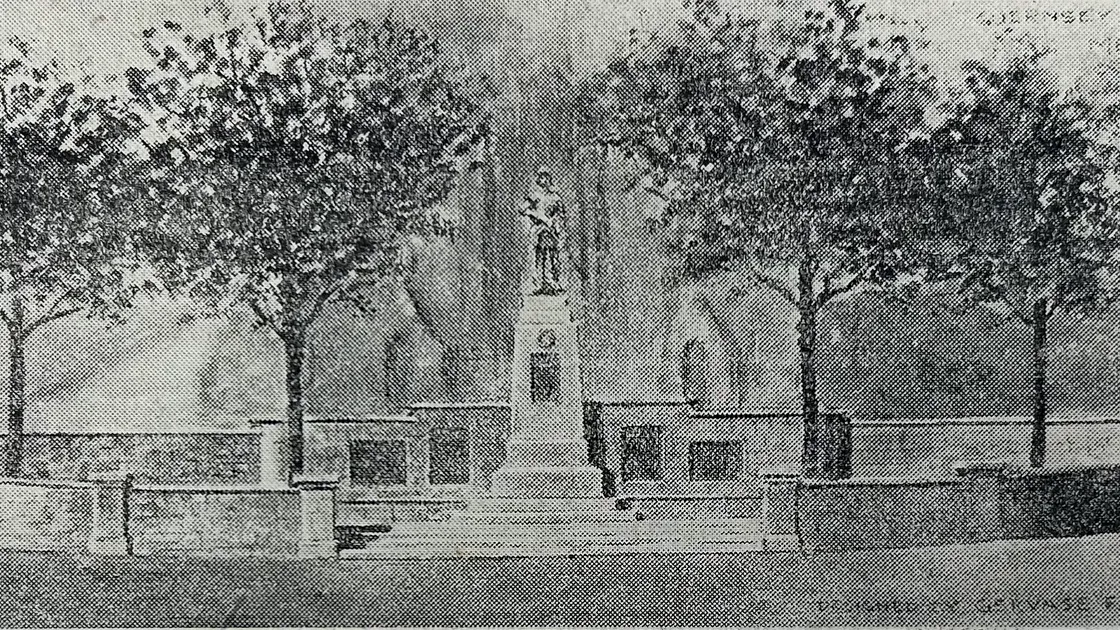
It was at this point Peek really got to work, making a car tour of England to see what other little towns had designed and it was the one he saw in Evesham that gave him the germ of the idea for his own Smith Street memorial design.
It seems previous reluctance for Smith Street lay with the expectation that the already established plantation trees would have to be removed.
Peek’s plan would, though, accommodate them and another visiting expert said publicly: ‘I am definitely and strongly of the opinion that the existing trees should not be removed as these give distinctiveness and charm to the memorial, and greatly enhances the general effect.’
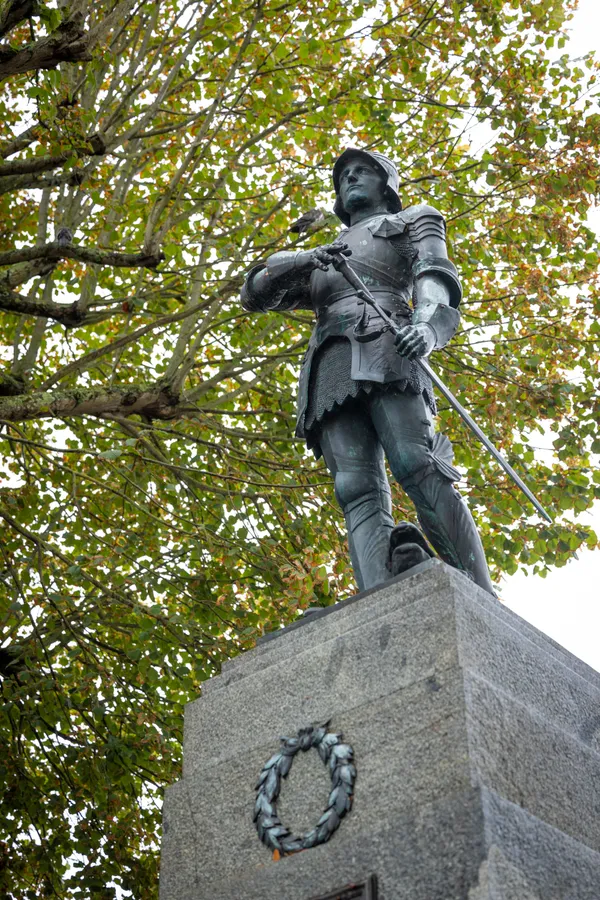
In May 1925 Peek’s design was reproduced in his paper for all the island to see and three months later, on Monday 7 September, the first foundation stones were laid by the new Bailiff Sir Havilland de Saumarez and the Lt-Governor, Major-General Sir Charles Sackville-West.
It would take a further year to complete the build and nobody was busier with the project than John Le Page’s stoneworks team at Westerbrook in Nocq Road, St Sampson’s.
The metal work contract went to J W Singer and Sons of Frome, Somerset, their skills tested surely by the central figure of St George, sheathing his sword after cutting off the dragon’s head.
Unsurprisingly, given who their boss was, the Press waxed lyrically at the final product: ‘We can safely say it is the most artistic of statues which the island has yet acquired’.
All through the project Peek had acted both as fundraiser and clerk of the works on a site sitting just a stone’s throw from his office down the street.
The island had waited long for its war memorial and, finally, it was there, standing impressively at the head of the hill and in front of the imposing St Paul’s Church.
As for the cost?
Estimates suggest in the region of £3,000 which translates to circa £175,000 a century on.
If ever there was money well spent on an island project, here it is.