
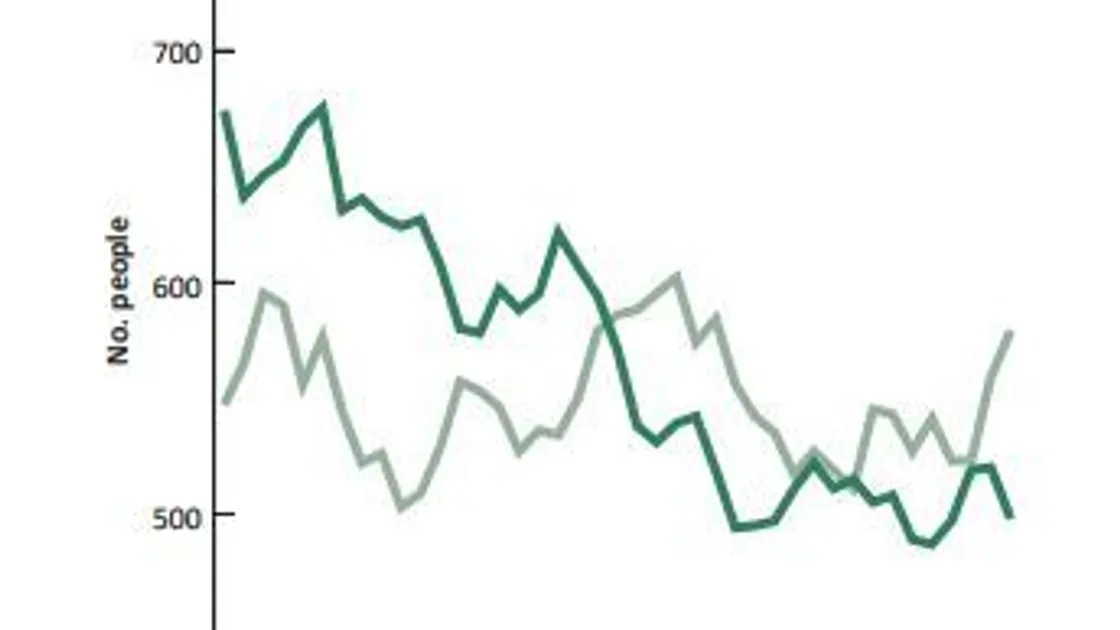
But the population would have dropped without immigration.
The ninth Guernsey annual electronic census report provides a detailed snapshot of the population, employment and earnings from March 2021 to March 2022 and includes analysis of trends over the last five years.
The data shows the impact of the Covid pandemic and the cost-of-living crisis.
On 31 March 2022, Guernsey’s population was 63,711, an increase of 410 people (0.6%) year-on-year.
There were 498 births and 579 deaths, a natural decline of 81 people, which was the largest natural decrease in the last 10 years. By contrast 2012 saw births exceed deaths by 127.
The year saw a big jump in the number of people coming to the island coming from the rest of world, rather than Europe.
This was only 9% in 2017, but rose to 25% during the year ending March 2022, almost as large as the proportion coming from UK and Ireland.
This coincided with the UK’s implementation of Brexit.
In 2022, for every 100 people of working age there were 57 people of dependent age. This ratio has increased every year over the last 14 years, from 48 in 2008.
This increase can be explained by the ageing ‘baby boom’ generation – babies born after the Second World War until the 1960s – moving from the working age category into retirement and is set to increase.
These trends in dependency are important as they are used to assess the tax contribution rates required from the economically active to support the economically dependent.
The data also showcases Guernsey’s buoyant employment market.
At the end of March 2022, 48.9% of the total population were employed or self-employed, up by 0.7% on the previous year, and 2.8% more than at the end of March 2014.
Only 242 people, 0.8% of the population, were registered as ‘wholly unemployed’ on 1 October 2022, the lowest proportion seen since 2008.
The finance sector was the largest employer in September 2022, accounting for 18% of total employment – 5,971 people.
However employment in this sector has seen a small decline in every year since September 2019.
The second-largest group was described as public administration and employed 5,692 people.
The manufacturing sector showed the largest annual increase in jobs over the year from September 2021.
Wages in this period also rose, with the median earnings increasing by 5.3%.
However when inflation is taken into account, which was over 8% last year, wages fell by 0.9% in real terms.
St Peter Port still has the highest population and density, with 19,354 residents, which is nearly a third of the population.
There are 3,024 people per square kilometre in Town, a density more than double that of St Sampson’s, the second-most densely populated parish, and nine times denser than St Peter’s and Torteval.
In March 2022, there were 681 more women than men in the island.
Over the last 10 years the female population has consistently been higher, and has ranged between 50.8% and 50.4%.
However there are actually more men than women in all age categories up to the age of 45 as a result of there typically being slightly more baby boys born than girls. After that women tend to dominate due to a longer life-spans.





You need to be logged in to comment.