

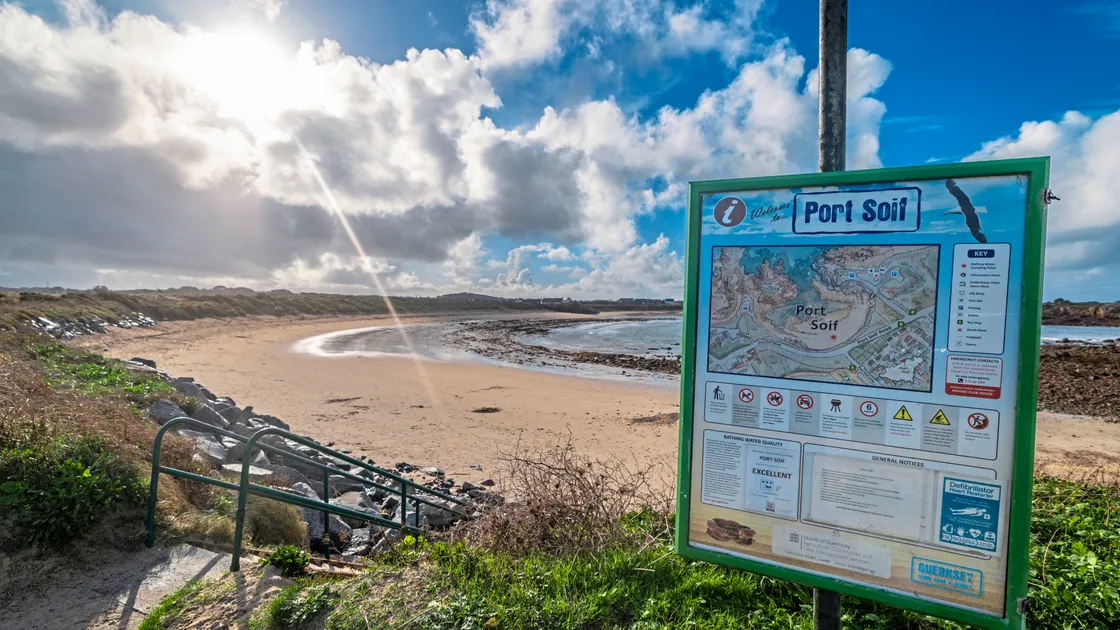
The States carried out weekly tests, measured against the EU Bathing Water Quality Directive, at 13 beaches between May and September, checking levels of E. coli and intestinal enterococci, which can indicate faecal contamination and bacteria that can make people sick.
Saints Bay, L’Eree, Vazon, Grandes Rocques, Port Soif, Ladies Bay and Pembroke all recorded ‘excellent’ scores every time they were checked this year.
For an excellent rating there must be less than 250 E. coli and less than 100 intestinal enterococci per 100ml.
For the second year in a row Port Soif was the cleanest beach, with no more than eight E. coli or 17 intestinal enterococci recorded in any test, and for eight of the weeks, neither of the bugs were recorded at all at the west coast bay.
Bathing water samples produce a snapshot of conditions and water quality conditions, which can change even over the course of a day. Water quality can be adversely affected by heavy rainfall as surface water run-off from fields and roads on higher ground enters streams and storm drains which run on to beaches. This run-off may be affected by faecal bacteria from grazing animals, dogs and birds.
Portelet recorded two poor ratings over the year, with one week in May, while the remainder of its tests were excellent.
Havelet also saw some concerning numbers, and returned a poor rating in early September, although the beach had excellent scores for the rest of the summer apart from a ‘good’ in early June.
Petit Bot had a mixed year, with four good and two poor ratings. Cobo has enjoyed all excellent ratings until a good rating in early September broke its streak.
Fermain also enjoyed all excellent ratings, except one good in mid-August. Two good ratings were recorded at Bordeaux during the season.




You need to be logged in to comment.