

The review into the number and location of schools, including whether any should be merged, moved or closed, will not take place until the second half of the States’ term.
It was initially due to be completed by 2022, but the previous Assembly deferred it until after this year’s general election, and it is now unlikely to start until the summer of 2027 at the earliest.
The new timeline, set out in a draft Government Work Plan due to be debated next month, increases the chance of politicians having to vote on controversial changes to primary schools in the run-up to the next general election in 2029.
Education, Sport & Culture put the latest delay down to uncertainty about housebuilding across the island.
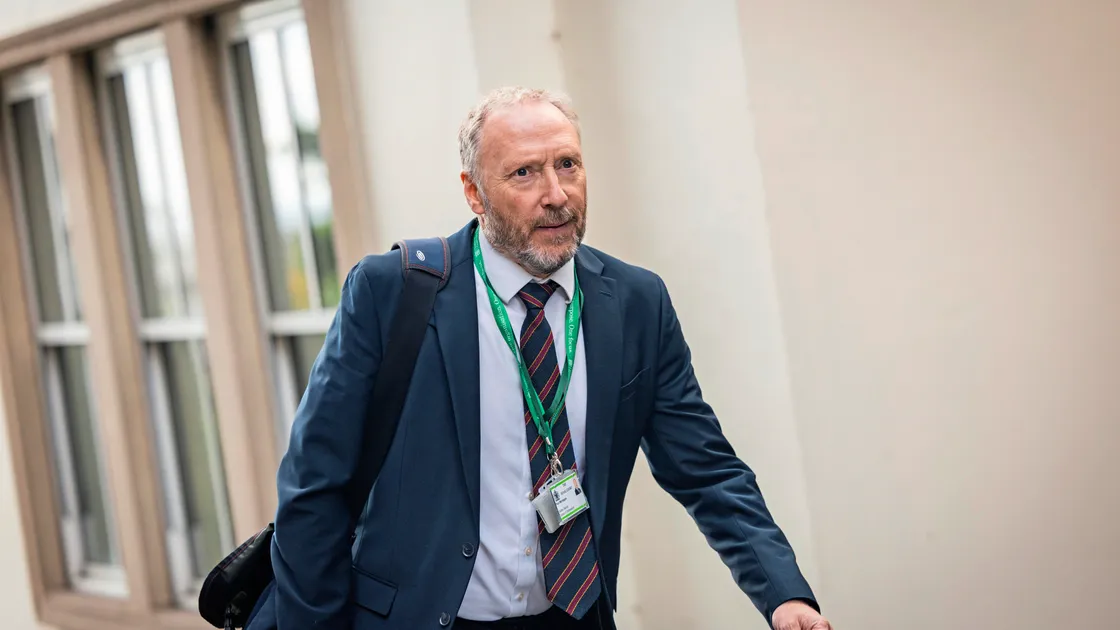
‘The committee cannot do this until it has a clearer understanding of how housing developments in Guernsey will progress,’ said ESC president Paul Montague.
‘If, for example, the development of housing units at the Mallard goes ahead, that may materially change the requirement for primary school places in that area.
‘Likewise, when The Guernsey Institute moves from Les Coutanchez, housing developments may be undertaken there, again changing the requirement for school places in that area.’
At present rates, it requires an average of about 50 to 60 additional houses to add one child to a year group in a States school, although the distribution of children and spare places in schools is uneven across the island.
In total, as a result of a steep decline in the birth rate, there are about 200 spare places in every new year group entering reception classes in States schools.
A previous disparity between school places and the number of pupils led to the closure of St Sampson’s Infants and St Andrew’s Primary a decade ago. School year groups today, spread across all schools, are typically at least 100 pupils smaller than they were then.
Deputy Montague said his committee ‘recognised the need’ for another review of primary schools but was ‘determined to ensure that it is carried out properly’. He also believed the review would be influenced by early years and families being proposed as a new ‘super priority’ in the draft Government Work Plan.
‘Our approach reflects a deliberate balance – continuing to move forward while ensuring that decisions are aligned across committees and informed by a clear understanding of the island’s future needs,’ he said.
‘Proceeding without this broader perspective risks undermining the very objectives any reform is intended to achieve.’
Meanwhile, a separate review into higher education funding, also led by ESC, was expected to proceed sooner, with the draft Government Work Plan indicating completion during the first half of the States’ term.
That review was already under way when the committee was elected in July. The committee was not yet sure whether it would result in proposals for change which would need to go to the States Assembly for approval.
‘It is not a piece of work on the same scale as the primary review, although it is important as it will reassess how we support students going into higher education,’ Deputy Montague said.