

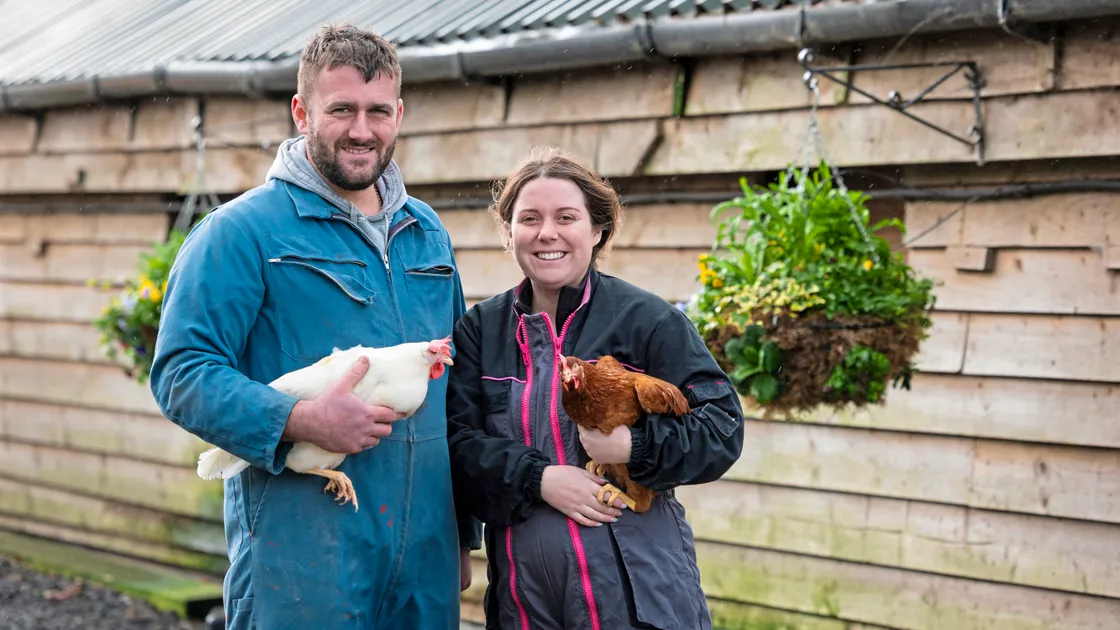
Islanders may spot the odd white egg in boxes in their boxes of Guernsey eggs, as the local farm has introduced a number of white hens in a innovative twist to boost production.
Jessica and James Rihoy marked two years in charge of the island’s sole commercial egg farm yesterday.
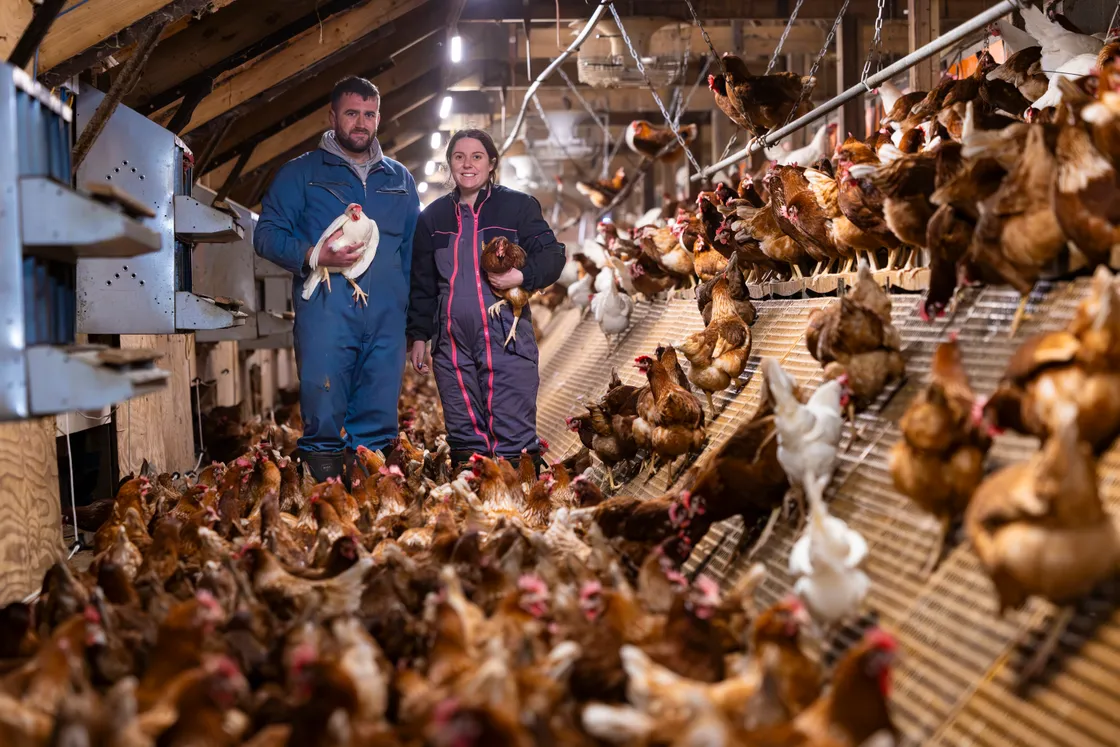
During that time they have doubled the size of the flock, with 16,500 birds now producing 15,000 eggs a day.
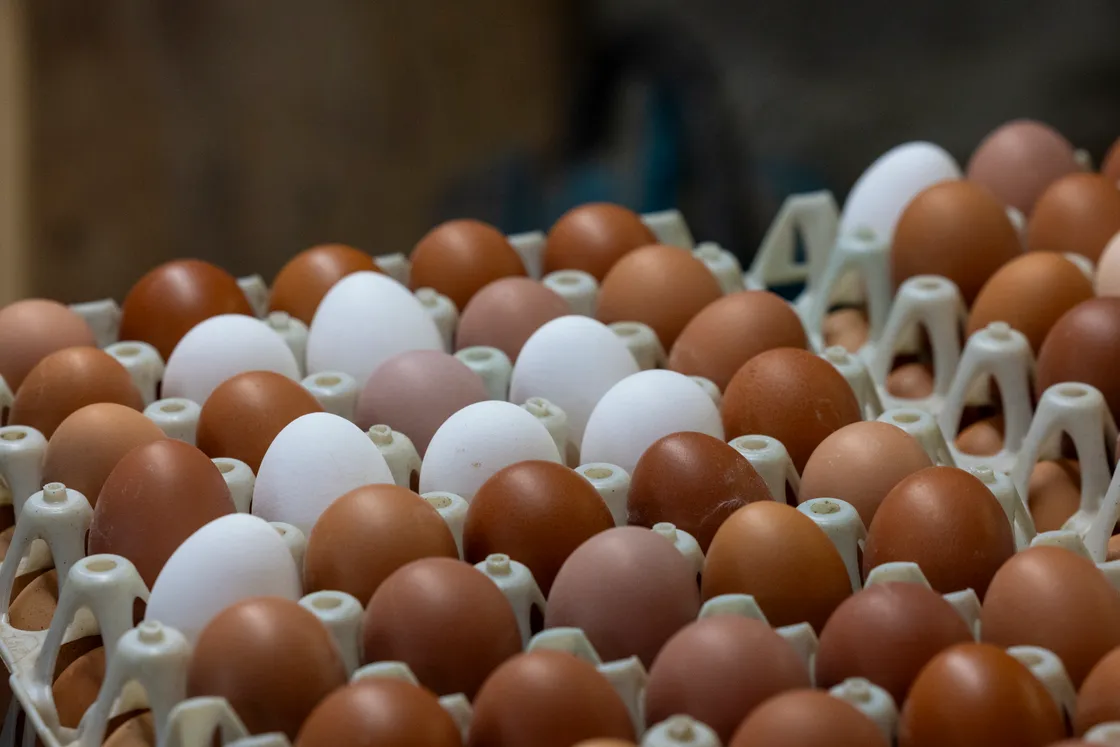
The 300 latest recruits stand out from their brown-feathered friends and produce distinctively different pristine white eggs.
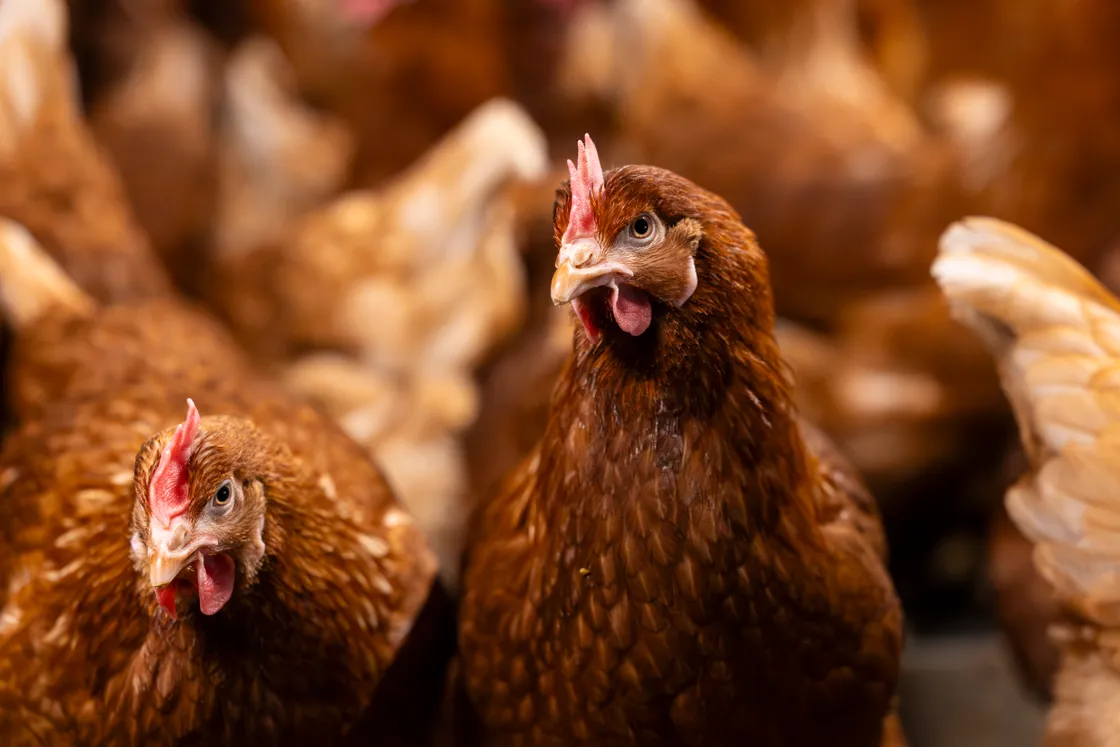
‘They have a completely different temperament,’ said Jessica.
‘They roost much higher up in the shed which encourages all the birds to do the same.
‘That means that when they lay in the mornings there is much less risk of eggs ending up on the floor.’
The white chickens, a breed related to the other hens, are currently only in one of the four sheds on the farm.
‘We are already seeing a difference and hope to introduce a few into each shed over time,’ she said.
‘There is no difference in taste so we are really hoping that everyone who buys our eggs will accept having the odd white one.’
Although the Rihoys’ brown chickens lay brown eggs and their new white ones white, a chicken’s egg colour does not directly reflect the colours of its feathers, they said.
It is actually determined by the hen’s breed and genetics, often linked to earlobe colour – white earlobes usually mean white eggs and red earlobes usually brown.
The birds, who normally have access to wander outside, are currently having to be kept inside due to avian flu restrictions which are affecting all of the UK and Channel Islands.
‘It happened last winter as well,’ said James.
‘We are hoping they will be lifted by the spring but we just can’t predict exactly what will happen.’
Jessica added: ‘We are trying to bring some enrichment to them while they are inside. We are hanging up old CDs as mirrors and bringing unwanted pumpkins and squashes from Hechet Farm for them to peck at.’
The Rihoys currently provide about 60% of the eggs sold in shops on the island and 20% of the wholesale market, supplying around 30 restaurants.
Before they took over the St Andrew’s site it had been set to shut, unable to address a problem with flies that was affecting people around the parish and further afield. But now that has all been dealt with.
The issue had been caused by moist droppings, but had been eradicated with the use of new equipment, pine foggers and biotech.
‘That’s really in the past now,’ said Jessica.
‘We have really reduced the amount of moisture with new watering stations and we have used a type of wasp that we introduce as eggs into the barns that feed on any fly larvae as it hatches, and that’s been really effective.
‘We also use a pine fogger [a type of natural disinfectant] that also kills off the fly larvae.’
‘All the clear-up work has been done and we are at full capacity now,’ added James.
‘We’re on to the second phase now. First phase was changing everything, putting in all of the kit, clearing up and making sure everything was the way we wanted it. And now we’re working on important things, like egg quality and bird health.’
To ensure ongoing high standards, the Rihoys are joining forces with Jersey’s three main egg producers, the largest poultry vet in the UK, and the States in both islands to form the Channel Islands Poultry association.
‘This is a new scheme equivalent to the UK’s lion stamp,’ said Jessica.
‘It means we are following all the best practise of the RSPB, lion stamp, and “laid in Britain” schemes, in terms of hygiene and welfare and being salmonella-free.’
Starting next year, each egg will be stamped with a new chicken tick logo, the date it was laid and a unique number indicating the farm it came from.
Having nearly lost local egg production, islanders need not worry for the immediate future as the Rihoys have new chickens booked up to 2030 and there will be new logo and new packaging coming next year too.
Taking on the farm has also let the couple learn some unexpected new skills.
‘We’ve both been on a course to do chicken post-mortems, which has been beneficial for us to learn why a bird has died,’ said James.
‘We have no specialist vets here, and because of bird flu restrictions you can’t send a whole bird off-island.
‘But we can look at the gut health and check everything looks as it should, and take our own samples that can be sent off. I did blood tests on 100 live chickens the other day, but that’s not easy.
‘They have one vein that you can get to under their wing, and it’s like trying to get water out of a stone.’
The couple now have egg production running smoothly but are about to hatch something else to keep them busy.
‘We’ve finished everything that we sort of want to do on the farm – we’ve just got to do the fencing, which the last job, which we’ve been saving for the winter while the birds are inside,’ said Jessica.
‘We have really enjoyed ourselves so far, and we enjoy the challenge, and we are ready for the next one, as I’m having a baby in January.’