

Some of the proposed sites for major housing development are on redundant vineries, but representations linked to other sites not included should not be the focus of debate, it was said.
Independent inspector Keith Holland opened the inquiry, which has provision for new housing across the island as a major focus, by saying that many of the 900 representations received had suggested that former vineries should be treated as brownfield sites.
That would require changes to the high-level Strategic Land Use Plan, agreed 15 years ago, which Mr Holland said many people believed was ‘no longer fit for purpose and should be amended’.
But representatives of the Development & Planning Authority told him that the inquiry must limit itself to reviewing only the lower-level Island Development Plan, agreed 10 years ago, and that it had no business making proposals to alter the Strategic Land Use Plan, known in States circles and beyond as the ‘Slup’, which Mr Holland described as ‘a terribly inelegant phrase’.
Former deputy Rob Prow, now St Martin’s junior constable, who was called to speak at the inquiry, hoped that Mr Holland would still feel free to tackle the SLUP.
‘It always seemed to me to attract criticism and debate along the lines that you already outlined and I would tend to support your line of questioning around the importance of the SLUP and how it underpins so much else that goes on,’ said Mr Prow.
‘If you see in your deliberations that there possibly is a need to have the SLUP reviewed, then I would encourage you to do so.’
Developer Paul Nobes, also called to speak, argued for more flexibility in the Island Development Plan, but Mr Holland pointed out that there was none in the SLUP.
‘That’s a bit of tension between those two points,’ said the inspector. The inquiry is prepared to sit on eight working days until it closes next Friday.
It provides an opportunity for a selection of representors to speak about the IDP.
They include developers, parochial officials and near neighbours of sites earmarked for a change of status in draft proposals published by the DPA which will eventually go to the States for debate.
DPA president Neil Inder, who addressed the hearing at an early stage yesterday, said the IDP review was critical for dealing with the island’s housing crisis.
‘The proposals include measures to improve affordable housing and supply, and I’ve determined that these options are rigorously tested to ensure they deliver the best possible outcomes,’ said Deputy Inder.
‘Our goal is to strike the right balance, meeting development needs sustainably while protecting and enhancing our natural environments.
'This is not an easy task, and we recognise that decisions in planning often involve competing interests. We please everyone, we please no one – welcome to my world.’
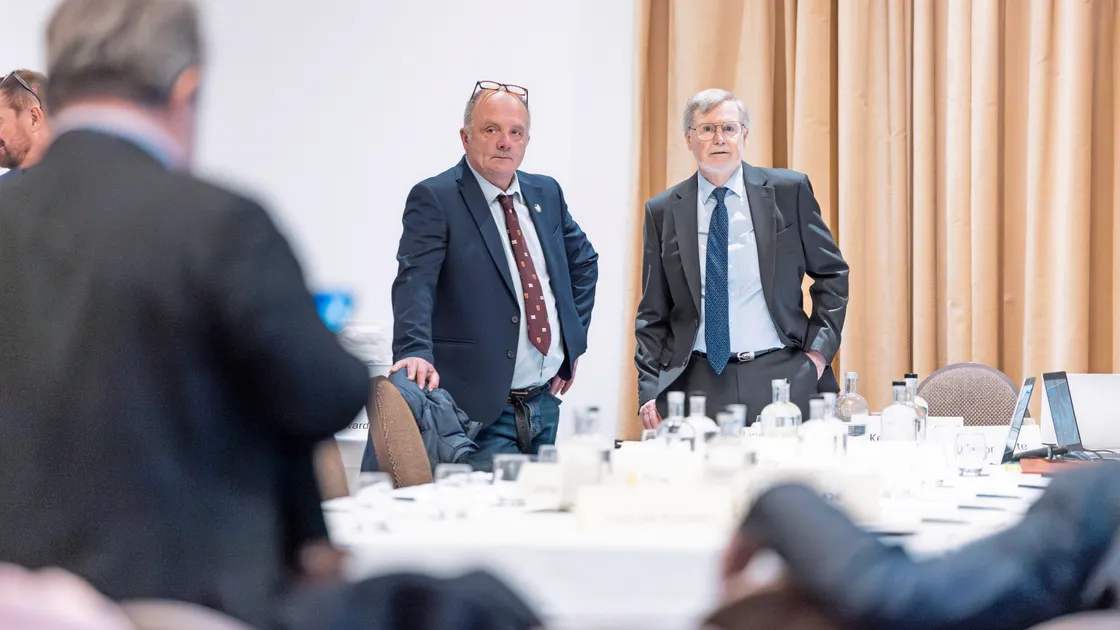
About 30 people attended the first session of the inquiry, held at St Pierre Park Hotel, many fewer than had been invited for the first of two general sessions on housing.
There was discussion about whether the IDP could deliver about 1,500 additional homes which the States has said would be necessary to meet demand.
Mr Nobes believed half the sites identified for development would end up not going ahead and called for a back-up list to be put together.
‘If I’m just looking at my own company [Infinity], we’ve got one site, the Mallard, which has been given permission in principle,’ he said.
‘After that site finishes, we have got nothing else to look at. We’ve got nothing else that’s been created by this IDP. I think that can be said by most developers. There is no more low-hanging fruit.’
Mr Prow said he was continually asked why old hotels, such as St Margaret’s Lodge and St Martin’s Hotel, could not be developed ahead of greenfield sites.
But Mr Nobes described some of these as ‘pie in the sky’ sites, often because land owners expected unrealistic prices for the land.
‘You’ve got Braye Lodge, for example, which is kept at the minute by the Medical Specialist Group for car parking,’ he said.
‘The likelihood of that coming forward in the short term is zero.'
Mr Nobes said that he understood that the owners of other derelict sites were holding back, seeking unrealistic returns.