

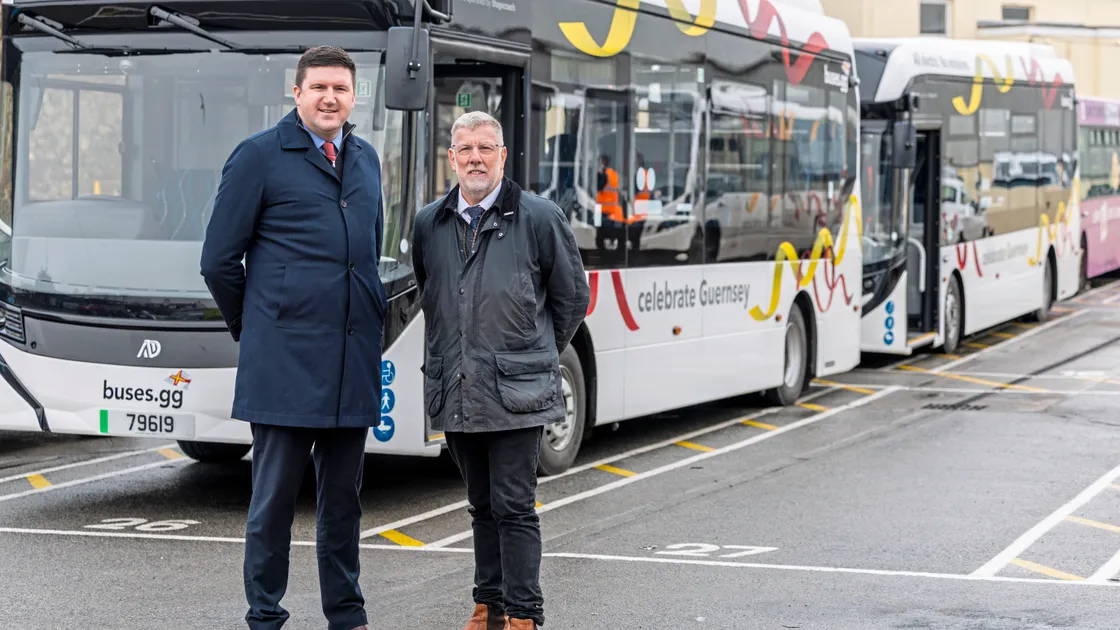
Environment & Infrastructure president Adrian Gabriel, who attended a media showround, initially refused to say how much the committee had spent on them, saying the figure was ‘commercially sensitive’.
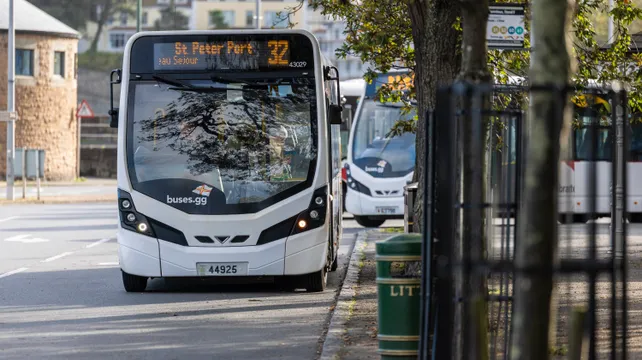
But a few hours later his staff revealed that the buses had cost in the region of £350,000 each – which might represent a good deal for the taxpayer, as Guernsey Press research has revealed that a new Alexander Dennis Enviro100ev would certainly be costing more than £400,000.
Diamond Bus, based in Staffordshire, bought six buses of the same model last summer for £425,000 each.
Stagecoach, also the island’s bus operator, in west Scotland bought 12 of the models in 2024 in a £5m. investment, suggesting each bus was more than £416,000.
Stagecoach was keen to talk about the long-term benefits of electric buses.
‘It’s important we focus on the whole life cost of the vehicle,’ said managing director Peter Knight.
‘There is a higher initial cost, but there are cost savings over the life of the vehicle, because they don’t need as much heavy maintenance and there’s less vehicle downtime.’
The buses, the first electric vehicles permanently added to the local bus fleet, will not be in service for another few months, as all drivers will need to be trained.
The company also needs to finalise some of the infrastructure and engineering training before the buses are put into service.
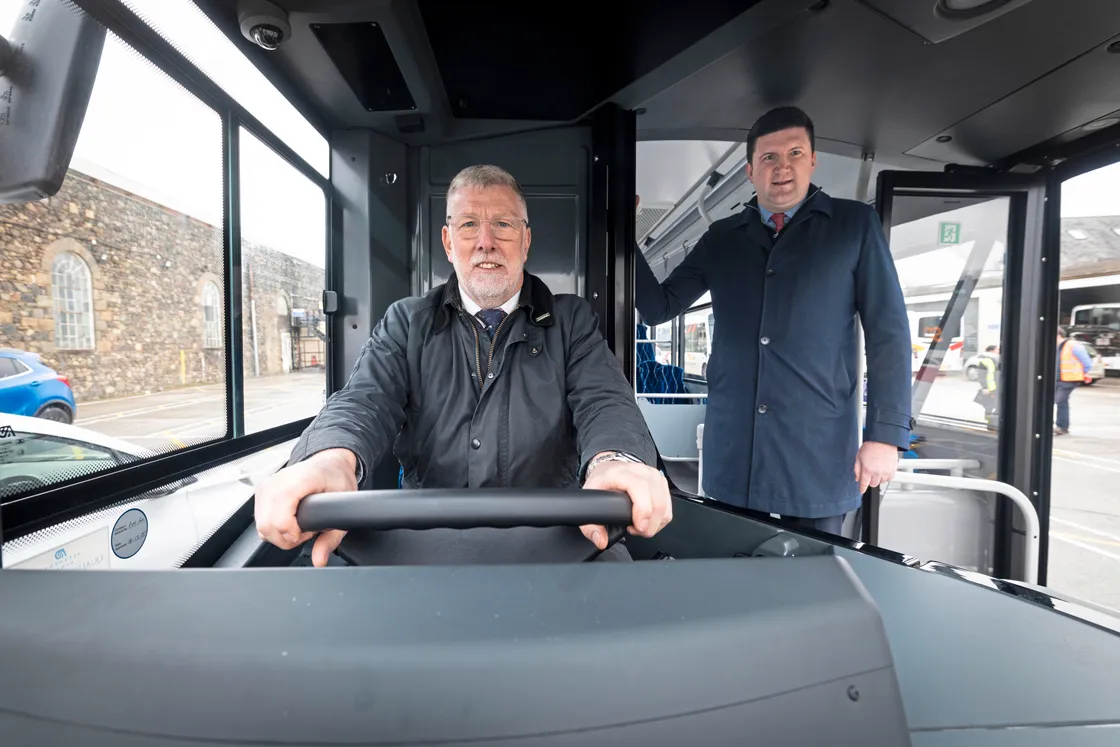
The States has stated an intention to move to a zero-emissions fleet by 2030. Three years ago almost to the day the States trialled a different kind of electric bus, a Yutong E9.
Deputy Gabriel, then vice-president of the committee, said at that time that the purchase price of the buses was less important than the States’ commitment to the environment.
Mr Knight said it was noticeable how the journey was quieter and smoother.
‘I think it’s going to go down really well with bus users, that’s before we even get to the zero emissions and no carbon emissions from the tailpipe,’ he said.
‘This is the future of bus travel and bus services and we look forward to evaluating and understanding more about these vehicles and how they perform in Guernsey over the coming months and years.’
‘The noise emitted by the vehicle is an artificial noise so customers know a bus is coming,’ said Mr Knight.
‘We have almost 1,000 electric vehicles in our fleet in the UK – it’s tried and tested technology.’
The model of bus is one of the ones which was trialled in Guernsey in 2024.
It has a range of 300 miles, and is equipped with audio visual next stop announcements. The longest Guernsey route is 150 miles.
The States has a bus replacement programme which is in the delivery phase of its capital projects.
‘We’ve made the decision to purchase these two, evaluate how well they work before we carry on with the bus replacement programme, but we’re really confident they will work well,’ said Deputy Gabriel.
‘It’s up to Stagecoach which routes the buses run, but I hope they will be on every route in rotation, so that drivers can get used to them and passengers can benefit from them.’
Stagecoach started operating local bus services in April last year, having been announced as the successful tenderer for the contract in September 2024, when it was said that savings would result for the taxpayer.
Last week the States announced a proposed 10p per journey rise in fares.
You need to be logged in to comment.