
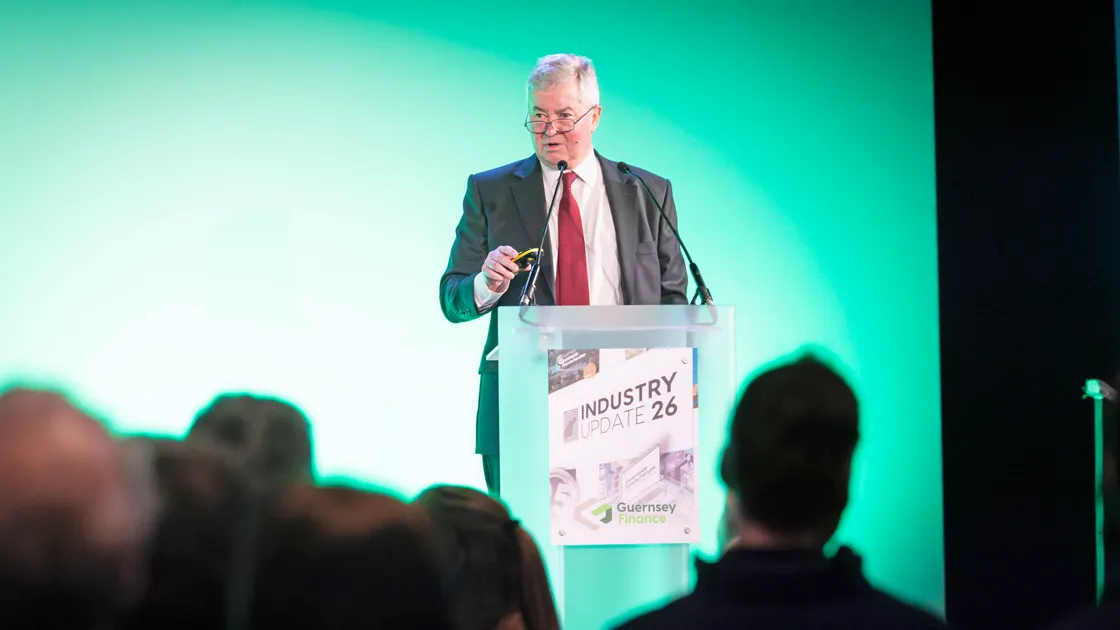
General Sir Richard Barrons, a retired soldier who went on to become Deputy Chief of the Defence Staff, was in the island yesterday to offer a concerning prognosis on the development of war across the world, and he highlighted how investment from the private sector, particularly into technology, would enable Britain and its partners to maintain a safer deterrent.
Sir Richard was one of the co-authors of the UK Strategic Defence Review, published last year.
The UK government has accepted its 62 recommendations, but there is a funding gap of some £28bn in meeting its requirements, which he said would be more likely to come from private investment, some of which could be through Guernsey, than the UK taxpayer.
‘If we’re going to do military transformation in the most profound way for 150 years, it will be based on innovation that comes from the private sector,’ he said.
READ MORE: ‘We need to talk about the price of deterrence’
‘That’s what you do, and it can be in many forms. So we need you to participate as Guernsey finance in this partnership, which takes private capital, seeds innovation, which by design, works in the military and is geared to the prosperity driven by an export-led market.
‘That funding gap is going to be closed in part by you [the private sector] putting your money into defence. When you do that for a profit, that’s got to be a good thing.
‘We need to acknowledge that in this difficult world, it’s a global competition, and there are big prizes for those that innovate their way through this, and great disasters for those who exist in a world of denial, or proceed with great caution. Essentially, I’m confronting you with a choice.
‘The true power of any country is the private sector. So what we’re talking about to keep us all safe is a partnership between what the armed forces do, what governments do, and the power of the private sector. And to be frank, that partnership is going to be defined partly by good people like you deciding to make collectively good decisions.’
Sir Richard said that a strong deterrent was critical for the country as advances in technology transformed the way that war would be conducted in the future.
‘A partnership with industry is profoundly important to deterrence, and the key thing is, in the world that we live in now, military force must constantly evolve at the speed of innovation, which comes from the private sector that you invest in.
‘Our opponents must know that should they choose to try and harm us, they will get such a thumping back that it more than outweighs any potential advantages that they conceived of having.
‘That thumping back might be a missile, almost certainly it’s in cyber, but it’s going to be in culture and economics and money and law and banking and property, all the things you do. That’s how Russia’s oligarchs’ eyes water at the prospect of taking on us and our allies.
‘And the reason that we need to think like this is that we must reset deterrence in order to avoid the horror and the costs and the consequences of deterrence failing, because we were feeble at it, and ended up having to fight with all the stuff that comes with that.’