
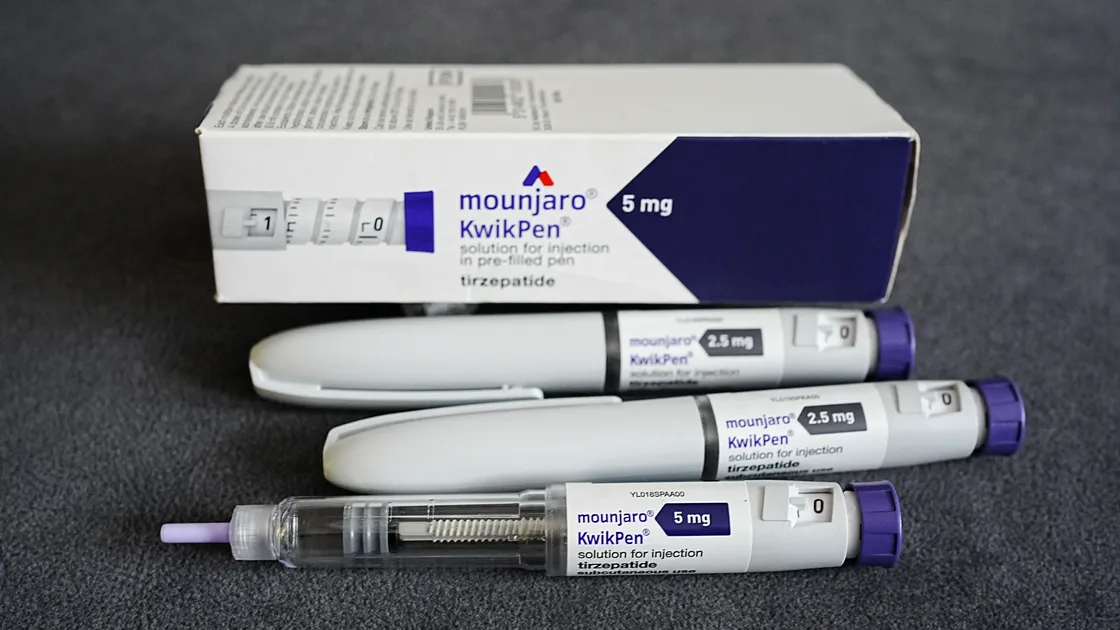
The appetite-suppressant injections are available privately in the island and are proving increasingly popular.
Some doctors’ surgeries have revealed that they have more than 500 patients paying privately for drugs like Mounjaro and Semaglutide.
The Health & Social Care Committee successfully applied in last year’s budget process for funding for a pilot study into the use and benefits of these drugs for a cohort of local residents who fulfil a defined criteria for obesity-related health issues.
The project is scheduled to start sometime this year and will run for three years.
‘The goal is to assess local outcomes, including the wider socio-economic benefits to the States,’ said HSC president George Oswald.
Currently he said that his committee had no budget for prescribing these drugs for weight loss, only for type 2 diabetes patients.
Deputy Oswald said that he was aware that some people would believe that arguably ‘lifestyle’ drugs should not be funded by the taxpayer, but he said he was ‘a strong advocate’ for their wider roll-out, saying the drugs have the potential ‘to open up a whole new era in improving the health and wellbeing of islanders’.
‘It is important to note that the taxpayer is already bearing the, sometimes very significant, cost of obesity-related health complications.
‘Our Public Health colleagues recognise the potential wider benefits of rolling out this medication to more of our population at risk.
‘By the time of the completion of the trial, I hope we have firm evidence that we can take to the negotiating table with our Treasury colleagues, as a genuine “spend to save” long term plan.’
Deputy Oswald said that increased use of fat-loss drugs would not mean the abandonment of traditional advice for controlling weight, and HSC would continue to offer a weight management service.
‘But there is evidence that for some individuals, conventional measures, and medicalisation for those at risk and in need, should be used together.’
HSC has previously called for more to be done to bring more people into the healthy weight BMI range. In 2023 it was estimated that nearly six out of 10 islanders were overweight or obese.
It is agreed that while weight-loss drugs can be of use, they can only be prescribed for a restricted period and healthy changes to lifestyles were also needed to keep weight off.
The NHS in the UK can offer the drugs on prescription but only to a limited range of patients with serious weight-related conditions.
It is believed that nine out of 10 users in the UK are buying the drugs privately, paying around £150-£350 a month for them.
The think tank the Tony Blair Institute for Global Change has said that improving access to weight-loss drugs could pay for itself within a decade and save the NHS a cumulative £50m. by 2050.
“The cost of treating obesity may be high but the cost of not treating it is higher,’ said Dr Charlotte Refsum, director of health policy at the Tony Blair Institute.