
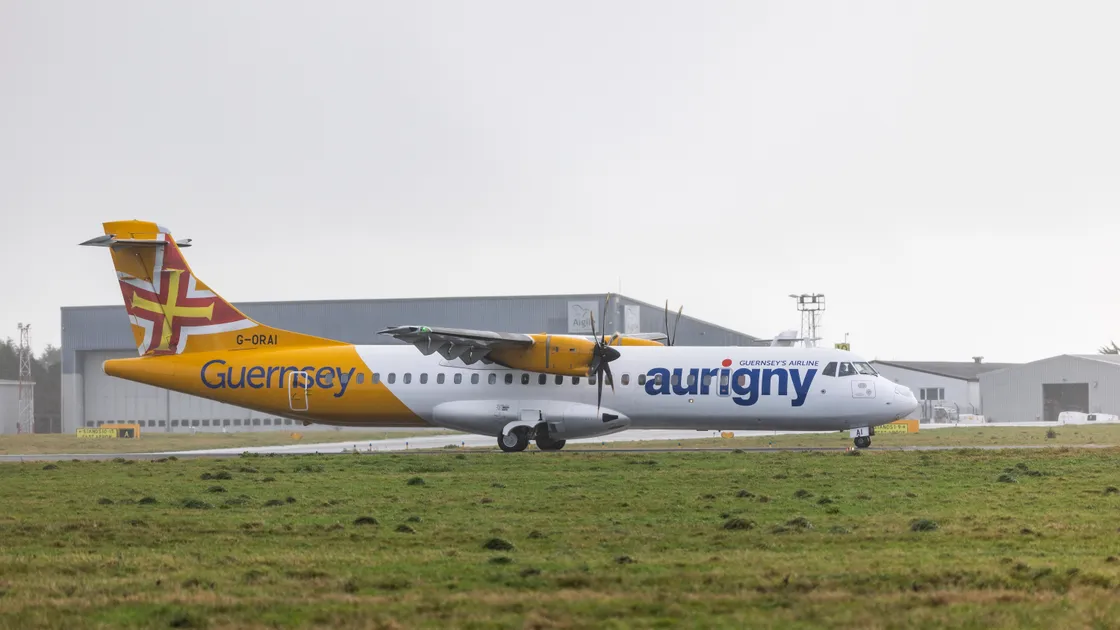
One plane was damaged by a third-party ground handling company in Manchester last Tuesday.
Following an assessment of the damage by Aurigny’s engineering department and by the aircraft manufacturer, it limped back to Guernsey on Friday night and, following repairs, re-entered service yesterday.
Then on Thursday evening another plan was left immobilised after it experienced a failure of what is generally a very resilient engine part on arrival at Gatwick. It has taken time to secure the required part and the plane is due back into service on Wednesday this week.
Aurigny said it overcame the loss of the first plane from the resilience built into its own schedule.
No flights were affected other than the return from Manchester on that day.
Aurigny was scheduled to operate 36 flights yesterday and two were impacted due to aircraft availability.
‘Over the last week, our resilience has been stretched – however, safety always remains our number one priority,’ said chief operations officer Philip Smallwood.
The airline is midway through its annual winter aircraft maintenance programme, which entails each of its five ATR aircraft, in turn, being withdrawn from service to undergo heavy maintenance checks, some of which are carried out at third-party maintenance facilities off-island. These mandatory checks can leave aircraft unavailable for anything between 10 days and four weeks. G-PBOT is due to return today after four weeks out.
‘Scheduled annual maintenance of aircraft impacts aircraft availability for all airlines, large or small,’ said Mr Smallwood.
‘At Aurigny, we compensate for the planned non-availability of one of our aircraft by reducing the number of scheduled flights during winter to ensure we still have a standby aircraft on the majority of days, even though we have one fewer aircraft at our disposal. In this way, when an unforeseen event occurs that impacts our operating fleet, we have recovery options available.’
Aurigny has had extra pressures this winter following the collapse of Blue Islands, after which it took on Southampton flights and inter-island services, but said that this has not impacted on punctuality and reliability.
‘With a schedule design that typically requires three or four operating ATRs, depending on the day of the week and time of year, and one standby aircraft, our aircraft standby ratio is higher than any other UK carrier,’ said chief commercial officer Philip Saunders.
‘It is unfortunate that two of our operating aircraft have been impacted by irregular events at the same time as our winter maintenance programme.’





You need to be logged in to comment.