

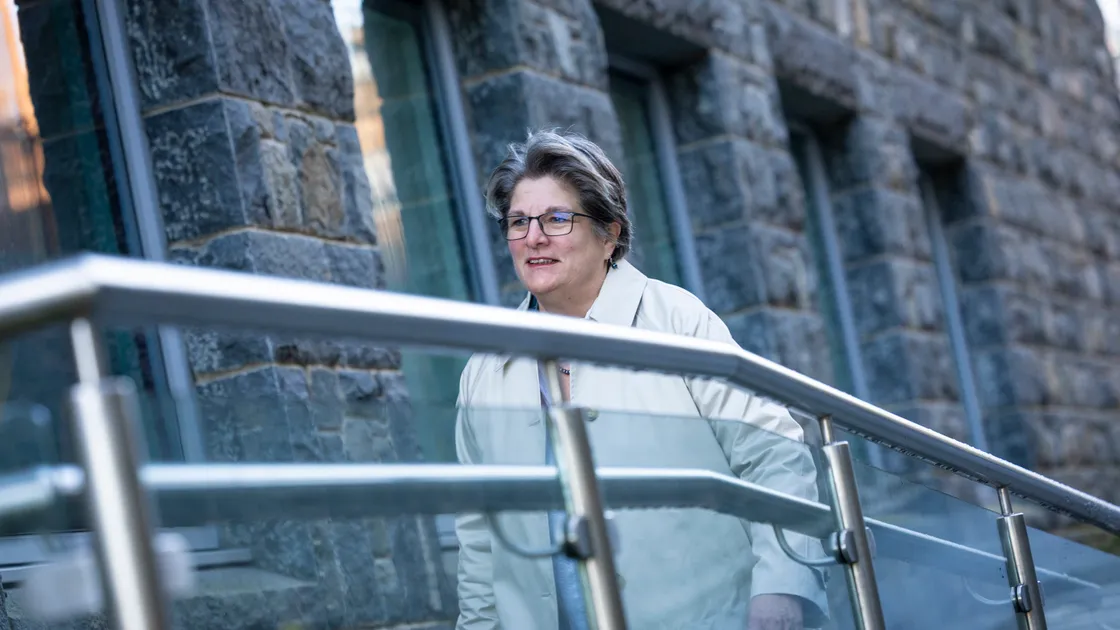
She wrote to Policy & Resources with her concerns over the weekend, after it was announced that the commission would be made up of five people based in the UK who have no experience of working in the Bailiwick.
P&R said the panel – three former politicians, an academic and a retired civil servant – was of ‘exceptional calibre’ but Deputy Ozanne feared that it would lack the local knowledge and understanding necessary to draw up recommendations acceptable to the islands.
The commission has been given 18 months and a £500,000 budget, almost entirely funded by P&R, to review Guernsey’s relationship with Alderney and Sark.
‘I am very concerned about the lack of anyone with on-island experience, particularly in government, in the recently-announced Bailiwick Commission,’ said Deputy Ozanne.
‘Notwithstanding the appointed commissioners’ exemplary professional experience, both in UK politics and constitutional affairs, I think it was very short-sighted and a great shame to have no one who has ever lived or worked in the islands. I can think of several who would have held the respect of all the islands, even if in some cases they no longer live here.’
P&R president Lindsay de Sausmarez said yesterday that it was agreed in advance that the commission should be made up of people with ‘relevant experience but preferably from outside any of the three islands of the Bailiwick’.
Jo Reeve, the States’ director of international relations and constitutional affairs, said Guernsey, Alderney and Sark had picked ‘some outstanding commissioners from an excellent shortlist’.
Deputy Ozanne believed there were two reasons why the commission should have included members with experience of government locally.
‘Firstly, the results of this important piece of work need to be bought in to by islanders. History shows that we don’t tend to take kindly to Brits, as they will be perceived, telling us what to do,’ she said.
‘Secondly, the commission is not just undertaking an academic exercise but one that needs to work practically and culturally. Without someone on the commission who truly understands our islands’ nuances and differences, particularly of our unique parliamentary systems, it’s going to be hard to see how we can ensure that any solutions proposed are workable.’
Deputy Ozanne had not given up hope of the commission co-opting one or more additional members with experience of government locally. But P&R showed no sign of acquiescing and said the commissioners were appointed after a thorough process.
‘Each of the three islands’ lead committees had the opportunity to submit names of candidates with relevant knowledge, experience and skills,’ said Deputy de Sausmarez.
‘Initially, a long list of potential candidates was drawn up by the three islands working together.
‘Following responses to invitations from the Bailiwick to apply, the three lead committees selected and agreed the final short-listed candidates who were approached with formal offers of appointment and have agreed to be commissioners.’
Mr Reeve said it was ‘a once-in-a-lifetime piece of work to get the Bailiwick ready for the challenges of the modern age’.
There have also been concerns raised about the £500,000 cost of the project. States’ communications did not initially mention the budget for the commission, which was only included in its terms of reference, and further questions were asked by the Guernsey Press.
It was then revealed that the commissioners would be paid by the day, and their individual contracts were still being negotiated, though the basic rate had been set by reference to a similar commission on the constitutional future of Wales.
Mr Reeve said that the budget was a budget, not a target, and he also highlighted the cost implications of not doing the work.
Each member of the commission is expected to commit 50 days to the task over the next 18 months.
Conservative Sir Bob Neill has had significant connections with the island, particularly over Brexit, and former SNP and Scottish Conservative Lisa Cameron was a member of the Channel Islands All-Party Parliamentary Group during her nine years at Westminster.
Former Welsh First Minister Lord Carwyn Jones visited the island for a British-Irish Council summit in 2010 and again in 2018. They are joined on the commission by constitutional academic Professor Caroline Morris and former senior UK civil servant Philip Rycroft.
Bailiwick-wide health and social care system should be the ‘key outcome’ of the commission’s work
The prospect of the Bailiwick Commission bringing the islands together under a health and social care umbrella is an early surprise from public feedback on its constitution and membership.
Both the Speaker of Chief Pleas in Sark, and the chief executive officer of St John Ambulance and Rescue Service in Guernsey, have raised the idea of a Bailiwick-wide health system on the back of discussions about the commission.
Commenting on social media, Paul Armorgie in Sark urged that a Bailiwick-wide health and social care system should be the ‘key outcome’ of the commission’s work – ‘shared, sustainable, protecting people, dignity, and access to modern care everywhere,’ he said.
And Mark Mapp from the Ambulance and Rescue Service, who in the past couple of years has had to extend his organisation’s remit by operating in Alderney, said he hoped that ‘one of its most important outcomes is a pathway toward a Bailiwick-wide health and social care system – a shared, sustainable approach that protects what matters most people, dignity, and access to contemporary care wherever you live in the Bailiwick islands.’
‘This is a moment to be ambitious in the best way,’ Mr Mapp said, ‘grounded in community, shaped by lived experience, and focused on fairness. If we keep people at the centre and take the long view, we can create a model of care that truly serves every Bailiwick community.’
The commission’s terms of reference make no mention of healthcare but do mention the delivery and funding of services generally.