

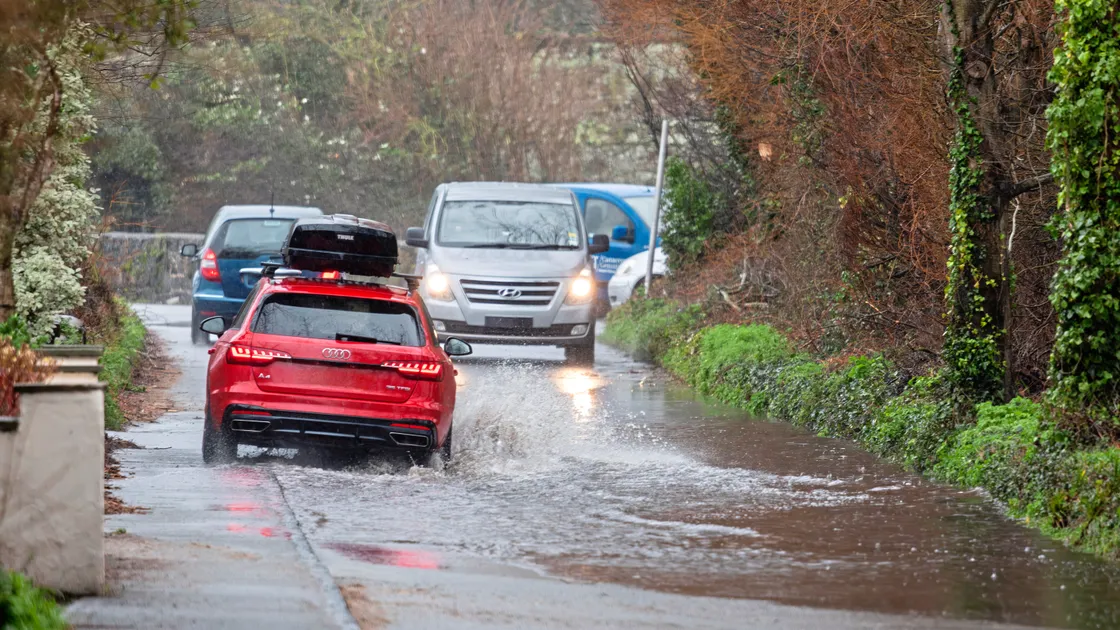
One Jerbourg resident said his cesspit would usually be emptied about once every four weeks but in the last two weeks it had been emptied eight or nine times.
‘The minimum that was taken was designed at two loads,’ he said.
‘On one occasion the guy said he was going to make sure it was totally empty and he took away three loads, and it overflowed again the next morning.’
The location of the property, lying below several fields and close to two or three douits, could have been to blame for the excess water reaching the cesspit but local drainage firms say they are reporting a higher than average number of calls from people who have cesspits filling up much more quickly than usual.
George De Carteret has been running Drain Away for 25 years. He said that while he would usually expect to get calls after some rain, the last few weeks have been exceptional.
‘Usually after you’ve had a bit of rain you get a few phone calls, but never as many as we’ve had,’ he said.
‘It’s basically all we’ve been having calls for. We’re getting one or two a day.’
He estimated the company had dealt with 25 cesspits since December and this week alone it will be attending to six more.
‘And there’s two next week, up to now, but I’ve already had messages about looking at other cesspits.’
The high volume of water has literally increased the pressure on cesspits, he said.
‘It’s finding the weak spots,’ he said.
To fix the cracks someone has to get into the cesspit to carry out a survey and then holes are drilled into the wall into which a polyurethane resin is pumped to provide a seal.
Drainforce director Nathan De Mouilpied also said his company had been unusually busy.
‘We have received a steady stream of inquiries and callouts from homeowners who say they are now needing to empty their pits far more frequently – sometimes every day rather than their usual collection.’
While prolonged rainfall and a high water table can put extra pressure on the system and lead to faster filling, the wet weather often exposes underlying problems with the cesspit, he said.
‘We are finding problems such as small cracks in older tanks, defective joints or pipe connections, and covers that are not properly sealed, all of which allow groundwater or surface water to enter the pit.’
While leaks can sometimes be remedied with a specialist seal, that can just cause the problem to migrate elsewhere.
‘Water will migrate to the next weakest point. In these situations, applying a full coat of render to extend the pit’s longevity is typically the most effective course of action – unless, upon inspection, we determine that the pit is no longer fit for purpose.’
The advice to cesspit owners is to get the system checked if they notice it filling faster than normal.
‘Simple measures such as ensuring covers are properly sealed and that surface water is directed away from the tank can make a difference, but in some cases repairs or upgrades will be needed,’ said Mr De Mouilpied.