

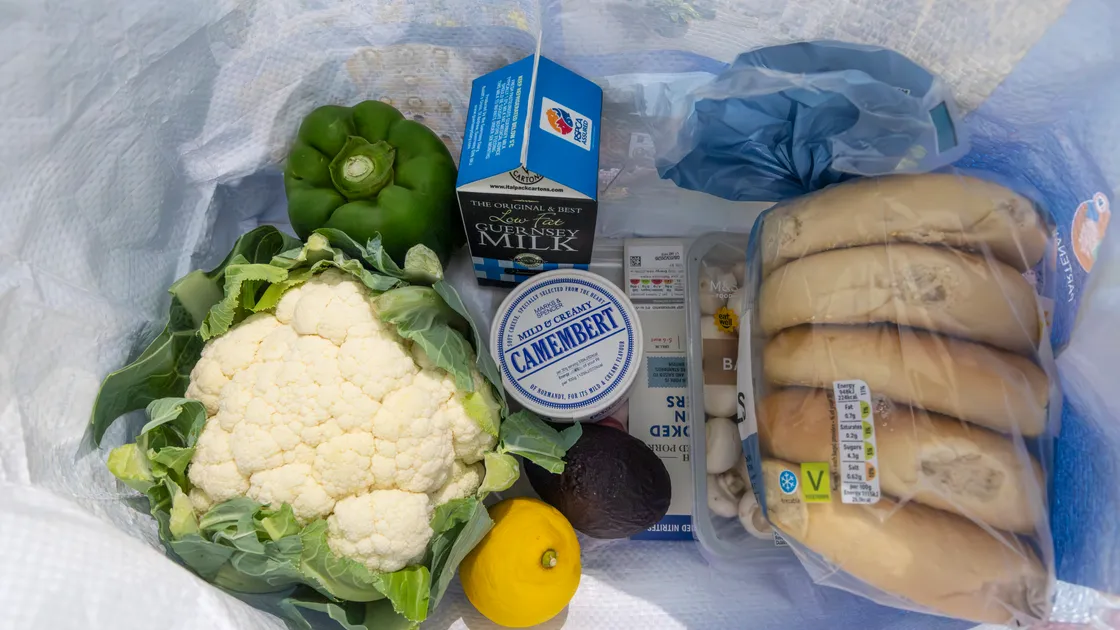
The Assembly backed including food by 24 votes to 12 after six hours’ debate on Policy & Resources’ latest proposals on tax reform.
That vote also removed an alternative option which would have kept GST off food but set a rate of 6% on all other goods and services.
P&R had warned that deferring a decision on food would add another year’s delay to the introduction of GST-plus.
It has already been pushed back to 2028, although it still faces final votes in a wider debate about tax and spending policy planned for July.
The senior committee told the States that excluding food from GST would mainly benefit the wealthy, and that a higher rate of 6% on other goods and services could make the overall GST-plus package harsher on low-income households.
‘In the last term, I voted to look at this because my instinctive belief at the time was that putting GST on food was not right,’ said P&R member Yvonne Burford.
She understood the moral case to exclude food but said the practical case for doing so did not stand up to scrutiny.
‘The fact is that the practical case is that a flat rate of 5% means that people on low incomes would actually be better off,’ she said.
‘If you are standing in the middle of the Coop, you are not going to be warmed by the moral case so much as you will be by the practical case, and being able to put those things in your basket.’
Deputy Burford also warned that applying different rates of GST, rather than a single flat rate to all goods and services, would make the system more complex and add costs to retailers, who would inevitably pass them on to consumers.
P&R’s treasury lead, Gavin St Pier, who led the debate, presented the vote on food tax as ‘a head over heart decision’ and asked the Assembly to accept the counterintuitve evidence that including food and keeping the flat rate to 5% would be better for less well-off households.
But Aidan Matthews was unconvinced and claimed it was ‘simply morally wrong’ to charge GST on an essential for life, which was why many places with consumption taxes applied a zero rate or lower rate to food.
Deputy Matthews said it was ‘disingenuous’ to claim that zero-rating food would benefit wealthy people the most and admitted he was ‘bristling’ at the suggestion of including food to make the administration of GST less complex for the States.
As well as deciding to include food at 5%, deputies backed P&R’s suggestion to look into a rule change which would require a two-thirds majority in the Assembly, rather than a simple majority, to increase the rate of GST in the future.