

Invasive marine species pose one of the greatest threats to biodiversity globally, and have a significant impact on the economy. Locally, this could include damage to boats, pontoons and harbour infrastructure, as well as limiting fishing and seafood production.
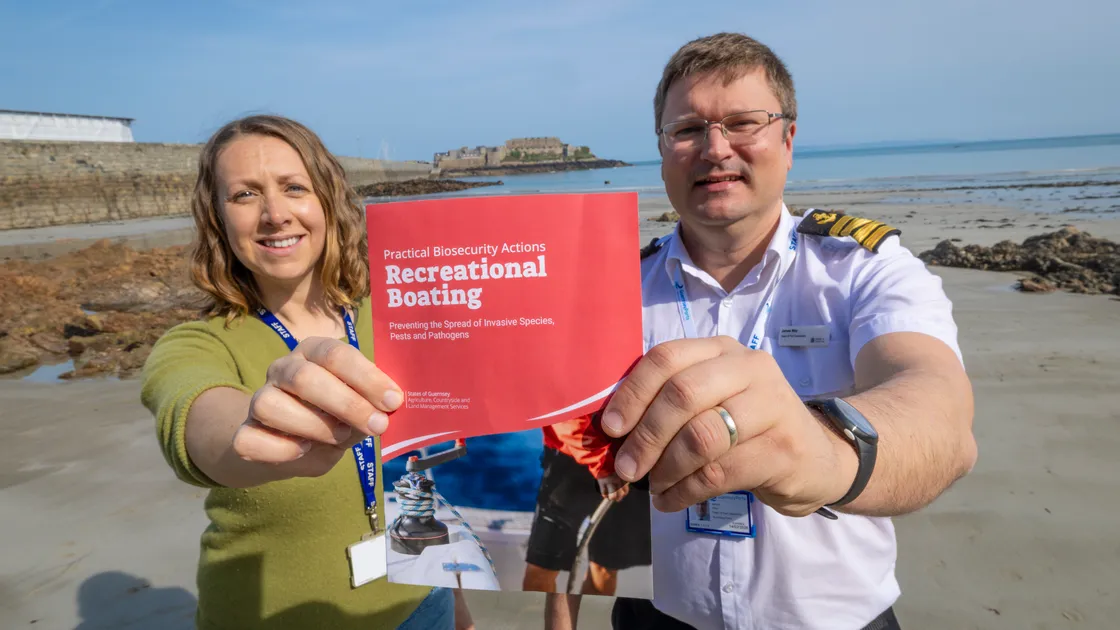
A Marine Biosecurity Guide, produced by Agriculture, Countryside and Land Management Services and Guernsey Ports, in collaboration with marine users, aims to raise local awareness and provide everyday marine users with some simple preventative actions.
‘There are many marine invasive species already in Guernsey’s waters,’ said Julia Henney, senior natural environment officer.
‘And once they’re here, they’re almost impossible to get rid of. Examples include Japanese wireweed, which I’m sure many locals are already familiar with – it’s an invasive seaweed that tangles around swimmers, oars and props – horrible stuff.
‘But there’s a whole host of things on the horizon, that are potentially more invasive, that we want to prevent from coming in, including American lobster or Japanese skeleton shrimp.
‘A lot of them come from Japan, China, New Zealand, or Australia – because their climate is quite similar to ours, we find they can survive our environmental conditions, but don’t have the same sort of predators or diseases that will restrict their population growth.
‘The best way to deal with them is to prevent them – by implementing some of these small, practical actions that the whole community can take. We’re seeing a huge increase of invasive species spreading worldwide, because there’s so much global trade. The world’s become a smaller place. It’s easy to get to new places now, which means it’s also easier for those invasive species to travel, too.’
The guide, published today, provides practical guidance for recreational water users, boaters and advice for commercial fishing, shipping and other businesses operating in and around the sea.
‘From a ports point of view, we get excessive growths of bio-foul, if you like, on key bits of infrastructure, like our pontoons,’ said James Way, harbour master of Guernsey Ports.
‘And then we have to spend time and money cleaning them. Six-figure sums could be incurred in removal costs to prevent operational disruption. This guide is all about little things that people can do, and a way to raise awareness of things people might not necessarily think of. If local boaters are moored in a marina in France for a couple of weeks, for example, there’s all sorts of things that might attach to the bottom of their boat that they then bring back to Guernsey. So if they consider that, and book their boat in for a lift-out and proper clean when they’re back, that could make all the difference.’
He said the risk is only going to increase as the sea temperatures rise. Guernsey Ports will develop operational procedures for prevention and continue to train its staff to identify and report any such species.
‘As the harbours are likely to be invasive non-native species hotspots, we have a duty of care to our bailiwick to ensure we’re doing what we can to reduce wider impacts.’
One of the key messages is to check, clean and dry your equipment, boat and clothing after leaving the water and remove any animals, plants and debris, leaving them at the site. Some species can survive over two weeks in damp conditions, so allowing items to dry for as long as possible is particularly important. The guide also encourages people to report any invasive non-native species they might spot.
Booklets and leaflets will be found at key local marine areas, and the full guide can be found at gov.gg/marinebiosecurity.



You need to be logged in to comment.