
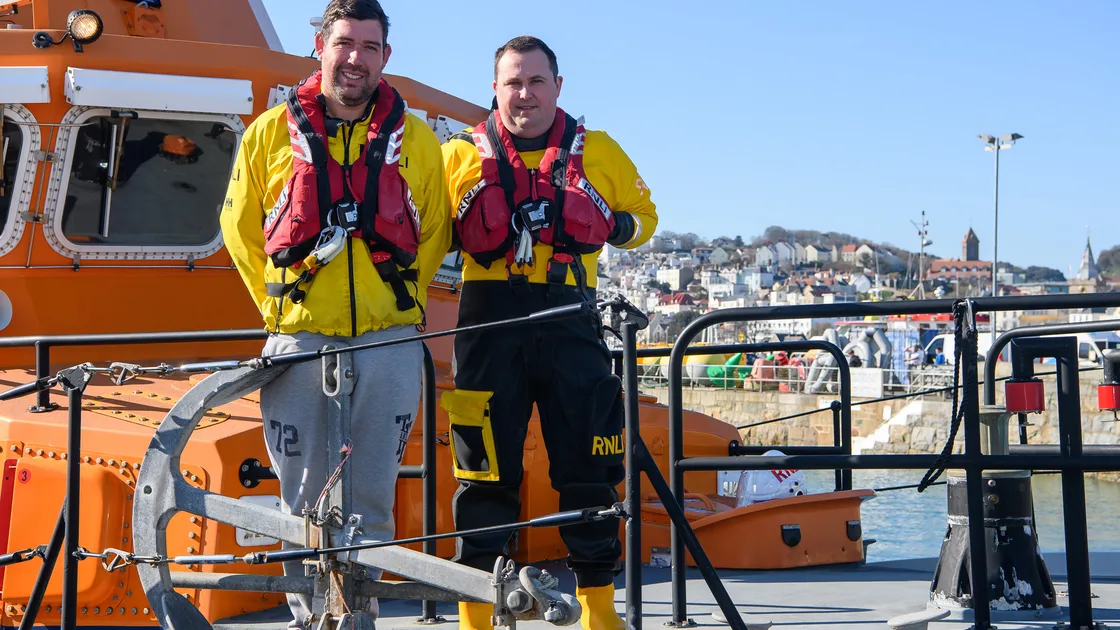
Jack Lucas and Jack Sparkes have both completed, and passed, their training to take charge of the inshore lifeboat in emergency situations.
‘We’ve now gone from four people qualified to six,’ said Mr Sparkes.
‘A lot of us have kids or our own boats so for times like in school holidays, it means there is more resilience and cover for someone to take the boat.’
RNLI volunteers go through basic training and then as they gain more experience, can specialise in different roles around the boat.
The ‘Jacks’ specialised in helming the inshore lifeboat.
They did all the pre-course work and then at the beginning of the year went on a training course in Poole where they performed boat handling and other exercises.
‘It’s different scenarios and situations, it could be towing, going alongside other boats, or searching for people,’ said Mr Lucas.
New recruits Luke Robert and George Melbourne have also both passed their tier two assessments on the ILB and ALB.
‘For Guernsey, it means that when the pager goes off at three o’clock in the morning, and the crew come down, there is a better selection of people to fill different roles,’ said lifeboat operations manager Richard Evans.
‘Generally we train about three times a month, and when we’re working up to an assessment, we’ll add extra sessions.’