

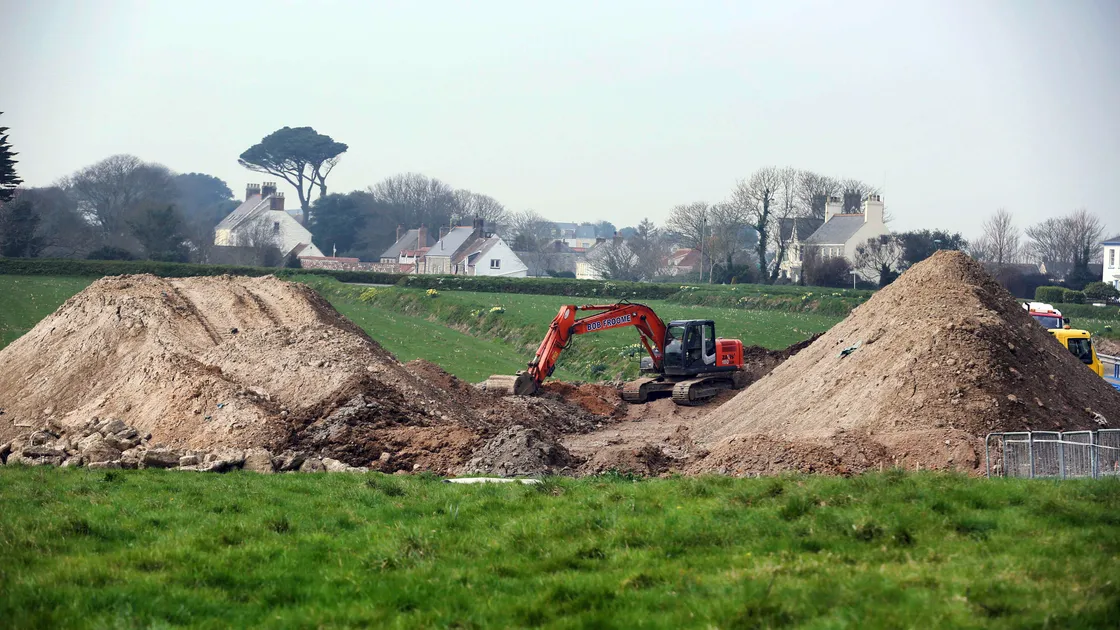
The States Trading Supervisory Board submitted a budget request yesterday for £16.5m. to excavate and export 16,000 tonnes of material containing the dangerous chemical PFOS which was previously used in fire-fighting foam.
The provisional cost of the clean-up was just £3m., when it was included in an improvement project at the airport 15 years ago, and was later estimated at £5m.
The board has approved a business case and identified a preferred contractor to excavate and export the soil, which has been stored in a bund near the entrance to the airport since 2012, but the explosion in cost means that funding the scheme requires the approval of the States Assembly.
‘The containment of this soil has been effective in preventing this historic pollution from entering the environment. However, it was only ever a temporary answer, to allow time for permanent solutions to be explored,’ said STSB president Mark Helyar.
‘We have been through a thorough evaluation of all currently available options and identified the most appropriate solution. We now need to progress that, given the evidence that the membrane containing the soil has reached its end-of-life and is beginning to fail.’
The Policy & Resources Committee said that early cost estimates were based on limited data and broad assumptions and that further planning since then had revealed additional risks and technical requirements.
The increased expenditure estimate for dealing with the contaminated soil means that the final total cost of the airport rehabilitation project will be near £90m. and some £8m. more than originally budgeted.
The STSB hopes the Assembly will agree to debate its proposals in June. If they are approved, a planning application will be required, including an environmental impact assessment. Excavation of the contaminated soil and reinstatement of the bund is expected to take about 10 months.
‘To minimise the risk of any chemicals being released during this operation, and the subsequent transport of the material, this will be timed to avoid the winter months. The main works are therefore expected to begin in early 2027,’ said the board.
The bund holding the contaminated soil is operated under a waste management licence. Regular monitoring has indicated that it is beginning to fail.
Although there is believed to be no immediate risk to health, as the bund is outside the island’s drinking water catchment area, the board warned that the continuing presence of the contaminated soil was ‘a significant pollution risk’ without further intervention.
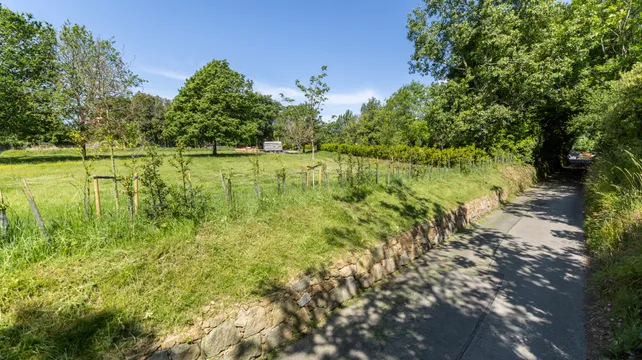
The contaminated soil was excavated from various locations around the airport in 2012 and the site of a freight plane crash in a field alongside Forest Road.
It was stored in a bund because at that time treatment solutions for PFOS contamination were not as readily available as they are today.
Once the material has been excavated, it will undergo a process known as soil washing, which uses an abrasive and water to rinse out contamination.
The dangerous chemicals are then extracted from the water by passing it through a carbon filter and destroyed by heat treatment.
The board assessed numerous other options before submitting its proposal to the States. These included creating a new containment cell, washing the soil in the island and using alternative technology.
‘These were discounted on the grounds of being more costly, technically not viable, unproven at large scale or not providing a suitable long-term solution to the pollution risk,’ it said.


You need to be logged in to comment.