

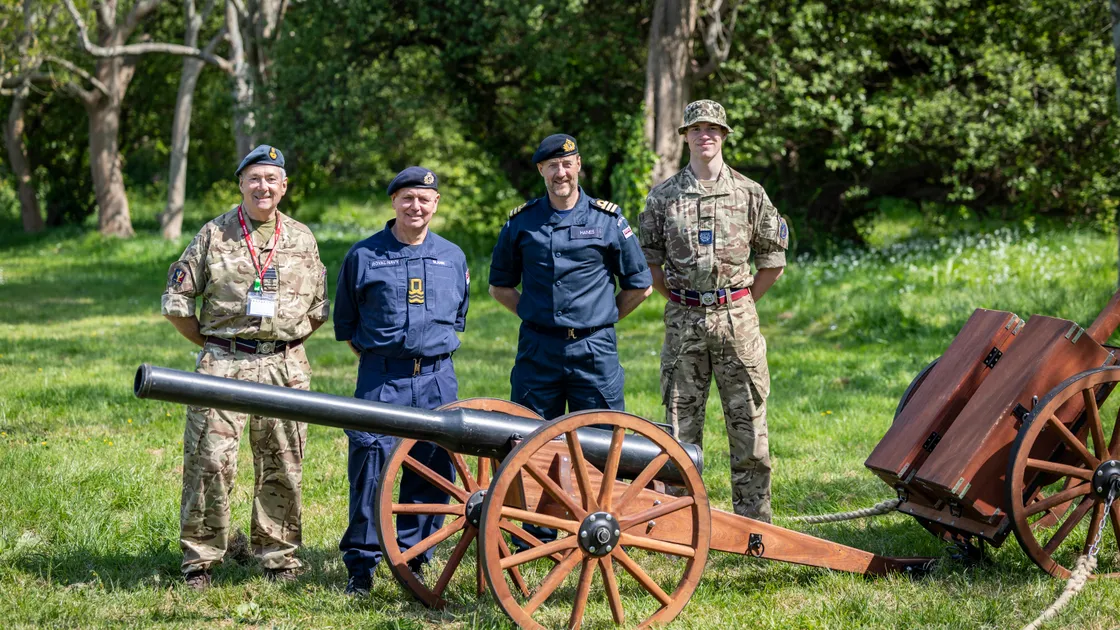
Visiting the island, the CEO of CCF for the Royal Navy and Royal Marines, Lt-Commander Russ Haines, inspected the 182 cadets on parade and handed out awards before an afternoon of activity.
The Royal Navy cadets spent the afternoon on the water with the Guernsey Sailing Trust, while the Royal Air Force and army sections were at Rue Mainguy navigating minefields, moving field guns and paintballing.
‘The cadets were fabulous, incredibly well turned out, very enthusiastic about what they’ve been doing. Whether they are new recruits starting out or senior cadets who have been away on lots of camps and courses, they’re still enthusiastic,’ said Mr Haines.
‘In CCF you have a progressive training syllabus. The older cadets teach the younger cadets so they get development opportunities like that, and it hopefully allows the adult volunteers, most of whom have day jobs as teachers or otherwise, to facilitate the delivery.
‘I’ve got a team of instructors, as do the army and RAF, who come and support the schools and adult volunteers in the schools to deliver the cadet activities.’
There is an aspiration by the British military to grow the number of cadets by 30% by 2030.
CCF is cadets in school, as opposed to community cadets who meet outside of school.
There are 160 CCF sections across the whole of the UK and Mr Haines is responsible for delivery of the Royal Navy and Royal Marine part of it.
‘It’s not a recruiting vehicle, but it’s to give young people experience, to build their resilience, develop their teamwork, leadership, communication skills, so whatever path their career takes, it’s setting them up for life,’ he said.
‘Originally it started in independent schools only, but has broadened out under the cadet expansion programme. We have more state schools that have CCF than independent schools, but there are more cadets in the independent schools because they’re bigger and more established.’
‘You could see their pride in actually putting on a uniform and representing their respective service and section they’re in.
‘Some of them had clearly had some great experiences, whether it be being on army camp at Okehampton, or flying camp, some have been on summer camp at Dartmouth. CCF is really good and giving young people opportunities that they wouldn’t necessarily get through sitting in the classroom doing academic things.’