
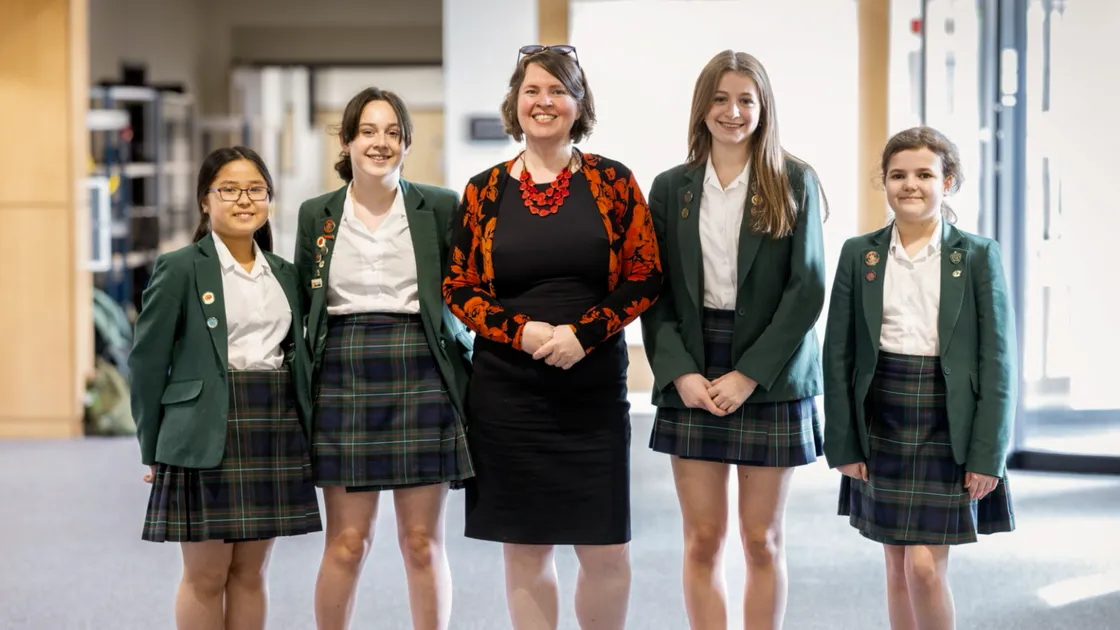
The inspection, which was executed under the UK Government’s British Schools Overseas scheme, assesses British international schools according to educational quality, leadership and governance, pupil welfare and safeguarding.
Unlike Ofsted, the ISI does not rate schools on a scale, but rather assesses whether a school does or does not meet requirements, and, as in the case of The Ladies’ College, exceeds its set standards.
‘I think I was a bit stunned,’ said principal Daniele Harford-Fox.
‘There’s no school that doesn’t get nervous about inspections, but also for us this is a new framework, and it’s much more rigorous than previous frameworks, so we went into it knowing that it was going to be really demanding and that we wanted to show the college in all its glory.’
Inspectors found that the school’s leadership, quality of education, safeguarding, and provision for students’ wellbeing and preparation for leaving school all met its standards.
The Ladies’ College was awarded the particular honour of an ‘exceeds expectations’ outcome for demonstrating leadership that had a clear and positive impact on pupils. The school is only one of four worldwide to have achieved that outcome.
‘There’s one quote in the inspection report itself that I really like,’ said Ms Harford-Fox. ‘It says, “Pupils are accepted on their merits and known and supported as individuals”, and I really care about that, because I felt like for a long time education has told children what they shouldn’t be, and that they should be more this or more that, and we’ve really focused on every girl knowing what she uniquely brings.’
Ms Harford-Fox also does not entirely separate the school’s success from its remaining the only single-sex school on the island, after the formerly all-boys Elizabeth College joined all other island schools in becoming co-ed back in 2021.
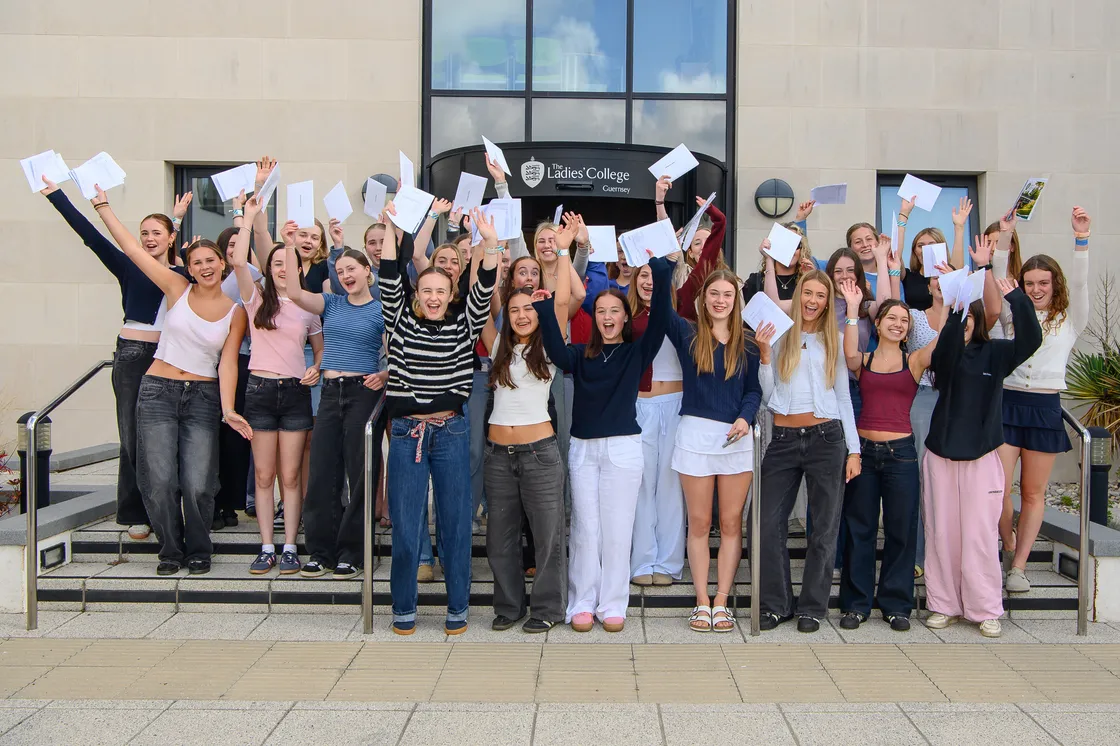
‘All the evidence points to the fact that girls do better in single-sex schools,’ she said.
‘They do better in academic outcomes. There was a big study last year looking at state and private girls’ schools versus state and private co-ed, and girls do 10% better at GCSE in single-sex.
‘But it’s not just academics. They’re way more likely to pursue something like further maths and engineering – we probably have more girls doing DT [design and technology] here than most schools combined – and they’re also more likely to have higher confidence and self-esteem.
‘For me, it’s really, really simple. Because there are no boys, they’re not defined as girls, so therefore they can figure out entirely who they are in all its complexity – whether that’s tree climbers or introverts, whether it’s the scientists or an artist – without thinking about whether they should be those things.’
While Ms Harford-Fox remains very positive about the college being a single-sex school, she also acknowledged that there are many naysayers who critique it for leaving girls unprepared for the reality out of school.
‘A lot of people say to me: “It’s a co-ed world, so girls need to learn how to live in a co-ed world”, and what I say is that they do live in a co-ed world. They have brothers, they have friends, they’re doing Music Centre on Saturday, they’re playing in teams, but for six hours a day, they’re not defined as girls,’ she said.
‘I think if you give girls that space when they’re developing, the evidence shows not that they’re less equipped, but actually that they’re more equipped. One of my favourite studies, for example, shows that girls who go to single-sex schools are more likely to negotiate their pay in their first job.
‘I think it’s that sense of finding your voice in that space before you’re told: “Oh, you shouldn’t do that because you’re a girl”.’
The inspection report appeared to evidence some of Ms Harford-Fox’s ideas, as inspectors particularly commended the college for its increasing number of pupils studying STEM subjects, in part through its promotion of influential female role models. Inspectors also observed that students leave the school well-prepared for life outside its walls.
‘The curriculum prepares pupils effectively for employment or further study and this can be seen in their diverse choice of university courses or careers when they leave the school,’ said the report. It also noted that pupils received ethical, cultural and civic awareness.
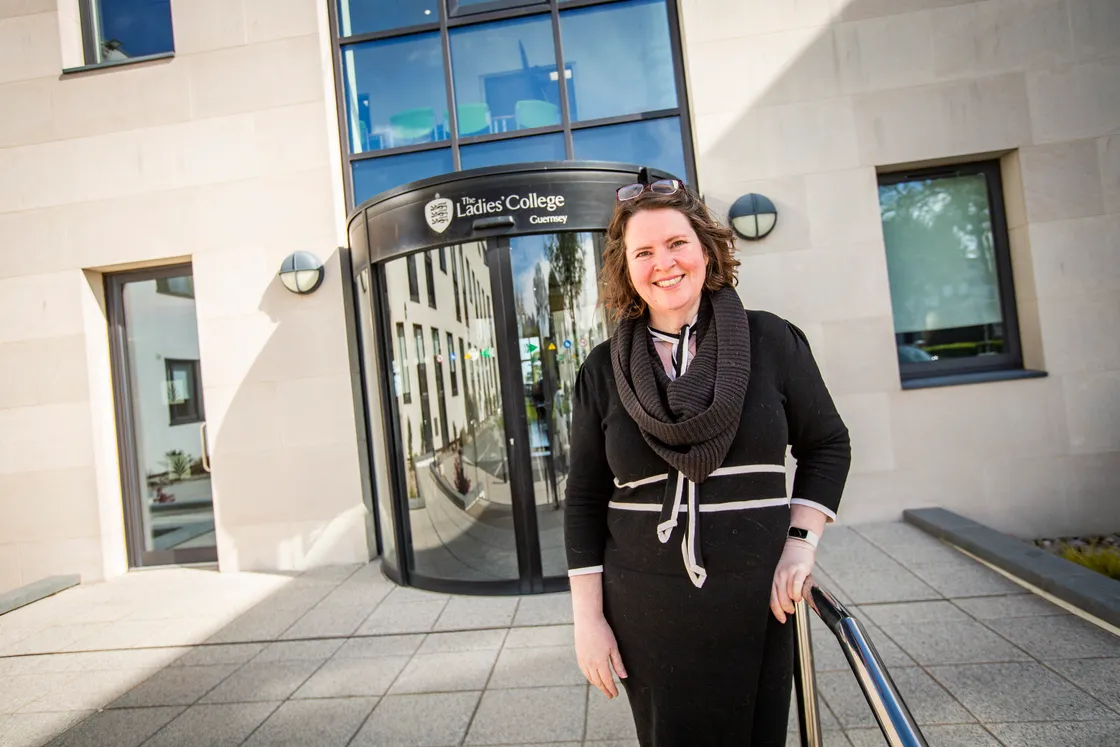
This aspect of education – making students ‘future-ready’ – is something that Ms Harford-Fox also picked out as a matter of particular personal passion.
‘I’ve been really concerned that education is essentially the same as it has been 150 years ago, and was created in response to the needs of the first industrial revolution, when there weren’t public libraries, let alone the internet,’ she said.
‘I’ve always been very concerned about the impact AI was going to have on the economy and the types of skills children were going to need, so we did a lot of work in the first 18 months I was here. We spoke to big stakeholders and industries and universities and tried to identify what skills the girls would need and the knowledge they’re going to need, so we’re in an ongoing process of pivoting the entire approach that we have.
‘For example, on my first day, four years ago, my head of Latin resigned, and I replaced Latin with “Future Ready Skills”. Then we launched “Pathways” for A-level students, which works with local industries, building all these core skills we need.’
Ms Harford-Fox also has further plans to develop the school’s provision for future preparation, extending initiatives down to the primary level. The subject was also the only thing picked out by inspectors as an area for further development.
‘Leaders should embed the provision for career guidance and financial understanding so it has a consistently high impact on outcomes for pupils,’ the inspectors said in the ‘Recommended Next Steps’ section of the report.
However, even on that count, the school did not fall below the ISI’s standards, and its accreditation makes it one of four schools across 40 countries to exceed expectation in any category.
‘I want to congratulate the leadership team, staff and students on this outstanding result. To be one of only four schools globally to be recognised in this way is an exceptional achievement,’ said chair of The Ladies’ College board of governors Caroline Chan.
‘We are particularly pleased to see inspectors recognise the strong relationships the college has built with the wider Guernsey community, and the environment that leaders have nurtured so that every student throughout the college can flourish.’