

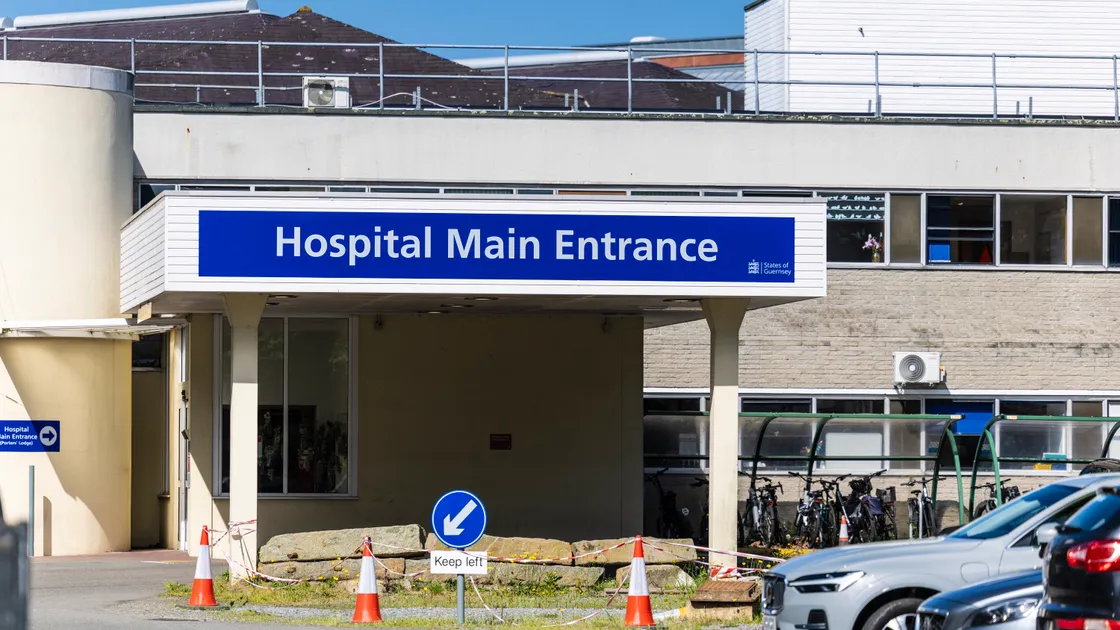
Some elective surgeries had to be cancelled as a result. All cancer and emergency surgery went ahead, but two elective operations were postponed with at least one cancelled for tomorrow.
Health & Social Care warned that there could be more disruption to come until capacity issues have been resolved. It apologised for the cancellations, which it said were not weather-related, although the Emergency Department was also said to be busier than usual, with longer waiting times.
‘There is no single factor driving the current level of admissions,’ HSC said, as it added temporary ‘flex beds’ on to patient wards.
Capacity at the Day Patient Unit has been increased to ensure that some procedures can still go ahead and to make the best use of theatre time.
Health & Social Care president George Oswald has admitted that bed shortages were no longer a problem only during the winter months.
He was responding to a question from Jayne Ozanne, who wanted to know if planning was being carried to prepare for the possibility of an acute shortage of beds next winter.
‘The winter bed crisis is no longer seen to be just a winter bed crisis – it is an all-year crisis,’ said Deputy Oswald.
‘Modelling for provision of health care beds is an all-year-round function. Virtually every week there is a bed crisis of some sort or other which has to be addressed.’
HSC recently announced the reintroduction of fees for flu vaccines administered at GP surgeries, including for pensioners. They had been provided free at the point of use for several years since the start of the Covid-19 pandemic.
Following that decision, Deputy Ozanne asked if modelling had been carried out to determine whether there was likely to be increased demand for hospital beds next winter.
‘I recognise that a flu pandemic would bring extra demand for resources,’ said Deputy Oswald.
‘If we manage to open Phase One [the new critical care unit] in the early part of next year, we will have increased critical care provision, which could expand quite significantly into the post-anaesthetic care unit.
‘In terms of provision in general medical beds, we do not have an emergency plan in place, but nor do we need one because this is a continuous process.’
The States continues to meet the cost of the flu vaccine itself. The reintroduced delivery fee varies between GP practices and is paid to them directly by patients.
Deputy Oswald said the more generous HSC subsidy had ended ‘undoubtedly because of cost constraints’. HSC is trying to find savings to contribute to a direction from the States to cut about £20m. a year from committees’ budgets by 2029, which could become a yet more demanding figure following July’s landmark tax and spending debate.
In his latest update statement to the States last week, Deputy Oswald revealed that the new critical care unit, which was scheduled for completion in 2024 at a cost of £34m., was now unlikely to open until 2027 and needs more work to meet fire standards, which will be funded by the States.