
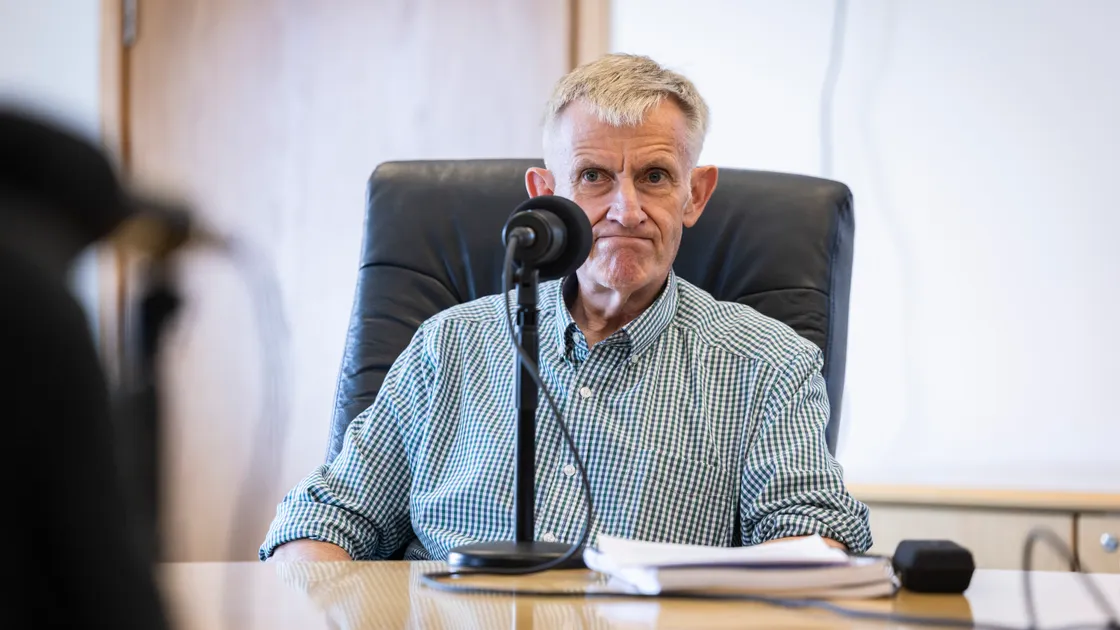
How did the Guernsey Development Agency come about and how were you approached?
I had talked to Stuart Falla about being involved. I’ve got a strong maritime interest and I wanted to see if I could help in that direction. Our brief was basically to look at floods, economic development and the whole future of the east coast and how that could help and enhance Guernsey. So it was a fairly large brief in terms of the areas that we’re covering.
Why are you now seeking to quit?
Unfortunately when the GDA was set up, it was set up poorly by the politicians probably, and also, it’s structurally not a development agency, effectively it’s a government quango, and I’d been hoping that we could move things forward. We’ve done the first part of what we were supposed to do, which was the key infrastructure development plan. A lot of work’s gone into that. But we’ve struggled with funding to come up with the next bit of the plan, which is basically a business plan of how we can finance it and how much money we can get privately. We’ve raised the issues for some time, submitted a budget last June, but we still don’t have any money to fulfil our business and funding plan. It’s revolved around just going back and things moving at a snail’s pace.
What are the main elements of your master plan?
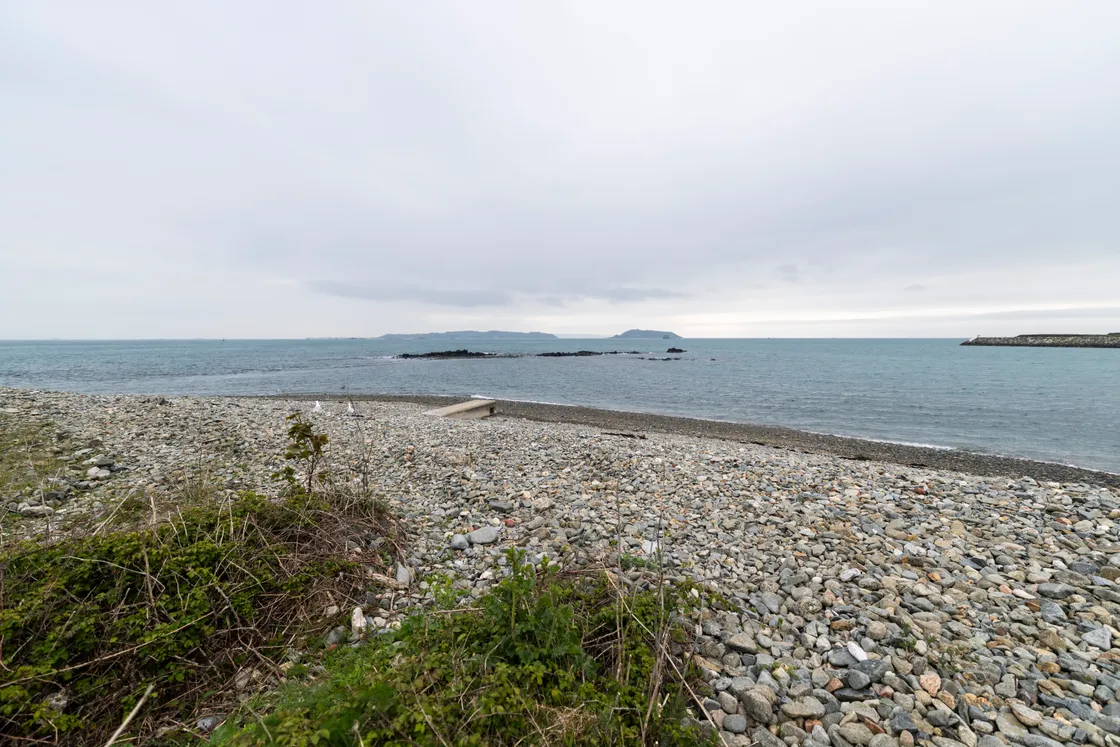
Inert waste into land reclamation at Black Rock. That can turn into anything, that’s the States’ decision, but we would see it mainly being housing. From the wealth that’s generated from that housing, we’d hope that we can then develop Longue Hougue, with a marine centre, a larger marina, moving Marine & General there and make that a kids-friendly area. There’s some suggestion that the Electricity Board might be moving ultimately and they wanted a second place for a secondary generation station, and that would free up the front end of the power station for housing. We’d have a multi-storey car park to take some of parking away from the housing that we’re developing. And then an overall regeneration of walkways, pathways, cycleways, round the whole of St Sampson’s, and a bridge across the Bridge. Taking the traffic away was definitely on our agenda.
What does your resignation mean practically for the plans?
Part of my resignation is to try and influence change. I’m very positive about what can be achieved by the GDA, but it fundamentally needs a different structure. Any development agency in the UK would normally have land and money, political oversight, yes, but they’re just told to get on with it. So they come up with a plan, get it approved by the politicians, and then they’re empowered to just get on with it.
We have a begging bowl that goes to the States once a year and they give us some money. It feels to me that people wanted to see something happening, but weren’t prepared for the results of it happening.
Why would they set you up if they didn’t actually want something to come out at the other end?
We seem to be struggling to get the right people in the room, round the table to agree a way forward. Meetings get cancelled at the last minute. It’s a general feeling that the other GDA members are frustrated. It probably hasn’t got to the point of resignation yet, but it’s not far short of that.
What would it take to make the GDA work properly and deliver?
I think they’ve got to go back to the politicians and get them to say: ‘We got it slightly wrong when we set this up, we need to give it a bit more freedom. Yes, we’ll politically make sure it’s going in the right direction, but we need to basically have land transfer, cash and be able to go and find private funding.’
We believe that with private funding, we could develop Black Rock, Longue Hougue and move M&G and that would fundamentally start the process of change in St Sampson’s.
Have you got to the point of exploring the appetite of potential investors?
It’s difficult and almost impossible without understanding the quantity of money that we need to start talking sensibly to any investor. They’ll tell us basically that when you have some more detailed plans, come back and talk to us.
Is the inability of the States to fund you what is really holding you back?
I think one of the major problems in the States at the present time is nobody looks at the sales line, they always look at the cost line. But the economic growth that we can bring to Guernsey through the development of Black Rock, the Longue Hougue and moving M&G is phenomenal. We’ve got figures that we’ve done with economists to support that.
It won’t be your responsibility any more, but you must be interested still to see what comes of the work that you’ve been involved in. What do you expect going forward?
Well, I’m passionate about seeing something happen, and that’s really what’s brought this on, because I felt nothing was happening. The States has a good track record of filing reports on shelves.
So I’m very hopeful that something can happen, but I’m healthily cynical. We need a chunk of cash to get things started and they need to make up their mind whether the States want to fund this development or whether they’re happy that the private sector funds it. It’s a bit of a jigsaw puzzle, the first bit is releasing that capital that will fund the other parts of it.
There has been a narrative around that maybe your plans are too big and radical for the Guernsey mindset. Do you think that that’s been a part of the problem?
I think it would be true to say they are fairly radical. But if you look at some old photographs of Longue Hougue, I mean, that was a quarry. And it’s not that we haven’t got a history of reclaiming land. And unfortunately, I think in Guernsey at the moment, we either go up or out.
You chose to focus very much on the St Samson’s Harbour area rather than St Peter Port or other parts of the east coast. What was the motivation for that?
Partly steering by the political oversight group, but I think everybody felt that if we could unlock St Sampson’s there’s huge potential to change it into not another St Peter Port, but a very different place to what it is at the present time. I did get into trouble for occasionally saying there’s nothing you can’t do to St Sampson’s that doesn’t improve it.
What’s the advantage of doing this through a development agency rather than the States just doing it themselves?
Well the States is very good at not doing things. The trouble is that the projects that we’re looking at are sort of long term, 25 years. You need continuity of the organisation that’s running that with the vision. So it’s very difficult when you have politicians in for a five-year period of time to get that sort of flow into the building of something that’s a 25-year vision.
Of course, everything you’ve done has had political oversight. What’s your experience been of that process?
I have to say that the politicians on the political oversight group have been hugely supportive, and I’d like to thank them for that. The difficulty I think has been converting that support into actual action that empowers us to get on and do things. I just think after three-and-a half years, I don’t think I can face another three years of wading through treacle.