

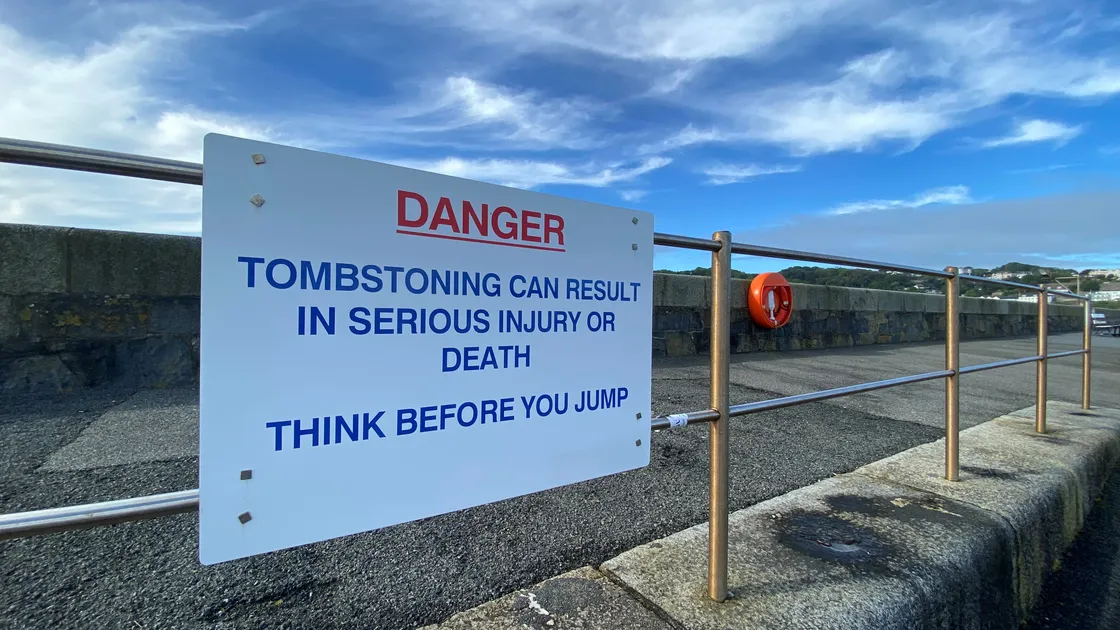
It has urged people to think twice before taking risks in the water.
‘Tombstoning may look fun, but it can have devastating consequences. When you jump into the sea from height, you’re quite literally jumping into the unknown,’ said James Way, head of Guernsey Coastguard.
‘The depth of the water can change dramatically throughout the day, meaning it may be much shallower than it appears. Just the impact with the water from enough height can cause serious injury or paralysis.’
He said that people should not allow peer pressure to influence their judgment, and many incidents happened because someone was encouraged to take a risk that they would not otherwise. Younger children may be watching and could be tempted to copy what they see.
‘The risks associated with tombstoning are very real. In the last 20 years, Coastguard services around the British Isles have dealt with more than 200 tombstoning-related incidents, resulting in more than 70 injuries and 20 deaths, including children as young as 12,’ said Mr Way.
‘These aren’t just statistics, they’re people whose lives have been changed forever by a split-second decision.’
He recommended that anyone looking for the experience of jumping into the water should do so under the supervision of a qualified coasteering instructor.
Local water depths change with the tide, and hidden rocks and other submerged hazards can lie just beneath the surface. The impact of hitting the water from height can also cause injury in itself.
‘Before heading to sea, you should always check the weather and tidal conditions beforehand, tell someone you know where you have gone, and make sure you have a plan if something goes wrong,’ said Mr Way.
n Anyone who sees someone in difficulty in the water should immediately call 999 or 112 and ask for the Coastguard.




You need to be logged in to comment.