

An investigation committee, known as EDDIAC, is due to report this year on whether control of schools, including recruitment, should be transferred to governing bodies separate from the Education, Sport & Culture Committee.
There was some political pressure to await the outcome of that work before starting the recruitment process for a new executive principal of secondary schools and the Sixth Form Centre on a permanent States contract.
But director of education Nick Hynes wanted to press ahead and a majority of ESC members backed his stance.
‘The committee was clear that maintaining strong leadership across the secondary school partnership is important to sustaining the progress that has been made and supporting the continued development of secondary education,’ said ESC member Sarah Hansmann Rouxel.
The role is now being advertised with a starting salary up to £144,000.
ESC members confirmed they had ‘discussed the position’, but declined to say whether they had considered deferring the recruitment process or making a temporary appointment, and also declined to say whether they had consulted the EDDIAC investigating committee before advertising the permanent position on a States contract.
At least one member of ESC was unhappy about pressing ahead, but the prevailing view at Education was that the appointment of an executive principal had nothing to do with EDDIAC, and in any event would not complicate the devolution of powers to school boards should the States eventually agree to a devolved model.
‘The executive principal is an operational leadership role within the existing approved model,’ said Deputy Hansmann Rouxel.
‘This appointment does not pre-empt the wider governance work currently being undertaken by EDDIAC.
‘Whatever conclusions are ultimately reached regarding future governance and accountability arrangements, our secondary schools will continue to require strong educational leadership, effective coordination and close collaboration across the secondary school partnership.’
The future structure of secondary education, as well as the governance of schools, is also uncertain, with proposals awaited for the permanent location of the Sixth Form Centre, which was moved to La Mare de Carteret temporarily last year.
The role of executive principal would be unaffected if A-level studies continued to be delivered separately or alongside 11-16 schools, but may need to be modified should previous plans be revived to combine the island’s sixth form with further education studies at Les Ozouets.
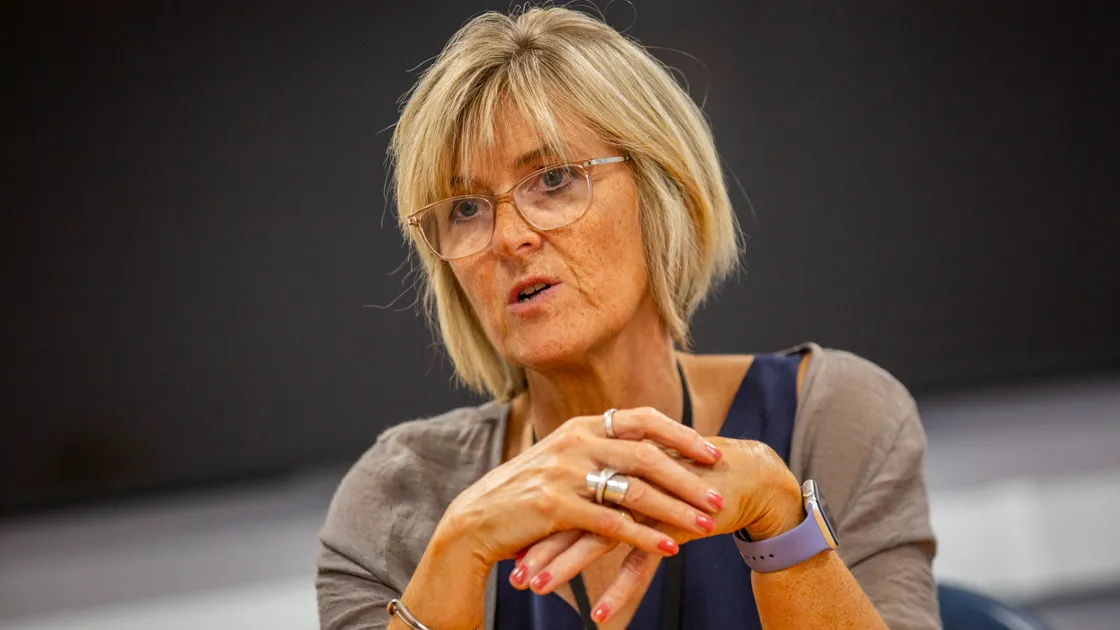
Current executive principal Liz Coffey, pictured, will retire at the end of year. She has held the role since 2018, having previously been head teacher of the Grammar School and Sixth Form Centre.
ESC said that Mrs Coffey was leaving secondary education in a strong position and that continuing to have an executive principal would maintain progress in areas such as recruitment and retention, curriculum development and workforce planning.
‘The decision to recruit to this post now ensures that the leadership capacity needed to support our schools remains in place, while broader questions about future governance structures receive the careful consideration they deserve,’ said Deputy Hansmann Rouxel.
‘We look forward to appointing a high-calibre leader who can build on the progress already made and play an important role in shaping the future success of secondary education in Guernsey.’