

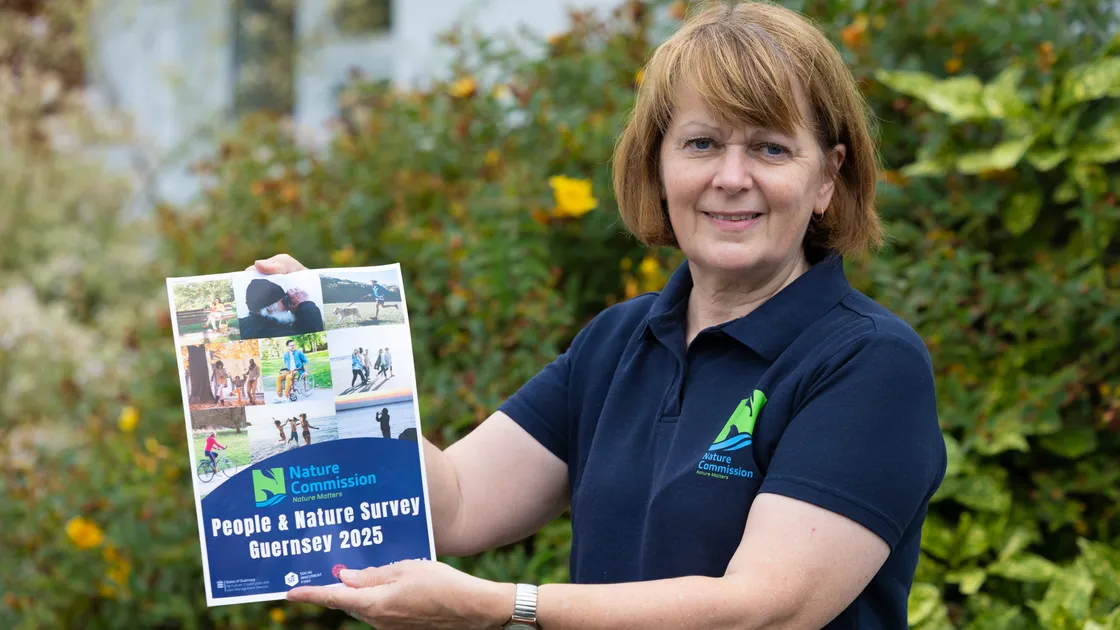
The results of the new survey, which will be repeated next spring, show that nature is a central part of life in Guernsey, with beaches, coastal areas and woodlands providing important spaces for recreation, wellbeing and connection, but people are growing more and more concerned about the pressures facing the island’s natural environment.
‘There are many things that go on in Guernsey that people are concerned about and it came out in the report that land use and development is one of those things and that obviously impacts or can impact on nature,’ said Angela Salmon, head of operations and education at the Nature Commission.
‘You can develop things and try and mitigate as much as you can so that it has as little impact as possible, but it is a concern and obviously we will be circulating these results to deputies and the people who need to know about these things.’
The impact of development and land use on biodiversity was a concern for more than 60% of people and was the top environmental pressure for all ages between 16 to 74.
‘The impact of development on biodiversity and the natural environment is a significant concern for the DPA,’ said Deputy Neil Inder, president of the Development & Planning Authority. Our main job is to balance environmental, social and economic aspects when developing planning policy and making planning decisions, which is no easy task. However, there are well established mechanisms to safeguard and promote biodiversity through the planning process, including the designation of Sites of Special Significance and Areas of Biodiversity Importance and requirements for biodiversity enhancement where there is change of use of land to garden.
‘Since I became president, we have placed a greater emphasis on the proactive use of Tree Protection Orders, consistent requirements for biodiversity features such as bird and bat boxes and native planting within larger developments and a closer working relationship at both political and officer level with the Nature Commission and other nature conservation organisations, who all do an excellent job.
‘The current focused review of the IDP gives a further opportunity to protect and enhance biodiversity with a proposal for 52 new Areas of Biodiversity Importance, which we hope will be agreed by the States when they debate our Policy Letter later this year.’
The results of the survey also showed that people over the age of 65 reported visiting natural spaces less often than younger age groups, and that women engaged with nature less than men.
‘That’s one of the things that is quite interesting, however older people may well have their own properties, they may well have their own gardens, so older people may well be connected with nature, but actually in their own gardens on their own land,’ said Ms Salmon.
‘Women engaging less with nature was a bit of a surprise, and they seem to engage more seasonally with nature, which may link into school holidays and that classic stereotype of women being with children and it does seem to come out that that is the case.
‘It was a really nice surprise that we had so much engagement from younger people, from the 16 to 24 year olds, which was absolutely fantastic.’