

Concerns were raised earlier this year when the number of students taking music at A-level in the UK fell to a record low.
The Independent Society of Musicians reported that entries had fallen by almost 50% since 2010.
In Guernsey, however, music seems to be as popular as ever.
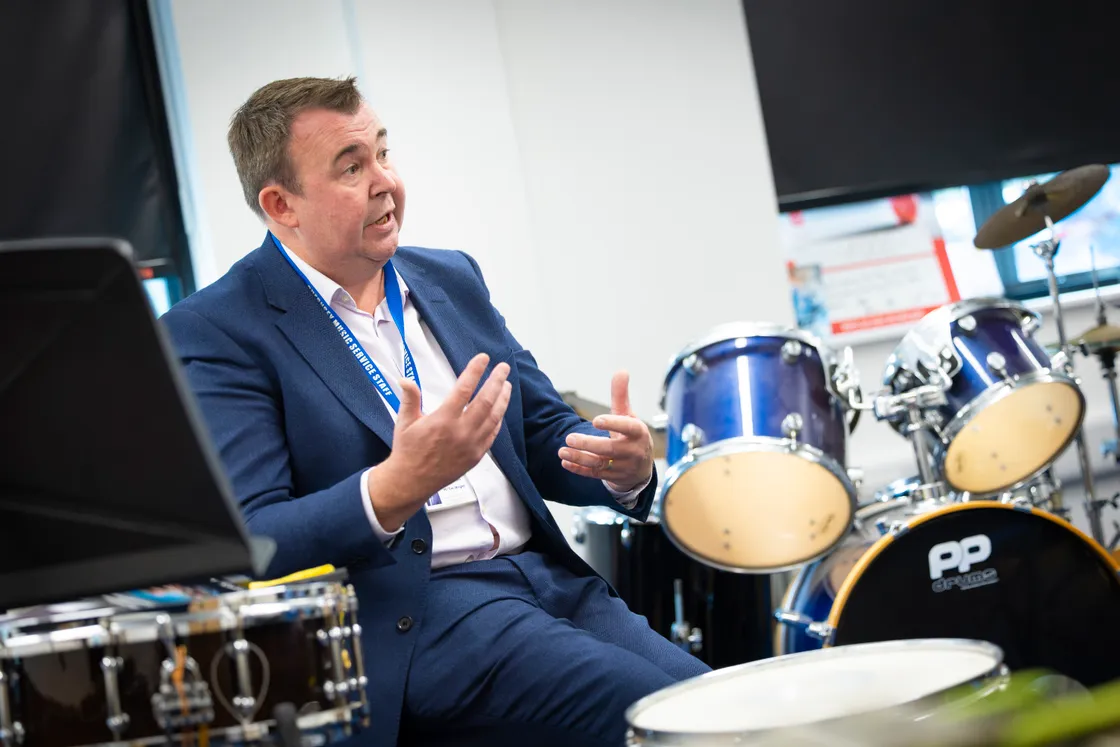
‘Out of the total number of A-level entries in the UK, 0.6% are for music,’ said head of the Guernsey Music Service Tim Wright.
‘In Guernsey this sits at an average of 3% over the past eight years, with this year slightly higher at 3.12%.
‘As far as GCSE music numbers are concerned, the uptake of Guernsey students is more than double the UK national average.’
Mr Wright believes there are three reasons why Guernsey has bucked the UK trend.
The first is a change to the UK’s funding system.
‘The system changed to a system called music hubs. It took a bit of time to adjust,’ he said.
‘Some music services and music hubs are very well supported and some are not. So it’s not a universal offer across the UK. It depends very much on where you live.’
The second is the introduction of the English Baccalaureate.
‘It focuses a lot on core subjects within the curriculum in secondary schools. Quite rightly – those are very important,’ he said.
‘But at the same time, the creative subjects weren’t really part of that equation to a certain extent, and as a result things like music were really affected.
‘Because children have not been taking the creative subjects earlier on in their secondary school career, that’s translating now to less A-level uptake, and to an extent GCSE.’
The third is the strength of the island’s musical environment. Services and community groups beyond the school gates support children from their earliest years into adulthood.
‘I think the strength of the offer that we have in Guernsey is that it starts in primary school. It’s well supported all the way through, and even when children leave school, there’s a good culture in Guernsey of music making in the adult community,’ he said.
‘People are quite civic-minded in Guernsey. They work together to make these opportunities work.
‘It’s not only what happens in the music service, it’s not only what happens in schools. It’s supported by the education service, the States and the community. And when you have all those different layers, it really works well together for the child.’
The island’s private music schools can also attest to the fact that interest in music is still strong Guernsey.
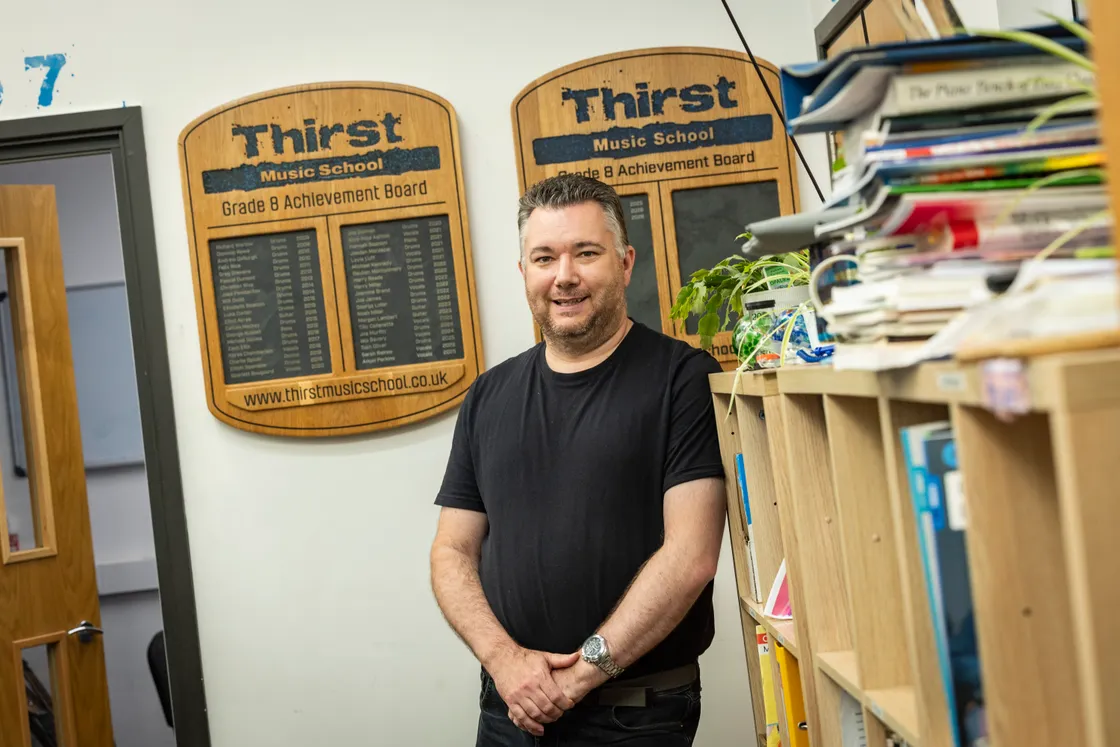
Thirst Music School teaches popular music using the Rockschool syllabus and accredited exams. Demand has grown since it opened 20 years ago, and it now delivers around 500 lessons a week.
‘Music is absolutely thriving among young people in Guernsey. Our numbers are growing every year,’ said director and head of drums Wayne Mahy.
‘We’ve extended the building twice since Covid.’
Interest in qualifications has not waned either.
The school has put around 1,300 students through music exams, including 137 at grades six and seven, and the number taking grade eight has almost doubled in the past five years. It is a similar picture at the School of Popular Music.
‘Across the Channel Islands we delivered more than 36,000 lessons last year, and our Guernsey roll has grown every year,’ said the school’s UK project manager and guitar tutor Charlie Stevens.
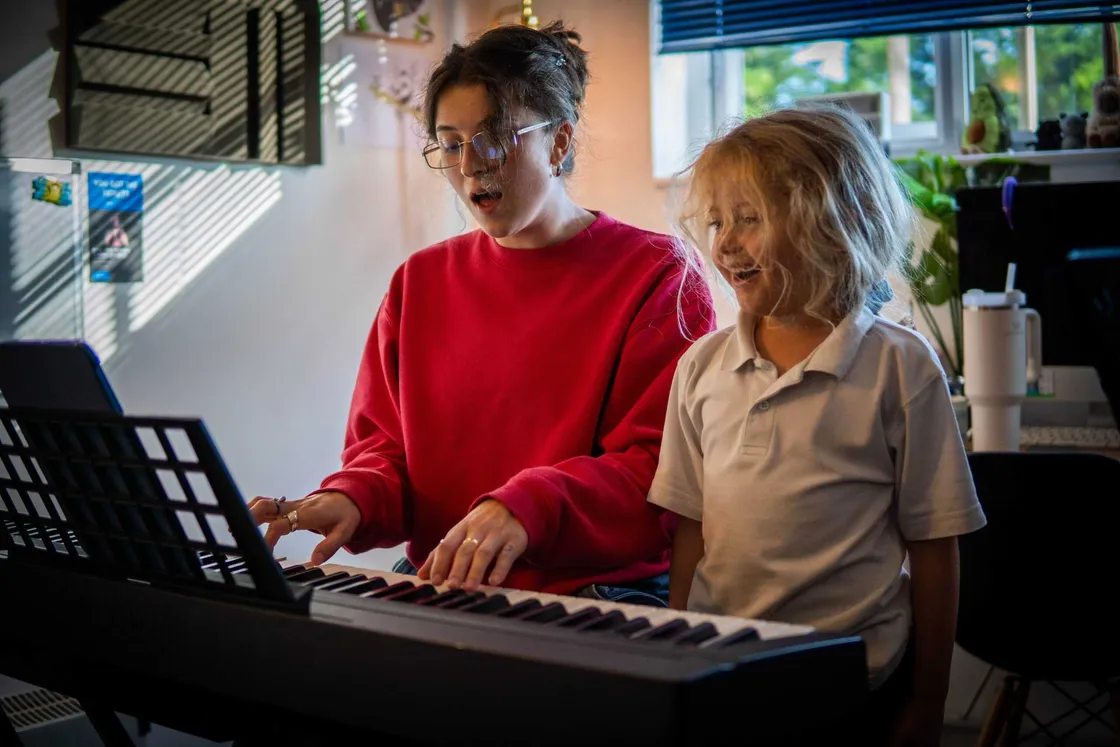
Demand for its RSL Level 3 Extended Certificate in the Creative Music Industry has been so strong that the school is now looking at introducing the Level 2 qualification as well.
‘It’s a nationally recognised qualification built around practical projects – live performance, rehearsal, recording and production – assessed through coursework rather than exams,’ said Mr Stevens.
‘Depending on grade, it carries between 16 and 56 UCAS points, so it counts towards university applications in the same way other Level 3 qualifications do.
‘That matters because it’s a route into higher education through music that doesn’t depend on the traditional exam pathway.’
Many of the school’s pupils also follow conventional routes.
‘Plenty of our students study the traditional or classical side through school, including GCSE and A-level music, and come to us for contemporary performance, bands, songwriting and recording.
‘There’s real crossover,’ said Mr Stevens.