
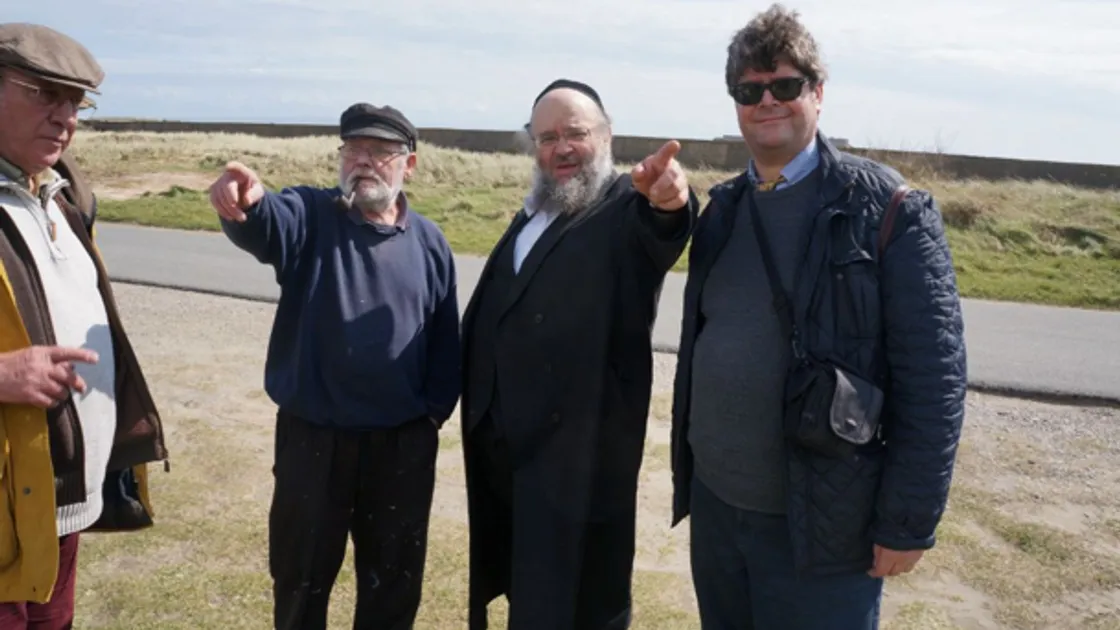
Three Jewish groups had applied for permission to erect a plaque on States of Alderney land at Longis Common, which would have read: ‘This plaque is dedicated to the memory of the unknown souls who perished on this island between 1941 and 1945 during the Nazi Occupation of Alderney, including Jews who still rest at this site. The plaque also stands in remembrance of all victims of Nazism, who rest not only here but in other places unknown upon Alderney.’
The plaque, which included revised wording from an earlier proposal, was requested to provide a permanent memorial at a site where forced labourers and other victims were known to have been buried.
Rabbi Herschel Gluck, of the Committee for the Preservation of Jewish Cemeteries in Europe, one of the groups behind the application, said that he and his colleagues had come across only one other such refusal in their work across Europe to mark atrocities carried out by Nazi Germany during the Second World War.
‘I am very surprised and deeply shocked that permission has not been granted to commemorate the Jewish people who were murdered during the Holocaust in Alderney and are interred in Longis Common,’ he said.
‘As a child of Holocaust survivors, I am deeply aware of the profound need for those who were dehumanised during their life to be provided with the dignity of appropriate memory in death. Failing this, it feels like a double and continuing abuse.’
The extent and details of Nazi atrocities in Alderney have been contested for decades, prolonging disagreement about the location and wording of memorials.
The island’s General Services Committee refused the application after taking advice from the senior committee, Policy & Finance, which by a majority recommended rejecting the application, partly on the grounds that there ‘was no official proof of a mass burial site on the island’.
The application also requested the erection of a stone, under the proposed plaque, which would have marked the contribution of the late Graham McKinley, who supported the cause of a commemoration memorial when he was a States member.
‘The refusal of the States and its advisers presents a neat Holocaust inversion,’ said Marcus Roberts, director of JTrails, one of the other groups behind the application.
‘They now present themselves as the real guardians of the truth about the Holocaust. They effectively pit themselves against the Jewish community, whom they say are making up a version of their own history.’
He accused the States of trying to decide who from the Jewish community could and could not be remembered in memorials and of trying to dictate forms of commemoration.
‘All we have asked is that the States fulfils its commitments as signatories of the International Holocaust Remembrance Alliance Charter and also to honour its previous public statements that victims remain on Longis Common and that they should be appropriately honoured and marked, as well as to enter into a genuine dialogue with us to resolve matters,’ he said.
Dr Gilly Carr, a professor whose specialism includes Holocaust heritage, and who took part in a recent expert review of events in Alderney during the Occupation, has previously criticised Mr Roberts for exaggerating the number of deaths at Nazi camps in Alderney.




You need to be logged in to comment.