

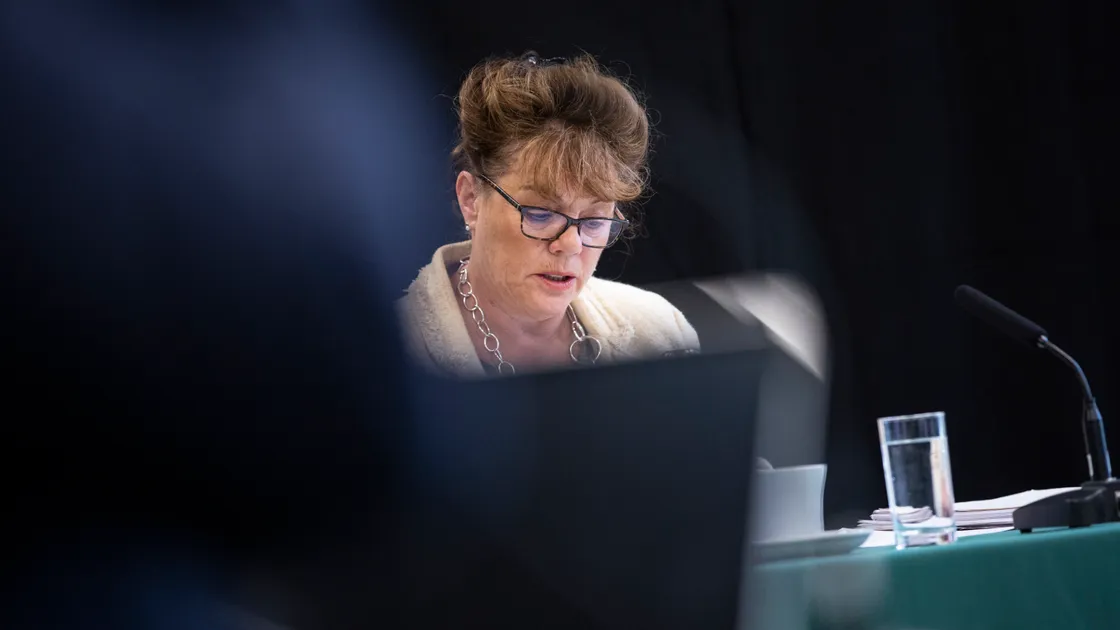
Speaking on the Guernsey Press podcast The Long and The Short of It, former deputy Michelle Le Clerc said the contributory benefits report was ‘given almost a nod-through’ when it was debated at the end of a long States meeting last week, with Storm Austin on its way.
‘A few questions were asked about it, but this happens time and time again, and yet it’s really, really important,’ she said.
Employees and employers will each pay an extra 0.1% in contributions to sustain the Guernsey Insurance Fund, which pays States pensions.
The long-term care co-payment will rise to £455 from 1 January. This is the amount people pay on top of what the Long-Term Care Insurance Fund covers when they move into a residential or nursing care home.
Under plans already agreed in principle, people going into care will also have to pay a user care cost contribution of up to £10,000, depending on a means test, before the fund starts to pay. Mrs Le Clerc said this would apply to those with assets of more than £25,000, not counting the family home, and was due to start in July next year.
‘These are the nuggets in this report that get totally missed and aren’t questioned,’ said Mrs Le Clerc,
‘It doesn’t make soundbites. It’s not something that will get their face or name out there. But it has a financial impact on almost every household.’
She said the report was always ‘the poor relation, tagged on at the end’ of a States meeting, when members were fed up and wanted to go home.
Her co-host, former deputy Heidi Soulsby, said the budget and the report did not appear to agree on where the extra contribution money would go.
‘The budget says General Revenue gets more contribution income because of the 0.2 rate rise, but the ESS table sends all of that to the insurance funds,’ she said. ‘It would be interesting to find out what’s going on there.’
She added that the rise would cost the States more as an employer. The report also cuts unemployment benefit from 210 days to 150, and halves bereavement payments from 52 weeks to 26. Together these changes are expected to save about £350,000.
But Mrs Le Clerc said that amounted to ‘moving wooden dollars’, because much of the cost would simply fall on non-contributory benefits paid from general revenue. That point was also raised during the debate.
Mrs Soulsby said the report challenged the assumption that pension costs were rising mainly because of more pensioners. It showed 83% of the increase was down to States-agreed rises, with 17% due to increased demand.
‘That goes against what people would imagine,’ she said.
She also pointed to the committee’s unhappiness with its investment funds, which have returned 5.95% over 10 years against a target of 8.72%, and said Employment & Social Security should have been invited to sit on the committee that oversees them.
Mrs Le Clerc said it was only when a loved one went into a care home that families realised how much care was costing them.
The draft law needed to bring in the £10,000 contribution is due to come back to the States, which she said may ‘raise more awareness and there may be some pushback’.
The episode, which marks the podcast’s first anniversary, is out now. In it, the pair also discuss the two options in the 2027 Budget and a new savings scheme for children in care.