
The Budget, drawn up by the Policy & Finance Committee, holds Alderney Property Tax, document duty and water rates at their current levels, while continuing to fund public services and investment in transport, tourism and infrastructure. But it forecasts a deficit of £132,000 on the provision of services, turned into a wafer-thin year-end surplus of around £3,000 only after £135,000 has been drawn from reserves to cover the costs of the island’s new Land Use Plan.
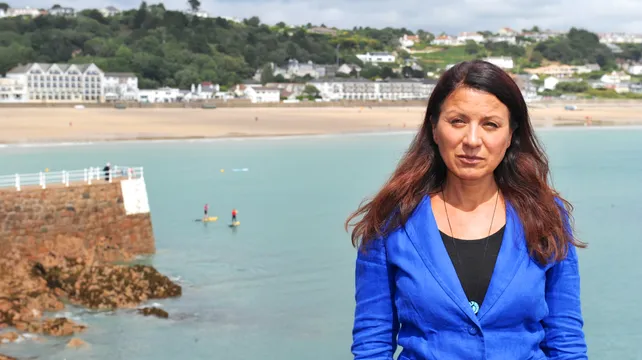
Committee chair Jeannie Cameron warned that the margin offered ‘virtually no protection against unexpected costs or lower-than-anticipated income’ but did seek to protect islanders from tax increases. The Budget aims to provide investment in transport, tourism, economic development and infrastructure, and increase promotion of Alderney, support for tourism events, improved digital marketing and provision to do more to promote economic development.
‘Overall, this is a workable but fragile Budget,’ she said.
‘It maintains services and supports economic activity without increasing the island’s principal property and document duty rates, but its very small surplus leaves little room for error. Success will depend upon close monitoring, disciplined spending and the delivery of forecast income, alongside determined action to create new and sustainable sources of revenue for Alderney.’
The cost of services is forecast to rise by 5.04%, with no provision yet made for general staff pay increases.
The Budget follows revisions of the island’s 2026 financial outturn with a forecasted surplus of about £87,000, some £220,000 better than first budgeted, thanks to stronger document duty and property transfer duty income. It means that £140,000 of reserve funding earmarked for Land Use Plan and Bailiwick Commission costs will not be needed this year.
Among the measures for 2027, the committee has agreed to cut marine fuel duty to zero ‘at the earliest opportunity’, a move Ms Cameron called ‘a practical and welcome step’ to help the island’s fishermen and attract visiting vessels.
Air and sea transport subsidies will also move into the revenue budget, freeing more of the Economic Development Reserve Fund – which will receive a further £300,000 from Alderney Gambling Control Commission surpluses – for growth initiatives. The Budget also funds a new economic development post and expanded tourism marketing.
The island’s capital programme, funded mainly from gambling commission surpluses rather than any Guernsey money, totals £4.2m. for 2027. The biggest items are a £2m. contribution towards Alderney Airport projects and £610,000 for road resurfacing.
Ms Cameron stressed that spending control alone would not secure the island’s future.
‘We must take action to generate more revenue to support the island, strengthen its resilience and sustain the services on which our community depends,’ she said, adding that members were looking at ‘all viable options’ to broaden Alderney’s revenue base.
Separately, the States of Alderney Water Board expects to post a surplus of about £37,000 in 2027 with no increase in water rates, though it warned its surplus relies increasingly on investment income rather than its core operations amid rising energy and maintenance costs.
Its £905,000 capital programme, funded entirely from reserves, is led by planned improvements to the Battery Quarry filtration plant, one of the island’s most important pieces of water infrastructure.
The Budget is due to be debated by the States of Alderney on Friday 13 November.

You need to be logged in to comment.