
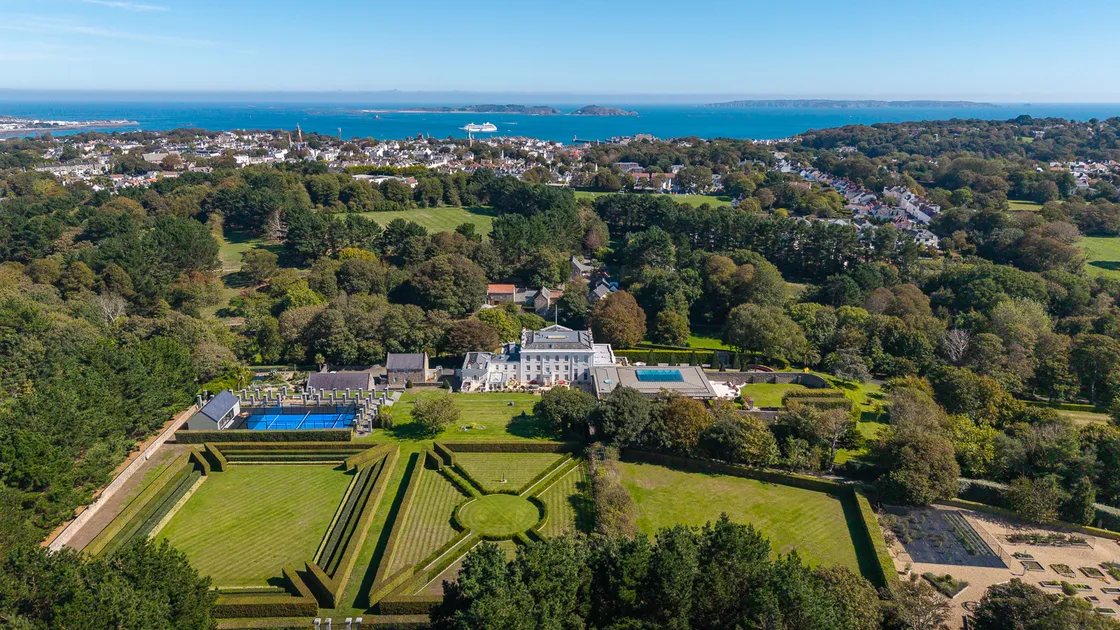
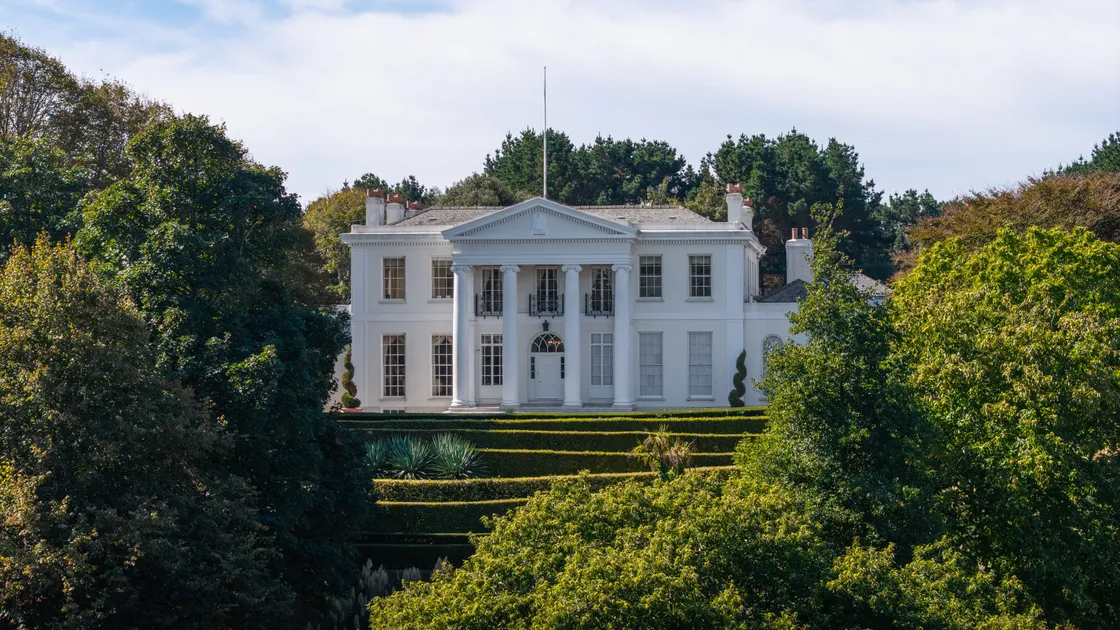
Havilland Hall is the largest privately-owned estate in Guernsey. Built in 1830 for Lt-Colonel Thomas Fiott de Havilland, forefather of the de Havilland dynasty, it extends to over 80 acres, incorporating formal gardens, parkland, agricultural land and a picturesque valley.
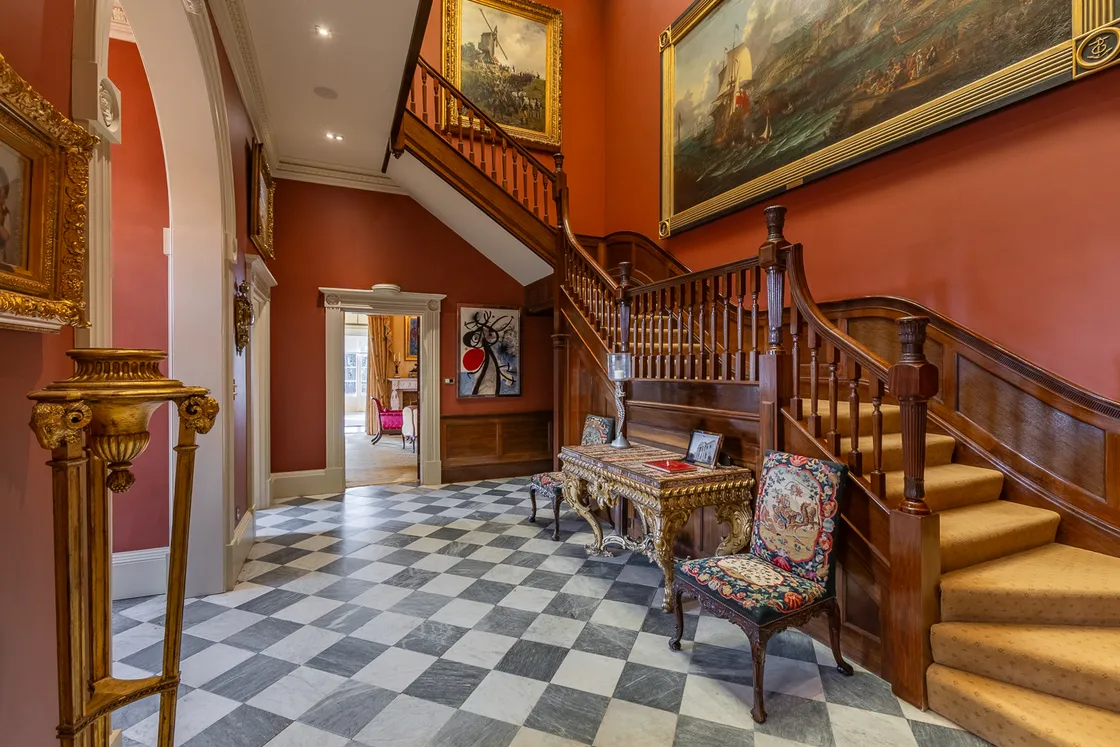
The neo-classical house has six bedrooms and five reception rooms over four floors, and a dramatic cantilevered staircase in the main reception hall. It is being sold through estate agents Savills.
‘We are honoured to bring this phenomenal estate to the market at a time when Guernsey is seeing a resurgence of activity from informed relocators looking to make a move to the island. This truly is a superb home and a once-in-a-generation opportunity,’ said Nick Paluch, head of Guernsey open market residential business at Savills.
Havilland Hall is an open market property in category Part A, and is designated as a protected building. The estate is offered freehold.
The current record price achieved for a Guernsey property is the £24.37m. paid for the St George’s Estate in Castel in 2024.
The Jersey record is held by The Grove manor house in St Lawrence in the centre of the island, which sold for £38m. at the beginning of the year.
Havilland Hall has been home to city financier David Rowland, who is well known for his friendship with Andrew Mountbatten Windsor, who has been reported to have visited his home on several occasions, but has rarely been spotted in public. It is believed he has lived there for more than 30 years, and since then, apart from the connections with the former prince, it has largely stayed out of the news.
‘Havilland Hall is a pre-eminent Channel Island estate,’ said Phillippa Dalby-Welsh, Savills head of country department.
‘Estates of this scale are extraordinarily rare in the Channel Islands and it is likely to draw a global audience.’
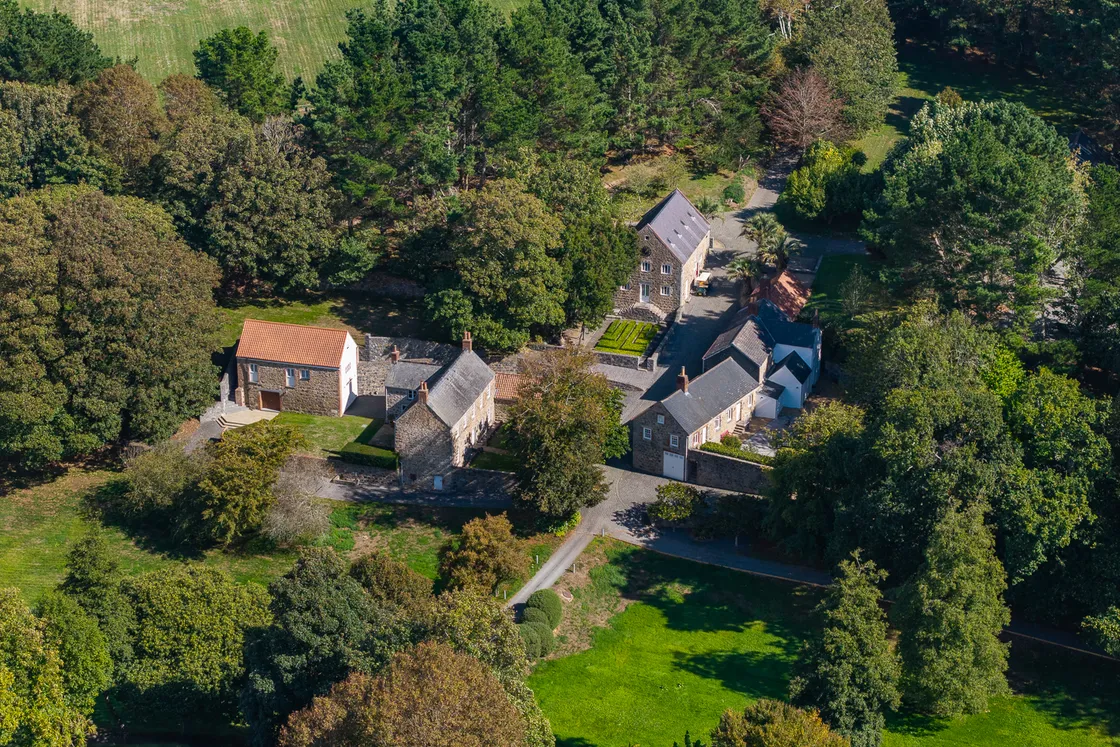
Across the valley from the Hall is a collection of traditional former farm buildings known on site as ‘the village’. Its buildings, largely used for guest accommodation, entertainment and business, are connected by granite-cobbled paths and arranged along the contours of the valley.
They include a farmhouse, ‘Beach House’ studio, a lodge, cottages, stables and a purpose-designed office buildiing.
At one point in its early years the property was used as the home for the island’s Governor.
In 1922 it was acquired by Count Lothair Blucher, a British Army veteran and descendant of Wellington’s decisive Prussian ally at Waterloo. The estate became home to an exceptional collection of European art and antiques, many of which were hidden during the course of the German Occupation.
Following requisition during the occupation and its return to the family in 1945, Havilland Hall was extensively restored and modernised.

You need to be logged in to comment.