

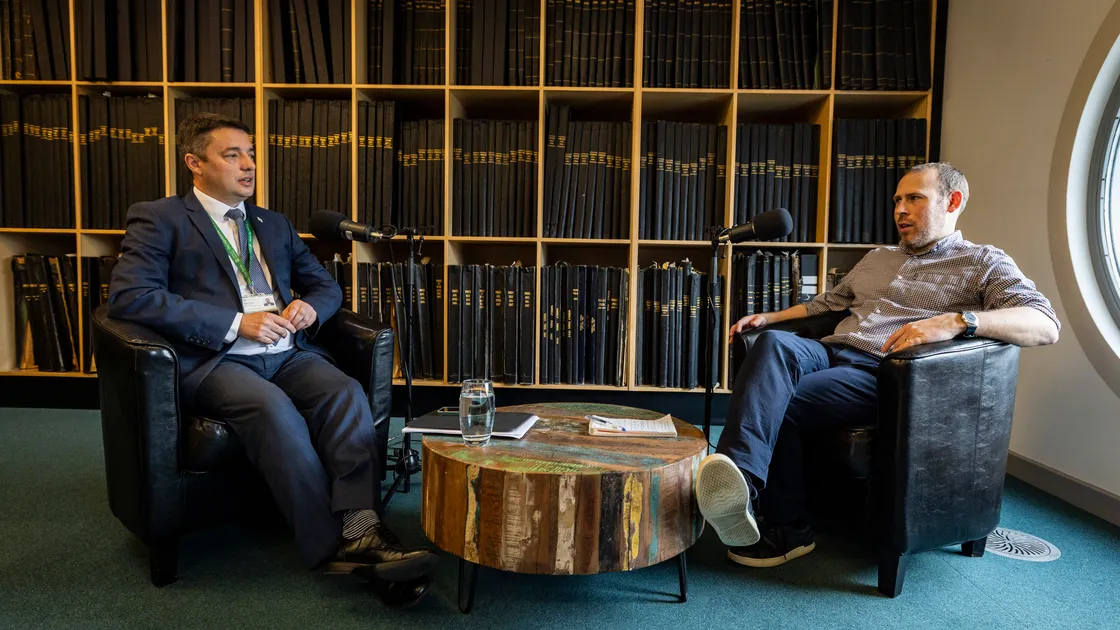
Thanks to a podcast with this newspaper, we now know that the still newish head of the island’s public sector – what you and I fondly regard as the States – thinks and acts as a proper CEO: focused on the bottom line, providing shareholder (aka taxpayer) value and only delivering services that are needed, necessary and worth paying for.
Perhaps that shouldn’t be a surprise. After all, Boley Smillie is the first Guernsey public sector leader in recent times who hasn’t come from a civil service background and understands commercial reality better than most, particularly many of his colleagues and political bosses.
It’s why he declared in the interview that growth in government pay and headcount simply cannot continue, particularly at above RPI rates, and that the island has to live within its means.
There was a lot to unpack in the podcast so I do urge listening to it. The thrust as I read it, however, is clear. Instead of complaining that government can’t afford to do everything, it needs to prioritise better and, especially, improve productivity.
Well, you’ve heard stuff like this before, so what’s different this time? Two things. Most importantly, there’ll be no top-down, imposed-by-head-office stuff. That’s been tried before and largely failed because of a lack of buy-in from staff and the committees themselves.
Listen to the full podcast with States chief executive Boley Smillie
It’s also true to say that meaningful change has previously been confused with moving costs between departments and cutting services rather than actually doing things differently. As a result, these ‘savings’ haven’t been sustainable, and the costs simply crept back in, two or three years later.
Secondly, and equally significantly, the changes the States needs to make will come from its employees themselves. What’s not generally appreciated is how much time during his first 10 months the new CEO has spent ‘walking the job’ and talking to front-line staff. Not managers.
Take the well-documented Revenue Services (income tax department) issues as an example. A dispassionate review reveals people working hard but not delivering because they don’t have the IT tools to perform as they should.
Flag that as an issue higher up the command chain, they say, and ‘solutions’ are presented by people who don’t do the job and don’t understand the problems – a familiar experience for anyone struggling with the introduction of a new system.
Well, no doubt you’ll have your own levels of cynicism over this approach but I’m told the new CEO couldn’t be more confident that the States organisation as a whole is ready for change, and the committees – particularly, Policy & Resources – back this belief too.
So where are we and what’s going to happen next?
Look for some quick wins, productivity gains and the actual delivery of the £4m. savings identified in the 2026 Budget. Start small, show that you can deliver, build out and don’t expect service reductions or removals until next year at least.
Why do I say that? Simply because the message has finally got through to P&R and others that the States of Guernsey’s budget process isn’t fit for purpose.
In essence (and apologies to those working to make it otherwise), it’s a simplistic expand on what we currently do and have, add a dollop of inflation and try to accommodate whatever else the committees want to do. No serious challenge on what’s being done or why, whether it works or if it can be done better.
As the CEO said in his podcast interview, unless that’s changed, the best the island can hope for is slowing the speed at which government costs increase.
What do we need to do? Look at what committees have to do by law or mandate – i.e. the bare minimum – and contrast that with what they now provide, to establish
the extent of mission-creep, and compare that with what they should be doing but don’t.
As Mr Smillie said in the podcast, ‘…if we can create an environment where to fund the new stuff we might want to do… it must at least in part be funded by the efficiencies we’ve gained from doing things better. Then, you know, that’s quite an incentive actually to deliver reform.’
There were two other elements of the interview that were equally revealing – his views on the role of deputies and the split between operational and political matters; and accountability generally.
Which is why deputies should be acting more as non-executive directors by setting objectives for their senior officials and holding them to account for delivery – something he’ll be working to introduce.
The accountability element is also relevant and best illustrated by the problem of reliance on consultants to tell us what we already know. It was reported recently that some pretty basic suggestions to improve driving here cost £55,000 for a UK firm to produce.
Why employ a traffic department at all if they can’t come up with penalty points, speed cameras and a crack-down on pavement surfing themselves, you’re tempted to ask.
So, a chunky old interview highlighting a different approach that welcomes scrutiny and stands or falls on its achievements and determination to embrace change and a culture of performance.
What do I make of it? It’s clearly the right approach and, yes, time will tell. More importantly, however, I think we’ll see fairly early on how well Plan Boley is – or isn’t – working.
Plenty of opportunities have already been identified where productivity can be improved. These, I anticipate, will be publicly flagged and success or failure similarly shared.
The ultimate aim is to see this approach embedded so it becomes business as usual rather than something special or one-off, as with all the other earlier efficiency initiatives.
Do I think it can work? Yes, and with a better likelihood of success than we’ve seen in the past. But – and it’s a big one – deputies will need to be actively engaged as partners rather than observers.
That’s important, because their current reward system, being re/elected, is less based on saving money than on spending it. So the stated approach is a big change.
That said, the results of the July election demonstrated islanders have also got the message – carrying on as we are simply isn’t an option. It really is time for Plan B.





You need to be logged in to comment.