

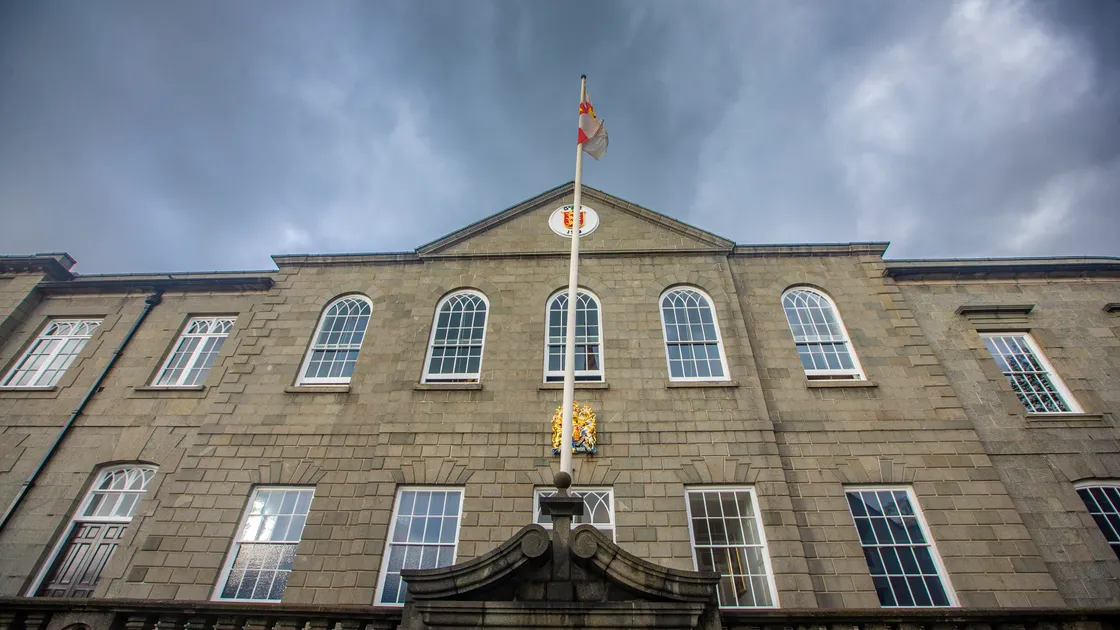
So, the ‘summer of love’ that was seemingly ushered in with the new Assembly, seems to have dissipated with some vociferous (but largely unsuccessful) opposition during the debate of the Policy & Resources 2026 Budget.
This was spearheaded by a letter of comment from the Scrutiny Committee which was highly critical, and followed up by its president, Deputy Sloan, who brought a specific amendment seeking a widespread cut in proposed funding. This amendment teased out the considerable differences between deputies that evidently exist, but perhaps had not been given the opportunity previously to be aired.
Now, I will say that the budget preparation process involves a fair amount of horse trading with committees, but this is specifically with P&R – not between individual committees competing for access to funds. The committee system itself, I believe, contributes to embedding the inevitable silo approach and lack of cohesion in decision-making across the States as a whole – but more about that shortly. What the budget confirms however, is that P&R refused to endorse requests for some £28m. above the initial cash limits they set for committees. This did come back to bite some members during the debate, who then chose to support the Sloan amendment for an across-the-board saving.
Perhaps this was partly down to naivety on the part of new deputies, who of course remain anxious to be seen to be delivering on manifesto commitments, but for whom the entire budget process was their first introduction to the machinations of budget preparation. Returned deputies however, are merely captured by the process they will have undertaken a number of times before in which their own committee’s needs are uppermost in their minds – not necessarily whether it should be considered to have priority over those of any other.
But for all that, the tone of the debate certainly conveyed an urgency to address our unsustainable fiscal position which was welcome. Unfortunately, the cards are stacked firmly against the likelihood of any serious containment of States finances due to structural challenges that are unlikely to be addressed this term, but for which I am going to offer three prerequisites that simply must be undertaken (despite the likelihood that I will be labelled a ‘Cassandra’ for doing so).
Structural challenge #1: The committee system
Most people have probably got a life and are not minded to worry too much about how the States organises itself, unless of course they find themselves falling foul of some part of it. This is not surprising, since in the normal order of things, government should not intrude into your daily life any more than absolutely necessary. Unfortunately, it is human nature to focus predominantly on what government prevents you from doing – or you believe you should have freedom to do – rather than the default of provisions which allow you to go about your daily life largely unimpeded and with a high degree of safety.
It is also unlikely that the average person will make any distinction between the three main components of what a deputy is primarily charged with in practice, ie: policy-making; ensuring successful delivery of public services; and participating within the Assembly in its role as legislature (agreeing the laws that give life to that policy-making).
Generally speaking, it is in the execution and delivery of public services that most people will interface with the States and that delivery is primarily effected though the individual committees. Now, if you have a complaint about the conduct of a deputy or a States official, there is a procedure (more about that shortly). However, if you have a complaint about a service, then the committee responsible is the first port of call. Normally however, most people will contact a specific deputy or increasingly, simply email all deputies.
But the States has a specific committee (Scrutiny) which has a broad remit to investigate and interrogate the activities of individual committees as they see fit and report back to the States Assembly, and as part of that, the public at large. Indeed, it is now common practice for the Scrutiny Committee to have such interview hearings in public, but attendees (beyond the committee in question), are only permitted to observe. The role of the Scrutiny Committee could be viewed then as simply the States ‘marking its own homework’ as a consequence and I address this in my Structural challenge #3.
But back to the overall system of committees and why I feel they represent a hindrance to effective decision-making of government as a whole, and most particularly, preventing its ability to prioritise or effect the really big decisions, like containing costs, addressing the housing crisis and of course raising taxes. It is not simply that this system breeds a silo mentality in which the needs and ambitions of individual committees tends to take precedence over that of government as a whole.
No, it is the autonomy that is preserved through their individual mandates that really gets in the way of achieving ‘big picture’ focus and agreement. This becomes very apparent when there simply is no money to fund much of what may well be needed, but is only one more item in an ever-increasing wish list right across government which has no single arbiter or hierarchy to make an executive decision. That is the privilege of the 40 members of the Assembly, who themselves will be members of one or more committees who’s loyalty to and support of is quite likely to make them subjective. As was recently demonstrated, the annual Budget is when this really becomes an issue and a bun fight ensues, with those in the firing line valiantly striving to prevent losing out. Should you doubt that, read the Hansard transcript from the president and members of HSC who stood to lose some £9m. of its budget had the Sloan amendment been successful.
Structural challenge #2: The unsustainable healthcare model
Quite frankly then, if this Assembly could get to grips with this healthcare issue and nothing else this term, we would be on the road towards a return to fiscal sustainability. The costs pertaining to our current, but more importantly our future healthcare needs, as funded presently, will cripple our economy – probably more so than the impact of our housing crisis. If you don’t believe me, look across the water to the UK, where the NHS has become such a burden on government revenues that it regularly defeats successive administrations’ attempts to tame it or rein it in and is a major contributor to continually needing to raise substantial additional revenue.
Obviously, it is driven by an ageing demographic, but that is not the whole story and a significant factor is the increasing costs of having to rely on agencies to cover so many of the roles we cannot otherwise fill.
In addition, the costs of (out of necessity) having to house particular patients in the UK within specialist institutions can amount to millions of pounds annually. Let alone the ever-increasing range of drugs and treatments of which NICE drugs are a prime example. Regardless of whether you believe they must be provided or not, they are now funded out of general revenue rather than from the diminishing health reserve to the tune of some £7m. next year and they are only going to keep rising.
We have had at least two major investigations conducted independently over the last decade (BDO in 2015 and KPMG in 2017) warning that without change, the impact of necessary costs would be overwhelming. Treasury officials have continued to sound the alarm bells over this, but still we ignore the advice. So, if I have one plea to this Assembly it is to direct HSC to focus on the options for a new model of healthcare right now, before the regular fire-fighting and lack of resources consumes yet another term of office.
Structural challenge #3: Make Scrutiny an independent body
If the States is serious about recovering public trust, then this is an easy win. It is not as if we do not already have independent overview of the conduct of States members which takes the form of the commissioner for standards introduced (finally) last term. This precisely is to ensure an impartial and independent approach is taken to conduct which alleviates deputies from what can be quite an uncomfortable and sometimes, subjective experience: judging one of their own. In fact, an independent and external Scrutiny function, accessible to the public, could reassure islanders that the States is indeed doing everything possible to bring finances under control and the Assembly would choose to ignore its findings at their peril. Something akin to the Office of Budget Responsibility as exists in the UK might assist.
I go into more detail on all of these issues on my website should you be minded to participate in what I am calling ‘The Big Conversation’. Hope to see you there soon. www.Vote4Guernsey.gg





You need to be logged in to comment.