
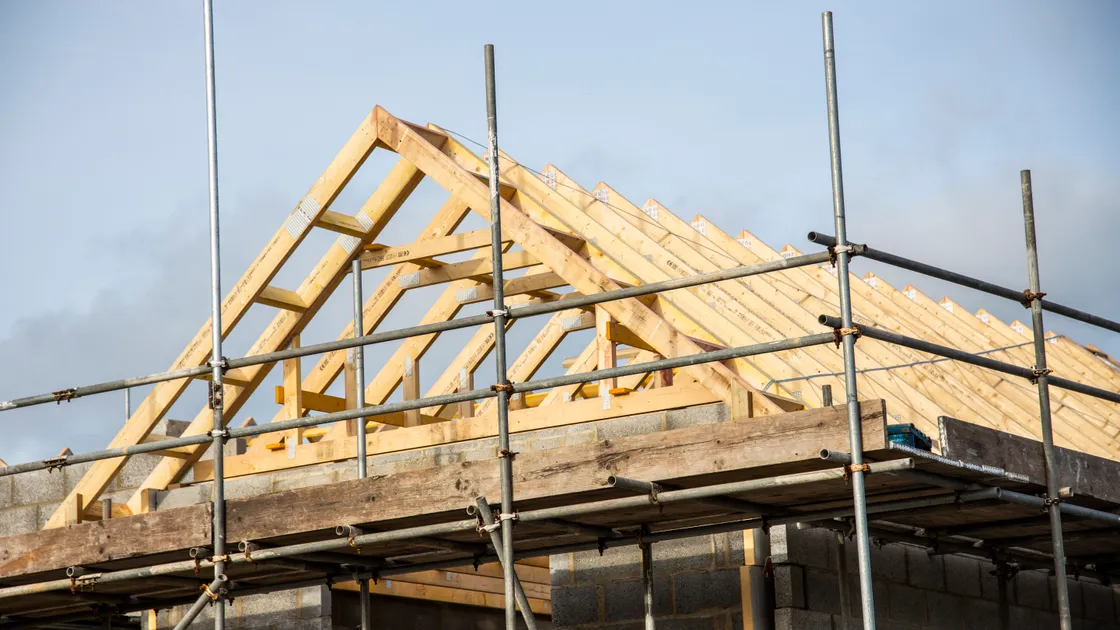
For decades, Guernsey residents had a pathway to home ownership that was deeply personal and achievable – buy a modest plot, design a small home, and build what you could afford. That system fostered community, independence, an eclectic housing mix and intergenerational security.
That model is now all but extinct.
As housing affordability worsens and local families are priced out, Guernsey’s own planning policy, rather than just market forces, has played a major role in reshaping access to land and housing. A once-inclusive, self-build and small-build culture has been replaced by a preference for a large developer-dominated market. At the same time, small builders and local architects, the very professionals who enabled that system, have found themselves edged out.
The States has spent a decade ‘land banking’ several big sites, but have not actually built on them.
The States Strategic Housing Interventions report offers important analysis and recommendations. But while it correctly identifies many of the symptoms of Guernsey’s broken housing system, it does not fully address the deeper causes, and the lived experience of those now shut out of the process.
My thoughts below provide a cause-and-effect critique, integrating lived experience, industry feedback, and the strengths and blind spots of the arc4 report.
From Self-Build Culture to Developer Monopoly
What happened?
Historically, individuals could buy modest plots, often on the roadside, and build their own homes. These plots were relatively affordable and scattered throughout the island, supporting both personal ownership and small, builder-led development. This led to undesirable sprawl and ribbon development.
Planning reforms changed that. Today, new development is restricted primarily to designated ‘Main Centres’ and ‘Local Centres’. These sites are:
Large (typically requiring 50-100 homes),
Strategically zoned,
Sold at prices affordable only to professional developers.
The effect is profound – small, self-build plots have all but vanished. Local people are priced out of buying land to build their own homes. Small builders can’t access land, their traditional work is drying up.
Architects are no longer designing homes for locals, but reliant on open market client extensions and alterations, introducing more vulnerability.
This shift inevitably aimed to move housing production into the hands of the GHA or a few large developers and sidelined small firms. But that strategy has not delivered increased production while still creating losers in the process. While windfall permissions have been granted at a far higher rate than assumed, prices for individual plots are still exorbitantly high because overall supply of new homes is so low.
What the States Strategic Housing Interventions report gets right:
Recognises the drop in supply of homes, especially for first-time buyers.
Notes that new homes are not being built despite planning permissions.
Calls out the gap between policy intentions and delivery outcomes.
What it overlooks:
Does not explicitly acknowledge that this zoning strategy is the root cause of the exclusion of small builders and self-builders.
Frames the failure to build as a developer issue, without recognising that the policy framework has made development impossible for most.
Does not propose any structural shift to restore access to smaller plots. If every builder on the island was asked (and helped) to target a doubled production of houses, that could increase annual supply of new affordable housing by hundreds.
Large Sites Are Zoned but Left Undeveloped
What builders and architects are saying:
The architects I spoke with made it clear – the policy of concentrating development into large zoned sites is backfiring. These sites remain dormant not because developers are idle, but because the financial and logistical risk is too high. When, for example, a private developer offered to develop Leale’s Yard with a partnering approach to the States, the States rejected a fully privately-funded scheme that offered new one- and two-bed homes at an average cost of £378,000 each. The States should welcome private initiatives and encourage the use of private money over public capital expense.
Recently, a builder explained another major barrier: infrastructure costs. At the proposed Leale’s Yard development, the costs for new roads, drainage and utilities were estimated at £25m. before a single house could even be built. This really underlines the scale of risk that the States expect builders to take on, and the vast cash reserves required to even begin such projects. It is yet another reason why the houses are not being built, despite permissions being in place.
Key issues include:
High upfront costs and land prices.
Difficulty securing finance for 50-100-unit builds.
Unpredictable returns due to market uncertainty.
Complexity of infrastructure and planning.
Limited capacity in Guernsey’s construction sector.
As a result:
‘The States has zoned land for hundreds of homes, but those homes have not been built. The policy is failing in practice, even if it works on paper.’
What the States Strategic Housing Interventions report gets right:
Accurately identifies that build-out rates are far below target.
Proposes a ‘tool-kit’ of incentives and penalties to encourage development.
Recommends creating a States-owned delivery vehicle for stalled sites.
Suggests compulsory purchase powers for land banking.
What it does not fully address:
Does not connect the dots – these large sites are struggling because they are too large and too risky for the market to handle.
Does not sufficiently acknowledge that the entire policy model is misaligned with Guernsey’s scale and builder capacity.
Offers no meaningful proposals to enable smaller-scale, incremental development that fits Guernsey’s economic and social context.
Small Builders and Architects Are Being Starved Out
What’s happening on the ground:
With no access to large sites and no small plots to build on, small builders are desperately looking to extend, add to, or adapt existing developments. There are real sustainability vulnerabilities and dependencies here compared to the previous market.
Builders/developers are also driven to compete for existing housing sites where there may be scope to subdivide and redevelop. To be viable with high material/labour costs, this often means older, ‘cheaper’ properties are bought – taking that stock away from local families who would have been prepared to renovate over time and as their budget allowed and replacing it with £850k-plus houses that are out of reach for most people.
Local architects are in the same position. Without new homes to design for local families, their only viable business comes from luxury renovation work for wealthy open market clients.
This is creating:
A hollowed-out construction industry.
Over-reliance on open market work.
Loss of local design knowledge and community-focused development.
It also leads to long-term economic fragility – when the only viable housing projects cater to the rich, the needs of the wider population are ignored, and the professional ecosystem shrinks.
What the States Strategic Housing Interventions report gets right:
Recognises limited construction capacity.
Mentions labour shortages and skills issues.
Proposes creating a delivery body to take on riskier projects.
What it largely overlooks:
Does not explore the professional consequences of current planning policy on architects, small firms, and tradespeople.
Does not propose support mechanisms for sustaining local building expertise.
Does not highlight the link between loss of small-scale work and reliance on open market clients.
The Death of Self-Build and the Creation of Structural Inequality
Where things now stand:
Individuals once had access to land and could build, often building with their own hands, or with help from family/friends, and to their own budget – no high-end kitchen/bathroom if they couldn’t afford it.
Now, land is only available in multi-million-pound packages for developers.
When developers subdivide the land, individual plots effectively cost £60,000, compared to £400,000-plus for any standalone plot.
This means:
Locals cannot buy land to build. Developers would profit from land access (if they actually built), while locals are relegated to consumers.
The opportunity to own land and build a home has become class-based, reserved for those with capital.
This is a structural shift in who gets to participate in Guernsey’s future. The States should explore how its land banks could be made accessible to private sector development with private money funding building.
What the States Strategic Housing Interventions report gets right:
Strongly highlights the affordability crisis.
Suggests shared ownership models and first-time buyer loans.
Supports supply-side interventions to free up land.
What it does not sufficiently acknowledge:
Does not trace the inequality back to land access and planning structure.
Does not show how zoning policy has institutionalised exclusion.
Does not recognise the loss of autonomy and dignity that came with the self-build culture.
Does not consider the historic certainty that advantageous first-time buyer loans drive up market prices.
Conclusion: Systemic Problems Require Structural Change
The States Strategic Housing Interventions report offers valuable insights and a clear commitment to fixing Guernsey’s housing market. But its solutions are largely technocratic: tariffs, incentives, surveys, tool-kits.
What it lacks is a diagnosis of the deep cultural and structural causes and shifts.
The States of Guernsey could:
Restore access to small, affordable (affordable to normal people) building plots.
Recognise the scale-risk mismatch of large sites.
Scope too for family plots – subdividing existing domestic curtilage and building new homes, could take the plot cost out of the equation and make self-build viable for locals. If limited to built-up areas across the island, not isolated properties in open countryside, there should be no harmful character impact.
Open up the States land banks to the private sector to get more building starts at the earliest opportunity.
Value self-build as a social and economic good.
Acknowledge that the original policy requires enhancement to deliver good outcomes.
I have previously made my views clear to the new Housing Committee and other deputies. I want to see the States sell off single plots and one-to-three plots on the land it owns that is set aside for housing. A small house plot should be around £50,000. Increased conditions to stop profiteering would be applied in the form of capital gains in the event of sales and a ban on renting these homes. Additionally, the States could work with lenders to ensure that prefab houses are an option for those purchasing the plots. I understand at least one bank has expressed willingness to lend on this type of construction.
There are economic opportunities of a construction industry and wider supply chain focused building new homes. That economic impact deserves further investigation. It is also worth noting the direct tax revenue impact had Guernsey built 1,000 new homes in terms of document duty of between £12-30m. TRP annual income would also increase significantly.
Additionally there is substantial evidence that well-housed families are more economically active. Good housing stability underpins health, labour market participation, children’s educational attainment, and local economic activity. Conversely, poor housing traps families in cycles of illness, instability, and lower economic contribution.
The lack of recognition that the States policy has been the largest contributor to the housing crisis, has had a detrimental impact on community cohesion. In the absence of the actual cause, immigration and over-population have been assumed to be the main driver. Subsequently generating greater community xenophobia that will be hard to shift, and creates the illusion that our issues are similar to those of the UK. As in so many areas we seem to have imported UK policy approaches/solutions with no real thought for what’s proportionate/appropriate for Guernsey, or at least without any willingness to reconsider when that proves not to be working or has unintended consequences.
Read Deputy Marc Laine’s blog on political issues here.




You need to be logged in to comment.