How am I supposed to teach my kids the difference between right and wrong?
In 2025, it was a question I found myself asking with weary regularity. Sadly, not in the abstract, but in response to the world playing out in front of me – a world in which truth was optional, accountability negotiable, and brazen fabrications had an excellent year.
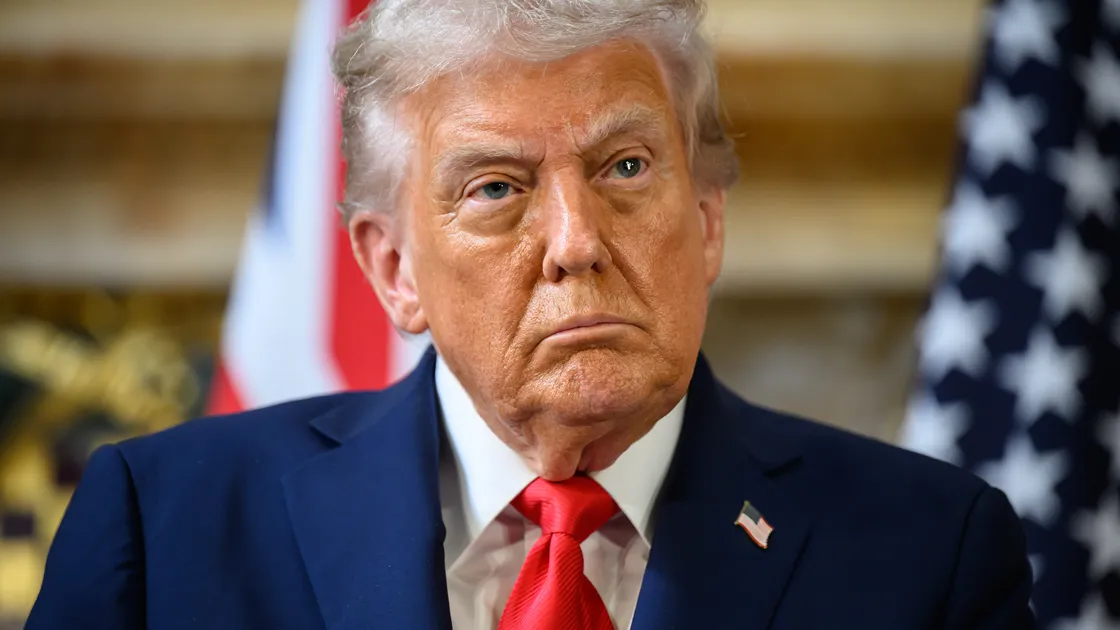
Donald Trump has elevated this approach almost to an art form, spoiling us for choice when it comes to examples. His chutzpah in recent attempts to rename the Kennedy Center was laugh-out-loud. Muting Democrat ex-officio members of the board on a Teams call during a vote, then declaring the result ‘unanimous’, couldn’t be bettered by scriptwriters.
But farce has a habit of sliding into something more corrosive – which brings us to the BBC and that Panorama piece.
As we know to Guernsey’s cost, Panorama has form. The BBC did splice the footage. That matters. Public broadcasters trade on trust, and once editing strays into distortion, it deserves to be called out.
But then Trump went over the top. Having rightly criticised the editing, he claimed the words themselves were AI-generated. Not taken out of context. Not selectively clipped. Simply not his – despite the original recordings being held by hundreds of news organisations around the world.
That was the moment we moved beyond media standards and into something darker. A man with no shame, no embarrassment, and no line he won’t cross. And the more brazen the fabrication, the safer it seems to become. Challenging lies is exhausting – and exhaustion is the lie’s greatest ally.
We like to think this is just an American problem. It isn’t.
We had the UK Chancellor, Rachel Reeves, caught out pretending her fiscal position was different to what it was ahead of this year’s Autumn Budget. She was claiming to be £20bn short when, according to reports of the Office of Budget Responsibility assumptions she was working with, she was in fact operating with a small surplus.
I guess you could put that into the more traditional political mistruth box. But as I said in a speech to the States in November: ‘This speaks to a deeper problem. The manipulation of language – the subtle implication, the framing that nudges the listener toward conclusions the evidence does not support – is something we see far too often in politics. It becomes habitual. Some stop recognising it for what it is; not cleverness, but a corrosion of honesty.’
Six months ago, in my election manifesto, I offered voters my three clear political priorities – fix public finances, get politics working again, and kick-start economic growth.
Using the language of Policy & Resources’ Government Work Plan, these were my ‘super priorities’, if you like. Half a year later, with all the recent goings-on, it is hard to escape the sense that when it comes to getting politics working again, we have been travelling in the opposite direction.
The events of the latter half of 2025 have been an uncomfortable spectacle for Guernsey on the international stage. Controversy has dogged the senior committee throughout the summer and autumn, culminating in a second arrest of a member of Policy & Resources last month.
The contrasting responses of Policy & Resources to its two arrests this year were striking. In the second, we were offered a holding line, followed by the equivalent of an official ‘meh’, not even a token expression of concern proportionate to the seriousness of the allegations. That inconsistency, more than any single comment, has done real damage to the integrity of the senior committee.
Because whatever claims are made about being exonerated by the process, the impact of driving a coach and horses through the code of conduct arrangements means that deputies are now acting with effective impunity – using elected office to pursue personal agendas, safe in the knowledge that the system will blink first.
Unless there is some visible concern for the public’s protection, I fear it won’t be long before someone is having to write to the Ministry of Justice describing a complete failure of political governance on this island.
With the unedifying spectacle of the political theatre, it is easy to be distracted and overlook the fact that there has been scant progress on my other two manifesto priorities in the last six months: growth (where what little statistics we have nowadays point to a second year of economic contraction) and, despite my efforts this autumn to freeze the budget, restraining government spending.
Which brings me to Policy & Resources’ recently published Government ‘Work’ Plan (my inverted commas). I can state, with some pride, that I had absolutely no input into it. In fact, if you take the trouble to read the document – not that many will – it records for the avoidance of doubt that, as president of the Scrutiny Management Committee, I was excluded from the process. I therefore have no qualms at all about offering a frank and honest assessment of its contents. Though I won’t spend too long criticising the specifics – others are already doing that.
Reading the plan in full, what struck me most was not its ambition but its caution. The underlying approach is familiar: raise more revenue, spend it, perhaps redesign a few systems, and hope for the best.
Page after page is devoted to the language of resilience, wellbeing and foundations. Strip that away, and it is worth remembering that this is a plan written for a government that has just admitted to spending £42m. on IT with nothing much to show for it, is budgeting to spend more than £100m. more than it expects to receive in 2026, and has allowed public spending to rise steadily throughout a decade in which the economy has barely grown at all.
In these circumstances, a credible Government Work Plan would be ruthless about cost control and urgent about growth. This document is neither. It assumes that existing spending patterns need not really be challenged, higher taxes will close the gap, and that growth can be assumed rather than planned for.
When criticised last week for producing a Government Work Plan with no meaningful commitment to economic growth, the president of Policy & Resources insisted that ‘our whole plan is about economic growth.’
Oh no it’s not. (Well it is panto season.) Not explicitly. Not implicitly. Not measurably.
If growth were truly the organising principle, it would be stated, prioritised and tested. Instead, an attempt is made to retrospectively read growth into a document that carefully avoided saying it.
It’s the Trump playbook. Same manoeuvre. Different room. Say it confidently enough. Assert it late enough. And hope nobody notices.
But they will.
Because voters can read. They can see what is in a document – and what is not. They can tell the difference between a plan and a post-hoc justification. And they know when they are being talked down to.
There is a certain chutzpah at work here. The belief that confidence can stand in for proof, that assertion can replace analysis, and that if something is said late enough and firmly enough it will be accepted as having always been true. It is not clever politics. It is simply politics that relies on people being too tired, or too polite, to challenge it.
Which leaves me with the same question I started with.
How am I supposed to teach my kids the difference between right and wrong – when the adults running the place no longer seem able to tell the difference themselves?