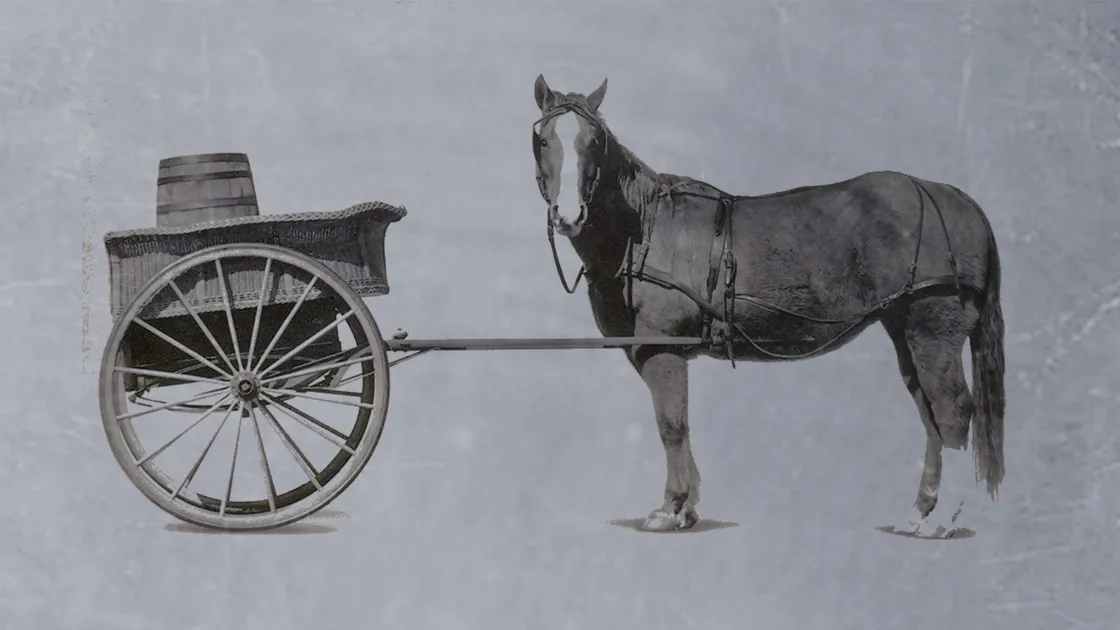
We are all familiar with the expression ‘putting the cart before the horse’. Well, this could very well be applied to P&R’s intent to have the Government Work Plan approved in advance of the most significant debate that this assembly will likely have during this whole term. To whit, the promised tax debate and resulting funding and investment plan slated for Q2.
Why? Think of it this way. The ‘cart’ is government expenditure. The ‘horse’ is government income. A horse that is not sufficiently large hasn’t the strength to pull a cart that is overburdened with too much weight – most specifically £95m. too much weight.
Whether we magic up five ‘super priorities’ or 50, until we resolve how big the horse needs to be (and note the use of the word ‘needs’, not ‘wants’) – how can this, or any assembly agree in advance what to plan for?
Out of circumstances, we already had this assembly endorse P&R’s 2026 budget, absent this aforementioned crucial tax and F&IP debate. Ordinarily they would have been in post for a year before having to then agree the next iteration of the GWP in June and crucially would know the outcome of that central debate that (in my opinion) will determine the bailiwick’s immediate and forseeable future. But P&R wants to move it to January instead.
This could be an exercise in futility at best and economic negligence at worst. That is of course, unless this P&R already knows that for all its bluster about examining the island’s tax-raising alternatives (for the umpteenth time) and all the election verbiage around ‘fair tax’, they have virtually zero chance of introducing any meaningful taxation changes to address their stated £95m. structural deficit with this assembly.
This is because all roads lead to unpopularity at best, or corporate, economic suicide at worst. So we could conceivably end up having a pointless, academic debate about vague commitments to health reform, Leale’s Yard, early years and our harbours – because there is no need to demonstrate or commit to how all this could possibly be funded. That, dear reader is the only super priority that really matters – for this whole term. Where is the money going to come from?
The chief minister has been reported as claiming ‘Our whole plan is about economic growth’. It makes a fine headline, but growth can be a zero-sum game. Which is to say there is a cost to be borne – particularly when at least 60% of government revenues (which pay for all our services) come from earned income, wages and salaries.
Unless we change the current taxation model, revenue growth under the current arrangements would require a substantial increase in the working population. Leading to more pressure on housing, education, social services and health budgets, unless of course sizeable productivity gains can be realised – or new revenues can be squeezed from the working population and/or the corporate sector. In addition however (and the GWP is pretty silent on this), we also need to make substantial savings in public expenditure if there is going to be any appetite amongst islanders to endure more taxation.
This is where we hit a wall and why the debate on future taxation must be had before this assembly make commitments that cannot be kept, with a proposed and premature GWP.
Most fair-minded people accept the need to assist the less well-off via redistributed taxation – up to the point that is, when many of those making higher contributions (popularly referred to as ‘middle Guernsey’) are themselves struggling to make ends meet. I would argue that we have reached that point which is why islanders are so resistant to further taxation measures. The recent election is ample proof of this, albeit most islanders are very likely ascribing support for a so-called ‘fair tax’ system as meaning ‘somebody else needs to pay more’.
Unfortunately, we cannot address a solution to all of this by simplistic thinking purely about taxation in our domestic economy. By that I mean that which is not reliant on our international economy (short form for the finance sector), which represents some 40% of our GVA. Consequently, any radical change to corporate taxation has to be within what remains competitive internationally.
Whilst that may primarily mean comparable headline rates of tax for corporates – it is also affected by the attendant cost of actually doing business here. The bad news is that operating out of Guernsey is increasingly too expensive already. That means that productivity becomes an absolute prerequisite to deliver growth from the same footprint. It also closes the door on seeking further increases in employer rates of social insurance contributions. Which is why we have to countenance GST.
Partly because we need the important diversity of income which it offers, but actually it introduces a means of taxation that the individual has the most control over, by providing some flexibility over what we choose to spend any spare money on. In addition, it brings in sources of income that do not hit the majority of individual taxpayers – tourists; corporates and those living off capital (who may in fact be quite wealthy, but don’t work).
For all of the foregoing reasons the last assembly (by a small majority) agreed to begin the work necessary to be able to introduce a GST.
However, the vast majority of the existing assembly who were also in the last one did not vote for it. Furthermore, a lot of the new deputies did not voice support for GST in either their manifestos or election rhetoric.
If I am honest, I don’t think the island as a whole quite understands this dilemma fully, in fact, I don’t think many deputies do either. So let me fly a kite on a third way, which is borne out of the reality that our demographic will otherwise inevitably require continuing increased tax contributions for pensions, long-term care and health services.
Essentially, we have to accept greater individual responsibility for the costs of the services we demand. But that also requires individuals having more control over how much money they retain before automatic taxation from wages and salaries removes their choice. This however can only be realisable when a definition of what universal entitlement actually represents.
By definition, it will not provide what we have today but that will also mean lower cost of universal services paid out of redistributed taxation – and obviously a lower cost of government for providing or overseeing them.
That does not mean there should be no safety net for the most vulnerable. But it will also likely require a fixed budget allocation to health, as opposed to today when increased demand is automatically provided for from taxation alone, because rising health and care costs are what will eventually bankrupt us under the current model.
I could go on, but the point I am making is that to gain any sort of popular support for additional taxation measures in the domestic economy, it will need to include the ability for individual taxpayers to retain control over more of their own money than currently.
That in turn will determine the size of government, the number of deputies, necessary governance measures, greater participation by private business, the third sector and quite likely douzaines too.
This requires considerable work and, to be clear, a number of taxpayers would be paying out more personally as a consequence, especially in relation to health. But islanders cannot have it both ways. You cannot increase the range of services without also increasing taxation – somebody has to pay the piper.
To my mind, given that what we do know is, as things stand, we will have no reserves left by 2032, this assembly has to make some fundamental and far-reaching changes this term which will require big picture thinking, financial understanding, acceptance of economic reality and that any solutions will not be universally popular.
If this P&R is going to come back in Q2 with a simple binary choice of tax corporates more or introduce GST without some real alternative thinking, then having a debate now about any sort of GWP is merely bureaucratic window-dressing.
I cannot see that a binary choice alone will gain sufficient support either way. The stakes are now simply too high without a more radical rethink of how we sustainably fund what is currently an unaffordable future. We are a small island which, although beautiful and affording us all a fantastic quality of living, has very limited growth potential for population size.
In view of all of this, I strongly urge deputies to postpone the GWP debate until June when it was originally scheduled to be. Taking on GWP commitments for this whole term to ‘super priorities’ this early, without knowing if we can continue to fund them – or anything else for that matter – would be very foolish indeed.