Deputy Jayne Ozanne’s recent column on freedom of speech and social media prompted me to put a few thoughts on paper, not because I disagree with her desire for responsible debate, but because I think the conclusions she draws risk taking us in exactly the wrong direction at precisely the wrong time.
Before going any further, I should be clear about my position, because pretending otherwise would be disingenuous and would allow critics to dismiss the argument rather than engage with it. For several years I have been one of the administrators of the Facebook group Guernsey People Have Your Say, and what follows is not abstract theory or armchair commentary, but the product of watching, moderating, encouraging and sometimes despairing at how political communication on this island actually works.
Guernsey People Have Your Say now has more than 27,000 members, with Facebook’s own figures showing over 21,000 of them as active. In an island with a population of around 65,000, that is not a niche or a curiosity. It is one of the largest public forums Guernsey has ever had. Some individual posts attract more than 16,000 views, which is not far short of the circulation of the island’s main printed newspaper, and yet this space is still routinely dismissed as the 'wild west' by people who rarely venture into it.
That description tells us more about the discomfort of the observer than the reality of the space. It is also built on a persistent myth about who actually uses the group. We are frequently accused of being dominated by older residents, yet the data shows that the strongest participation comes from working age adults, particularly those in their mid-20s through to their 40s, followed closely by older working age groups. These are people in the thick of island life, paying tax, raising families, worrying about housing, healthcare and education, and deciding how they will vote. Women slightly outnumber men, and the overwhelming majority are Guernsey-based. This is not an online mob imported from elsewhere. It is the island talking to itself.
Despite this, many politicians continue to treat social media with suspicion or outright disdain, as if ignoring it were a mark of seriousness or wisdom. Over the years I have tried repeatedly to persuade deputies to use these platforms outside election time, not as a publicity channel, but as a place to explain decisions, outline constraints and correct obvious misunderstandings in public where everyone can see them. I have asked open questions deliberately, precisely because the answers would be useful to more than one person.
What usually happens next is instructive. I receive a private message inviting me for a coffee or a quiet chat, with an offer to explain matters one-to-one. I always refuse, not out of rudeness or stubbornness, but because the logic escapes me. Why should a politician spend their limited time explaining something to me privately when exactly the same explanation could be offered publicly to thousands of islanders with no more effort and far greater effect? Why retreat into private reassurance when public understanding is what is missing?
This instinct for private engagement runs deep. Politicians still hold constituency surgeries once a week or once a month, often giving up Saturday mornings to sit in rooms where attendance is tiny and, in some cases, where the politicians outnumber the electors. The intention is honourable, but the efficiency is questionable. In an age where thousands of people are already discussing the same issues online, I genuinely struggle to understand why this is still seen as a better use of time. One-to-one conversations have their place, but they do not scale, they do not educate the wider public, and they do not correct misconceptions beyond the walls of the room.
Social media does.
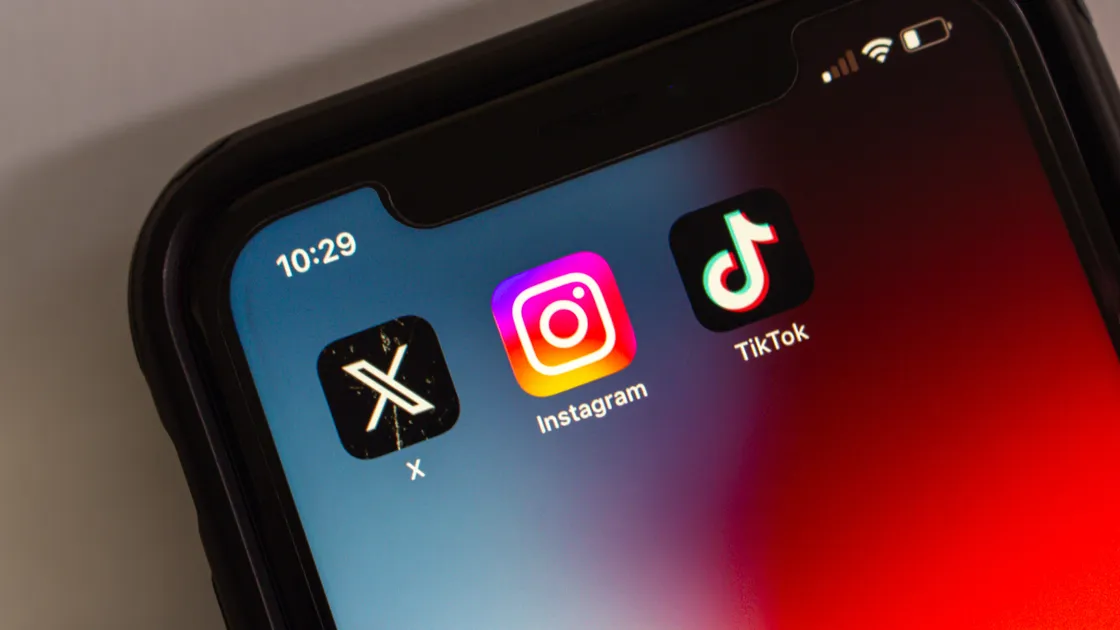
This is not just a Guernsey issue, and it is becoming increasingly obvious that more senior politicians elsewhere understand this. Earlier this week the UK prime minister chose to announce government policy on ground rents on TikTok. Whatever one thinks of the policy itself, the method matters. This was not a gimmick or a lapse into frivolity, but a recognition that serious political messages now have to be delivered where people actually are, not where politicians might prefer them to be. It was a grown-up acceptance of reality rather than a nostalgic defence of old habits.
That approach stands in sharp contrast to the view expressed by Deputy Ozanne, who described online forums such as Guernsey People Have Your Say as the wild west and warned of the dangers of unfiltered debate. Her concerns about misinformation, tone and confidentiality are not illegitimate, but her conclusion is the wrong way round. The answer to messy conversation is not withdrawal. It is engagement.
It is often said that social media is full of fake news and incorrect information, and sometimes that is true, but it begs an obvious question that is rarely answered. If those who know the facts refuse to engage, how exactly is that situation meant to improve. Incorrect claims do not dissolve through neglect. They spread, they harden, they get repeated and they migrate into offline conversations where they are even harder to challenge. Silence does not neutralise misinformation. It validates it in the eyes of those watching.
There is also a fundamental misunderstanding about what public engagement actually means. Politicians often feel they are being dragged into arguments with individuals who are entrenched and hostile, and they worry that nothing will be gained because neither side will change their mind. On that narrow point they may well be right, but again that misses the real audience. Just as with a newspaper column, there are far more readers than writers. The person you are arguing with is almost irrelevant. What matters are the thousands who are reading silently, forming views about competence, openness and trust.
Every public answer is an act of education. It explains process, introduces nuance, corrects errors and demonstrates whether someone understands their brief. That is why public engagement matters so much more than private reassurance.
Confidentiality is frequently raised as the barrier, and it is real, but it is also often overstated. Nobody serious is asking politicians to breach personal privacy or reveal sensitive negotiations. What people are asking for is explanation. Why a decision was made, what constraints existed, what options were ruled out, and why certain details cannot be shared. Explaining limits is not breaching confidentiality. Refusing to engage at all is something else entirely.
Trust sits at the centre of this debate, and trust cannot be demanded or asserted. It cannot be sustained by withdrawal. It is built slowly through presence and consistency, through being willing to show up in public spaces, explain decisions and take criticism without retreating behind closed doors. Calling social media the wild west may feel like wisdom, but it often looks more like avoidance.
Democracy has always been messy. Social media has not changed that. It has simply made the mess visible. The real risk is not that politicians engage and get criticised, but that they disengage and allow others to shape the narrative unchecked. When deputies retreat into private meetings and closed explanations, they do not elevate the debate. They remove themselves from it.
The irony is that many of the same politicians are perfectly happy to use social media during elections, when it suddenly becomes a valuable tool for reaching voters directly. Islanders notice this inconsistency and draw their own conclusions. If social media is good enough to ask for votes, it is good enough to explain decisions.
This is not a call for politicians to argue endlessly online, but a plea for them to recognise where public conversation now happens and to engage with it intelligently. One clear explanation read by 10,000 people is worth more than 10 private coffees.
Turning your back on social media does not protect democracy. It weakens it. It does not reduce noise. It amplifies suspicion. In a small island, absence is never neutral. It is always interpreted.
The conversation will continue regardless. The only real question is whether those elected to represent the island are prepared to take part where it actually happens.