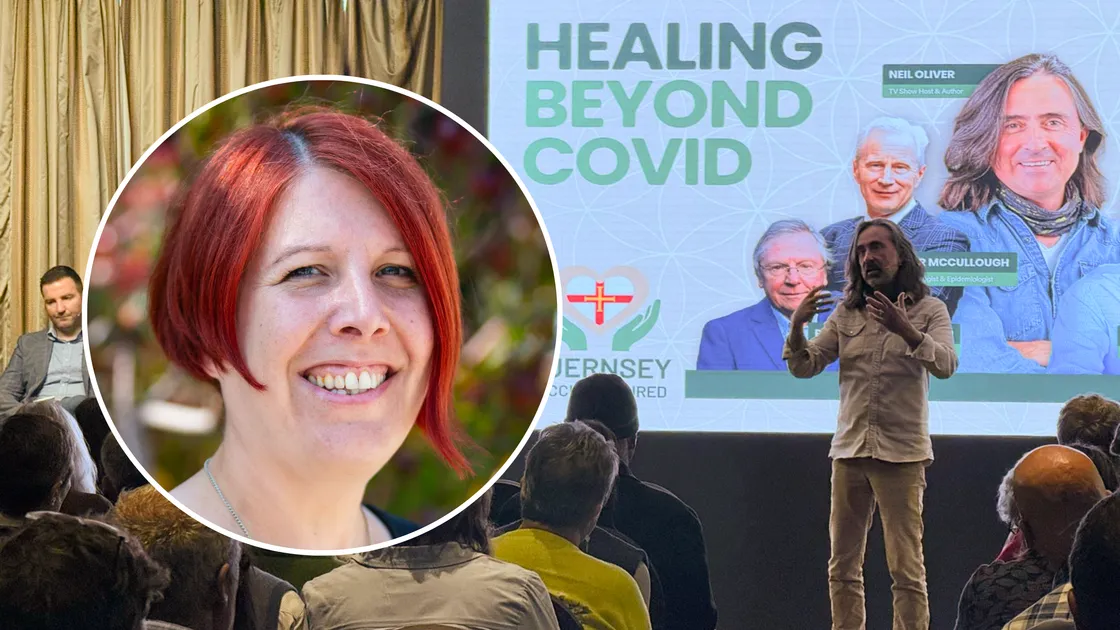
Earlier this month, I attended the screening of the 2025 film An Inconvenient Study and the Healing Beyond Covid conference with an open mind. I suffered a stroke in July 2022. I have no family history of strokes; I have phenomenally low blood pressure; and I have been vegetarian for more than 30 years. I used to suffer severe migraines in my teenage years and 20s but grew out of them and only suffered occasional retinal migraine every few months.
I received the AstraZeneca vaccine on 24 April 2021. I developed more regular retinal migraines further to the vaccine which culminated – 20 days later – on 14 May 2021 with me going blind in my left eye for a few minutes. It scared me so I visited the doctor, went for an MRI scan, went to the optician who referred me to the ophthalmologist at the MSG. All the checks were clear; the scan showed my brain was ‘normal’ but the retinal migraines continued. I also suffered from double vision until I was suffering from brief but daily events. I put it down to the pressure I was under with work and the long hours I would spend at the computer, given it was the era of Covid.
21 July 2022. I woke up and had suffered a ischaemic stroke in the left side of my brain in the night, which left me with expressive aphasia – a language disorder – where I could just say ‘OK’ for a few weeks and a paralysed right hand which saw me residing on Le Marchant Ward for six weeks receiving intensive physiotherapy and speech and language therapy.
I eventually caught Covid for the first time in September 2022. After my stroke, a question kept niggling at me: Was my stroke caused by the Covid vaccine? My suspicions were further triggered by a BBC article, AstraZeneca to withdraw Covid vaccine, and the line: ‘Its vaccine was estimated to have saved millions of lives during the pandemic, but also caused rare, and sometimes fatal, blood clots.’
My interest was piqued by the Healing Beyond Covid conference, I thought it would be a good opportunity to see if my suspicions carried any weight. I did not read anything about the film and the conference beforehand, aside from reading the letters in the Guernsey Press from both sides, as I wanted to attend the conference unbiased and to form my own conclusions.
An Inconvenient Study
This film is available to watch on YouTube. I had assumed that it would be a film solely about the Covid vaccines. To my horror, it was a film dismissing ALL vaccines, linking the rise in autism to vaccines. My horror turned to fury when the film advocated against the MMR vaccine and the polio vaccine.
The film cherry-picked statistics and ignored inconvenient truths. I was arguing in my head about how the film ignored genetic, environmental and socio-economic factors, and changing societal attitudes, on their quest to ‘expose the truth’.
I hadn’t heard of autism until I was an adult, I had barely heard of dyslexia as a teenager. The 21st century has seen society become more sympathetic to the neurodivergent and subsequently there has been a predictable rise in diagnoses. The number of my friends that have been diagnosed with ADHD and autism in their middle age has been astonishing. People who all their lives have been characterised as lazy and disorganised, or intense and introverted, have now received a formal diagnosis and, more importantly, access to medication and services that were unavailable to them previously. It has come as a great relief to them to have a greater understanding of themselves and how to manage the conditions effectively.
As the lights were turned up, I turned to my friends, shaking my head and saying ‘Wow’. We stayed for part of the Q&A, and I was struck by some of the audience’s genuine despair about how Covid and the Covid vaccine had impacted their lives. I also suspect that there has been a rise in the number of people with heart issues since the vaccine, in line with Dr Patterson’s conclusions expressed in an interview published on 14 May 2024: ‘I started to see things which made me more and more concerned’. I read this line with interest: ‘Incredibly, the side-effects don’t stop there, as I have been informed of a doubling of the stroke referral numbers recently, with an increase in overall thrombo-emboli disease since the roll-out of the Covid-19 vaccines.’
I noted the joint response to the article issued by Dr Nicola Brink, Dr Peter Rabey, and Dr Steve Evans rebutting Dr Patterson’s assertions, particularly: ‘In addition, Dr Patterson has slightly modified his statement on stroke cases but is still stating that stroke cases have doubled when in fact they have remained the same. Building an argument based on such inaccurate data is misleading.’
Back to the film. We decided to leave when there was clapping part way through the Q&A section from the entranced crowd. But I think the night was summed up by the speaker’s final statement when we were gathering up our belongings to leave, in response to a question, which was this gem:
‘Pray for Bobby Kennedy. Pray for Donald Trump.’
Healing Beyond Covid conference
To say I was unenthused about Sunday’s conference is an understatement.
However, I returned to St Pierre Park at 10am and tried to reset my mind after the previous evening. The conference was a vast improvement on the film.
I listened with interest to Laura Aboli on Fear – The Ultimate Weapon Of Control. I was interested in Dr Chris Flowers’ talk on Pfizer’s Own Words From Pfizer’s Own Documents, and was fascinated by the statistics produced which indicated that:
Serious adverse events (SAEs) were found three times more common in women than men
54% were under 50 with the highest number of cases were in the ages 31-50
Nearly half of all deaths plus 86% of AEs were amongst healthy people i.e. those with no co-morbidities
Nearly half of the outcomes remain ‘unresolved’ – 23% did not recover.
Food for thought and I was quietly impressed until he put up the last slide that claimed that climate change was a sham. Tell that to the polar bears, I thought.
I went for some food, so I missed most of Professor Angus Dalgleish’s talk entitled The Rise In Turbo-Cancers Post-Covid 19 Injections, but returned for the panel discussion and Q&A.
I listened intently to the nurse from the PEH’s talk about her concerns about the impact the vaccine had on people in her care. I left around 1.30pm as I was beginning to get fatigued.
So, am I any clearer on the ‘correlation vs causation’ argument that has been troubling my brain since my stroke? No. I had hoped for a lightning bolt as a result of attending the conference but got a damp sparkler. My conclusion? I am 50/50 about it, my stroke was ‘probably’ brought on by the Covid vaccination, but I can never be certain. And I am OK with that. I will never take such a rushed-through vaccine or medication again – pandemic or no pandemic – but I will continue to take vaccines that are tried and tested over decades.