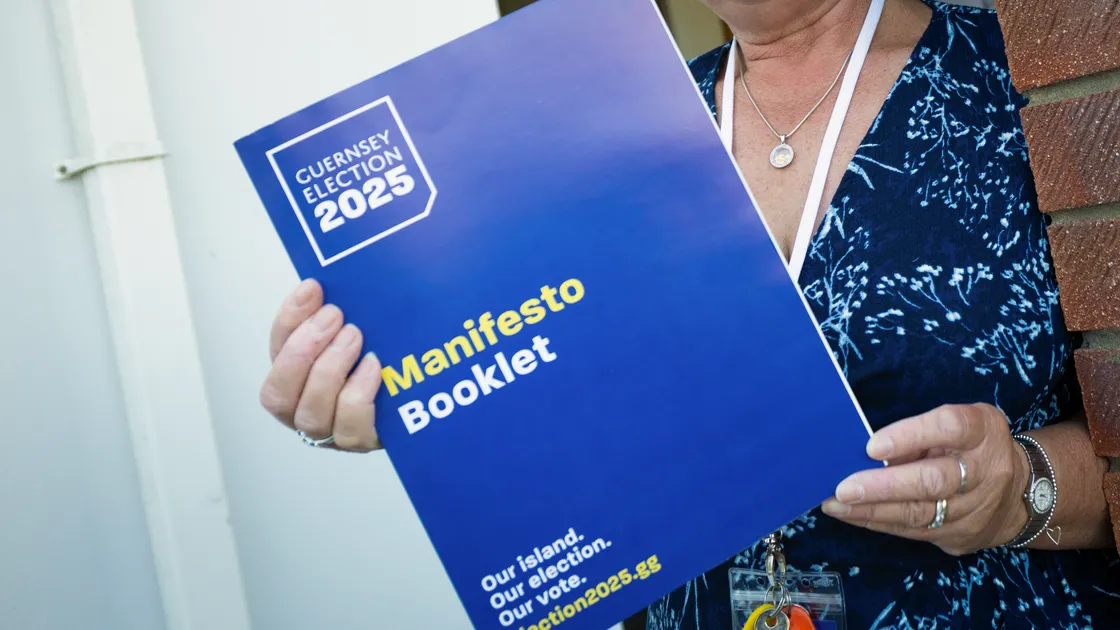
Was GST the issue of last year’s election? Reviewing the manifestos, it’s clear most candidates thought that housing was the thing that was going to convince the voters, and I was surprised to see that GST was only referenced 115 times across the 280-page booklet.
Many of those, of course, were from unsuccessful candidates – maybe those who were more politically aware knew it might be fairly sensible to avoid any mention at all.
Among those senior people was P&R president Lindsay de Sausmarez, who wanted a tax system that was ‘fairer and more efficient’ and noted that funding key services should be handled ‘responsibly, recognising the strain already on working people, pensioners and businesses’.
Yvonne Burford was focused on a thriving economy while keen to make efficiencies and savings in the public sector.
‘My voting record shows that I always support those who are less well-off,’ she said.
‘My promise to you is simple – I’ll only back fair tax changes that protect or improve things for low and middle earners who are already under pressure.’
Meanwhile Gavin St Pier’s Forward Guernsey manifesto was also studiously avoiding reference to GST, instead promising improved corporate taxes and wholesale tax reform to create a fairer system.
At least two members of P&R mentioned those dreaded three letters.
Charles Parkinson was keen to promote corporate tax changes that plenty of his fellow candidates would align themselves with.
‘Guernsey’s financial position is stronger than many would have us believe,’ he said.
'And in this context, it makes no sense to be adding a GST to the burden on the Guernsey public.’
Steve Falla proudly said he had never voted for GST and instead proposed broader tax reform, identifying and acting on inefficiencies, and corporate tax changes with Jersey.
Marc Leadbeater said he had firmly opposed GST but would not rule it out forever – as only as a ‘last resort’.
Aidan Matthews welcomed the protection that GST-plus offered low and middle income households, even though he had voted against it.
‘If GST cannot be stopped, an important task ahead will be to keep the lowest rates possible,’ he said.
Marc Laine, bidding to return to politics, wanted to see more scrutiny, fiscal responsibility and transparency in public spending.
‘My policies focus on wealth generation and a fairer society – we can only avoid GST if we can boost the economy without leaving people behind,’ he said.
Chris Blin said that ‘GST is not a quick fix to our fiscal problems – I believe in reform first’ while Andy Cameron was backing a commission to do the hard work and find alternatives to GST.
Adrian Gabriel was against a GST and wanted to explore ‘alternative revenue sources’. To be fair, he also had a few ideas – zero-15 corporate tax, taxes on activities that harm the environment, and a luxury goods tax.
Few people were prepared to go as deep as former Treasury lead Mark Helyar on GST, calling GST-plus ‘the fairest means of raising revenue without creating even more economic stress and risk’.
He said he had spent hundreds of hours trying to avoid these steps but said the island was a ‘global outlier in collecting almost the lowest amount of GDP in the developed world and having no form of consumption taxation’ when also rapidly running out of money.
Rob Curgenven said ‘GST doesn’t fix the problem – it won’t provide enough funds to fill the ever-growing financial void’ and Simon Vermeulen was happy to reiterate that ‘GST is not right for Guernsey and doesn’t fit our values’. Steve Williams was also not in favour, though he recognised that the States had to increase its income.
Lee Van Katwyk said he would stick a couple of pence on income tax rather than back GST.
‘There are other options before introducing the dreaded GST.’
A couple of other newbies were a little more courageous. David Dorrity said that ‘GST-plus seems to be the fairest way that has been suggested to strengthen the island’s future financial position’ and said whichever way the debate went, he was keen to sort it out quickly.
Munazza Malik said she did not support GST in isolation but did support the GST-plus package that protected people on lower incomes and created a broader, more equitable tax base.
Paul Montague had ‘valid concerns’ about GST-plus but wanted it to see it gain wider public support having been explained as part of a broader and fairer tax strategy.
Liam McKenna, as you might expect, was steadfast.
‘I have opposed a Goods and Services Tax for five years and nothing has changed to alter that view. GST is a regressive tax that inevitably rises, hitting working families and vulnerable islanders the hardest.
‘A restructured corporate tax system, where finance companies pay their fair share, is the sustainable solution we need.’