A friend of ours and his family have just been allowed back into their homes after police swooped on their remote Spanish hamlet and gave the 200 residents there literally one minute to leave, over fears that the storms battering Andalucia last week were about to sweep them away.
Andy, a local man and son of a former Vale grower before becoming a hotelier near Ronda, a holiday hotspot famous for its history and set dramatically above a deep gorge, has spent the last 38 years building a boutique business known by many islanders at nearby Estacion de Benaojan.
Molino del Santo is in an idyllic spot by a spring that gushes out of the hills and has never, since Roman times, been known to dry out – so the perfect spot for a water mill.
A few miles above it is a hydro-electricity dam that has never been used in its 100-year history, the valley behind remaining largely dry. But because of the severity of the Spanish storms it had not only filled, but reached capacity for the first time, and no one knew whether the overflow sluices would work to relieve the enormous pressure of billions of litres of rainwater. Hence the evacuation.
Further up the valley, the 2,000 folk of Grazalema are still banned from returning to their homes because biblical rains – a series of named storms one after another and eight since the start of the year – are threatening the structural integrity of the entire mountain village.
Further down the coast another famous white village, Competa, was cut off after one road was washed away and the other, at the weekend, blocked when a lump of mountain the size of a mansion fell on the road.
It reopened within 24 hours after a local contractor and others worked continuous shifts to reopen the lifeline link to emergency services and supplies.
Why am I telling you this? Because in comparison, this island, its authorities and its citizens have it easy. Set aside the Occupation and Covid and it’s basically managing the day-to-day and balancing the books.
Which, as you all know, we’re not doing very well.
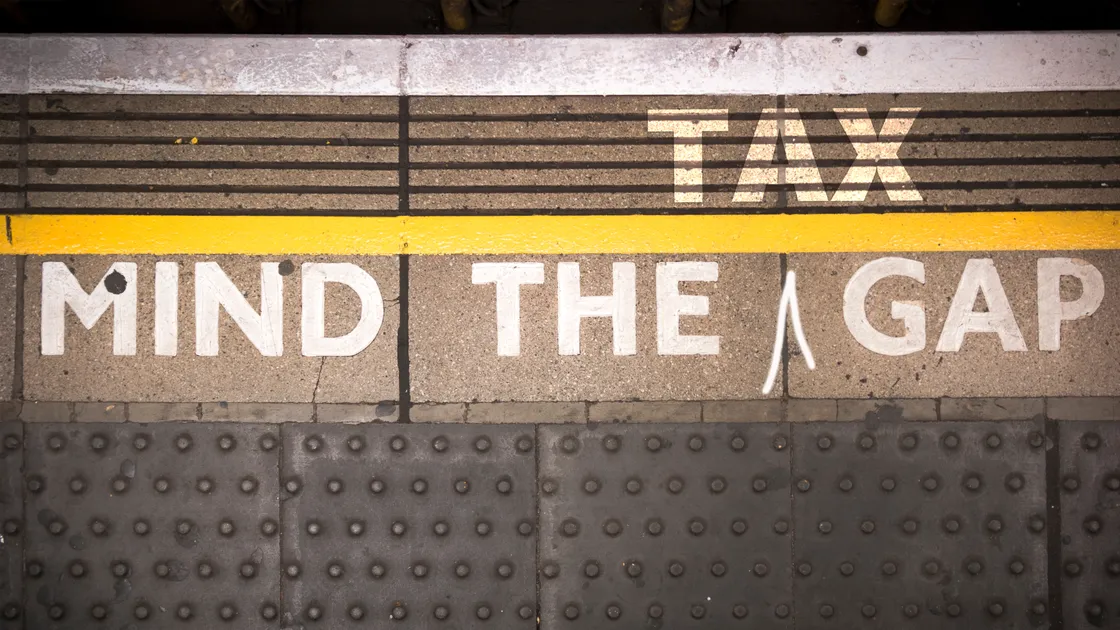
Unlike the circumstances I’ve mentioned here, Guernsey has brought this upon itself. In contrast to rockfalls or floods, it didn’t just happen. It was caused by the in/actions of its leaders and, as I highlighted here last time, the lengths (and Newspeak) adopted to keep you from realising that.
Now, ratings agency S&P Global has just published its annual appraisal of the creditworthiness of the States of Guernsey. Basically strong and stable, but not as good as Jersey and not as good as it used to be.
But it has also shone a light on some of the economies of expression adopted by Policy & Resources in trying to sell its ‘tax reforms’ – taking more money off you through GST – that making consumption more expensive will end all our financial woes. It won’t.
What do I mean? GST at 5% or 6% won’t be enough, we’ll continue to burn reserves, living standards will carry on flatlining, house prices and rents will rise and the cost of government spiral. Oh, and we’ll be deeper in debt with more borrowings.
As S&P says, ‘We expect a suite of tax reforms, including a GST, to be implemented from 2028 to strengthen and diversify Guernsey’s revenue base and slightly improve its long-term fiscal position.’ Note that – slightly improve. Not cure.
Much of the extra revenue is needed for capital expenditure – around £85m. over each of the next three years. These are huge sums – £7m. a month – for an administration that has a poor track record in managing such things, the latest being the massive time and cost overrun on the electronic patient records system.
‘Our current fiscal forecast includes the entire approved capital program [sic],’ says S&P. ‘The government’s outstanding debt is low, consisting of a £330m. Eurobond issued in 2014 and £17m. of drawings from a £100m. revolving credit facility at the end of last year, with the latter mostly used to manage operational cash flow needs. We understand that about £100m. in new borrowings is likely in the coming years to support Guernsey’s capex plans. Therefore, we expect debt to amount to about 10% of GDP by 2029.’
To summarise, that means raising taxes and borrowing an extra £2,200 per taxpayer to do things we know we’re bad at – IT, hospitals and schools. Hmm.
S&P says that despite this, 2026 and 2027 will remain fiscally challenging. ‘…we anticipate that the government’s investment needs will exacerbate fiscal deficits. Pay deals and cost inflation led to overspending in some departments in 2024, most notably health and social care.’
The island’s declining workforce is also highlighted as a drag on growth, as are high housing costs on its ability to attract foreign talent here.
What does this mean for you and I? Apart from the extra debt and higher prices, not much I’m afraid.
Real (after inflation) per capita GDP growth, a useful indicator of living standards, is expected to be flat over the next four years, as is the economy generally.
S&P also highlights something uncomfortable for P&R – it’s going to exceed its maximum taxation threshold. That’s supposed to be capped at 24% of GDP but will rise to an estimated 24.3% in 2028 and 24.1% in 2029.
Ah, you say, trivial deviations that show GST is working, and P&R’s magic wand and unicorns are coming to the rescue?
Not exactly. The same figures from S&P indicate that expenditure will be more than 2% higher – 26.7% in 2029 and representing a tax gap of around £90m. Despite GST, government will still be spending more than it’s raising in tax according to its own official forecasters.
So, in summary, P&R has no clear growth strategy or coherent plan to contain the size or cost of government, the island’s cash problems won’t be cured with GST and S&P indicates the headline figure of 5% or 6% will have to go up to have any chance of balancing the books.
But, as ever, politicians continue to spin a narrative that everything’s fine.