


When P&R was elected last July, we adopted a twin-track approach.
The first strand – unimaginatively named Workstream 1 – focuses on the tax package agreed by the previous Assembly. This fulfils the direction given by the last States in November 2024 to progress a goods and services tax, offset for all but the wealthiest third of households through substantial personal income protections.
None of us on the committee supported that package, for a variety of reasons, but we considered it would be irresponsible to abandon it before we had fully explored the alternatives.
That brings us to Workstream 2. This strand is examining corporate tax reform options – including a zero-15 regime (a higher rate for certain sectors), a territorial system (tax applied only to profits earned in Guernsey), or a new corporate levy. That work began in September with the creation of the Tax Review sub-committee, chaired by Deputy Charles Parkinson and supported by three external experts.
In an ideal world, we would wait for Workstream 2 to conclude before progressing Workstream 1. But doing so would delay any tax reform by at least a year – and with only six years of savings left, we really do not have that luxury. A year’s delay to any tax reform option would risk leaving us without the funds to invest in essential infrastructure, with knock-on effects for the economy, island services and our credit rating.
In parallel, P&R is examining ways to make significant reductions in government spending – which, to be meaningful, would have to go beyond simply making efficiencies. We identified substantial wasted spending in projects such as MyGov and acted quickly to address those failings. Improving government efficiency and accountability is non-negotiable – we have committed to deliver it.
However, efficiencies alone will not generate the scale of savings needed to meet rising demand. As I explained in yesterday’s article, more people are reaching pension age each year while fewer are entering the workforce that funds public services. Any change to the tax system – whether through corporate tax adjustments or a consumption tax – will be unpopular with at least some. So would reductions in public services. But we must examine all options seriously so that our community can have an honest conversation about the best balance to be struck.
By the summer, the States will be able to compare the available options. If the decision is to implement the previous Assembly’s tax package from 2028 to halt the drain on savings, then a decision this month is needed on whether GST should apply to food. At first glance, the answer would seem obvious: food is essential, and applying GST to it would disproportionately affect lower-income households. Their food bill represents a larger share of their weekly budget, after all.
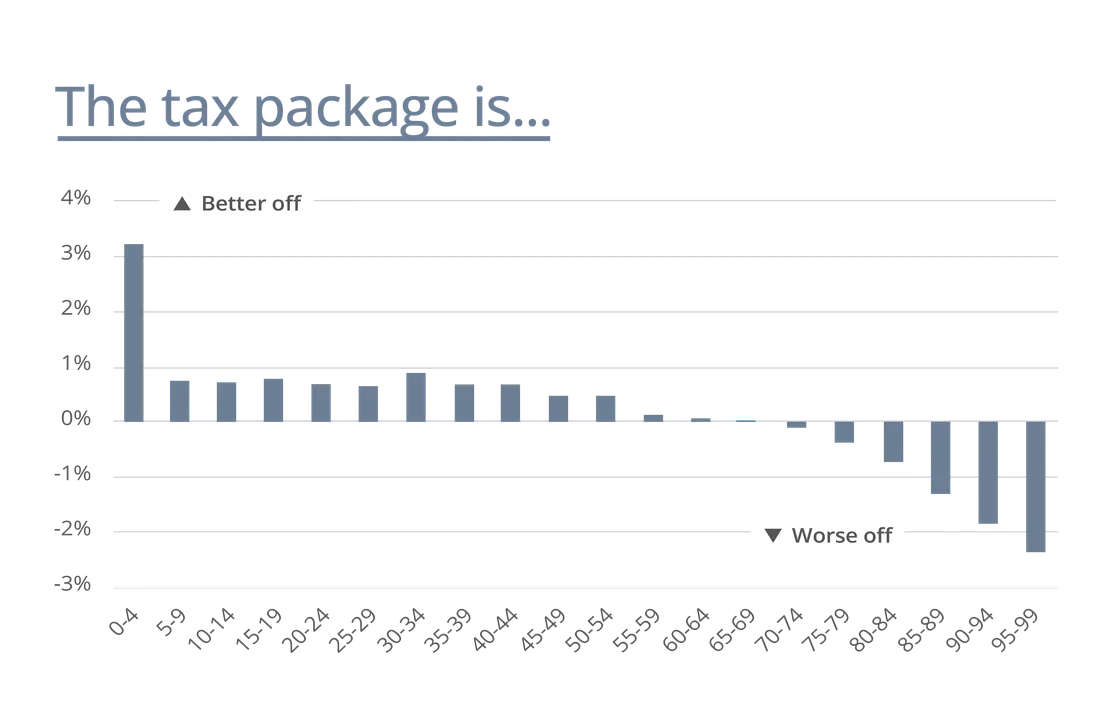
But the wider package changes the picture. The policy letter shows that, counter-intuitively, around two-thirds of households would be better off than now, or no worse off overall. The only group that would, on average, pay more is the wealthiest third of households – those most able to absorb the additional cost.
Instead of squeezing the middle, this package would squeeze the top, protect the middle and support the bottom.
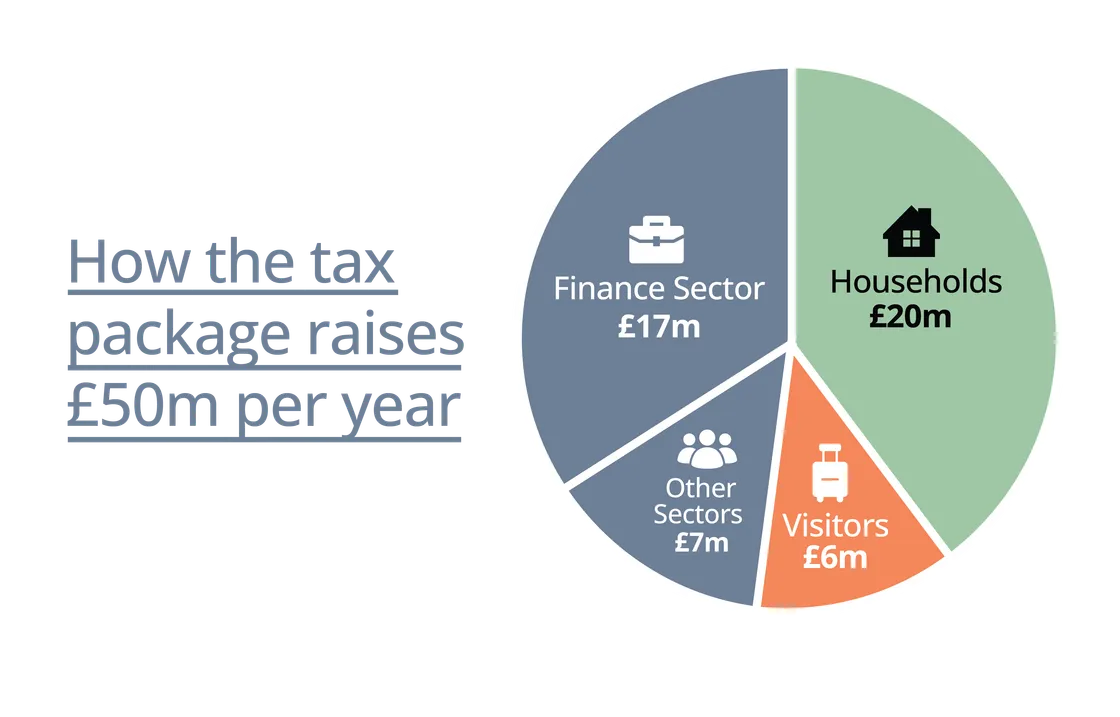
The mechanics work like this. A 5% GST would raise around £85m., but 60% of that would come from the corporate sector and from visitors to the island. Only 40% would come from households. Meanwhile, £35m. would be redistributed to lower- and middle-income households – fully offsetting, or more than offsetting, the extra cost of goods and services. Many households in those groups would actually have more disposable income than they do at the moment, even after accounting for higher prices.
The protections include:
Cutting the standard rate of income tax from 20% to 15%
Increasing the personal income tax allowance to at least £15,800
Introducing a personal social security allowance to exempt the first £15,800 of earnings
Increasing pensions and benefits ahead of price rises
A new essentials cost relief payment of £520 for individuals or £860 for couples on low incomes (including those who own their own property and/or have some savings) who do not qualify for income support
These protections are why a 5% GST applied to everything – including food – leaves lower income households better off than a 6% GST applied to everything except retail food. (If GST is not applied to food, then the rate would need to be 6% in order to raise the same amount overall.)
It is true that the top third of households would contribute more. Wealthier households tend to spend more on taxable goods and services, consume more overall, and spend a smaller proportion on rent or mortgages, which are exempt. No one likes paying more tax, but the proposed rate remains far lower than in most jurisdictions, and it is fairer for the additional burden to fall on those with broader shoulders.
One concern we share with many islanders is the fear that, once introduced, the rate of GST could subsequently rise, leaving personal income protections for dust. To guard against this, P&R is proposing two measures if GST were to be adopted:
A legal requirement that any GST increase must be matched by equivalent increases in all personal income protections; and
Consideration of requiring a parliamentary super-majority for any future increase.
Once we have debated the question of applying GST to food, once the corporate tax review concludes, and once options for reducing spending have been considered, P&R intends to bring forward a final suite of proposals by the summer. These may blend elements of different options, but the outcome must be proposals for a tax system that is both fairer and more sustainable, and able to fund the public services we need.
Creating such a system is undoubtedly a challenge – but the benefits it would bring are worth pursuing and entirely achievable.





You need to be logged in to comment.