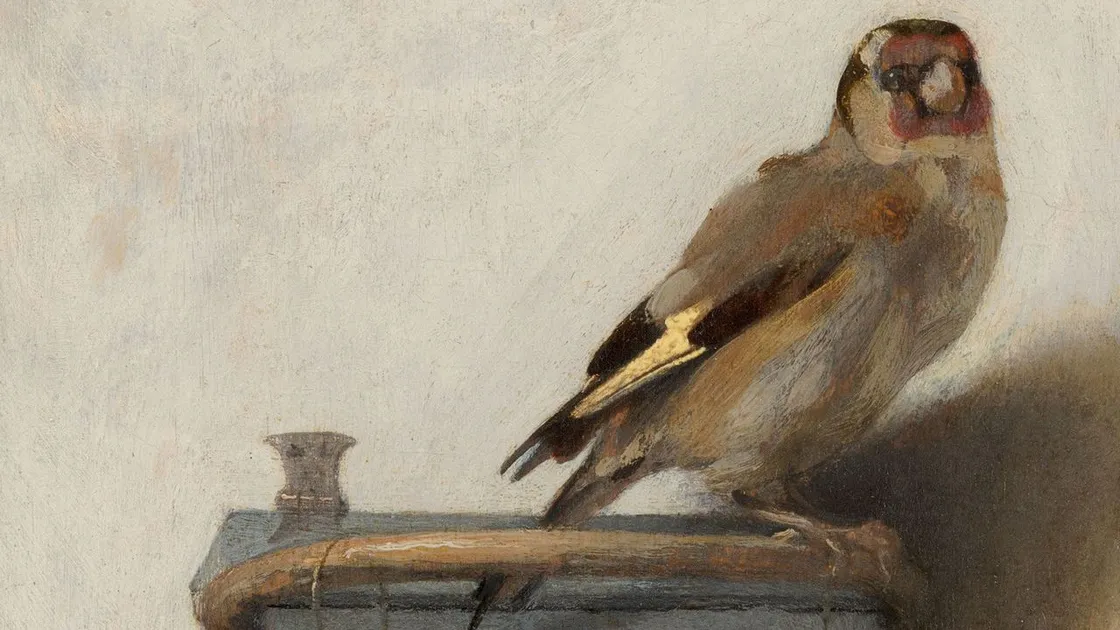
I’ve spent the past few weeks returning, again and again, to an image of a small chained bird. It appears in Fabritius’s painting The Goldfinch, and it has become for me a surprising metaphor for leadership. The tiny chain on the bird’s leg looks restrictive, even uncomfortable. But the more I’ve reflected on it, the more I’ve been struck by what it represents: a willingness to live within the boundaries that make life stable, purposeful, and trustworthy.
Good leadership – especially in a small democracy like ours – is not primarily about being talented, popular, or even available. It is about the discipline to do what is right, even when it is difficult, inconvenient, or personally costly. Character is not the absence of ambition; it is ambition shaped and restrained by integrity. And without that anchoring, the authority of a deputy becomes fragile, and the public’s trust more fragile still.
But character is not forged in the glare of the States of Deliberation. It is revealed there. The real work happens long before anyone takes the oath of office – in the quiet disciplines of truth‑telling, of owning your mistakes, of submitting personal preference to the common good.
These are the ‘chains’ that don’t confine a leader but steady them. They prevent the slow drift towards self‑interest that so easily erodes public trust. And in a community as close‑knit as Guernsey, where the impact of every decision is felt by neighbours rather than strangers, this anchoring is not optional. It is the very thing that preserves the dignity of the deputy’s seat.
The apostle Paul understood this better than most. He described himself as a ‘bondservant of Christ’ – language that sounds foreign, even jarring, to modern ears. But Paul was not talking about subservience; he was talking about anchoring. He was naming the commitments that held him steady, the truths and disciplines he willingly bound himself to so that his life would serve a purpose greater than his own advantage.
In Paul’s world, freedom was not the absence of restraint but the right kind of restraint – the kind that produces integrity, humility, and courage. And in the realm of public service, these are precisely the qualities that keep a leader grounded when pressure, ego, or opportunity might otherwise tempt them off course.
This is why those who seek election – or who already hold office – must be clear about what they are anchored to. Not to popularity, nor to the shifting winds of online outrage, nor even to the comfort of their own political instincts.
The States of Deliberation does not need free agents who treat the role as an extension of personal ambition. It needs men and women who willingly accept the ‘chains’ of responsibility: truthfulness when the optics are poor, humility when the spotlight flatters, and service when self‑interest beckons. These qualities may not be fashionable, but they safeguard the honour of the deputy’s seat and, more importantly, the trust of the people who grant it.
And so I keep returning to that little goldfinch, chained to its perch but beautiful and resilient. Its creator, Carel Fabritius – Rembrandt’s most brilliant student – worked in the Dutch city of Delft at a time when it was alive with talent, innovation, and artistic promise.
All of it was shattered in the 1654 gunpowder explosion that flattened half the city, killed Fabritius and destroyed almost everything he created. Yet this one small painting survived. And it is precisely its survival – against all odds, when the great ambitions and grand canvases around it perished – that makes it priceless today.
There is a lesson in that. When devastation comes, whether to a city, an institution, or a public trust, it is the quiet things that endure: character, integrity, the commitments a leader has willingly bound themselves to.
For those entrusted with public office, the chain is not a symbol of confinement but of devotion – to truth, to service, to the people they represent. If our deputies are to honour the seat they occupy, they must choose that same anchored life. For in the end, it is not power that survives the storm, but character.