I frequently disagree with the policies of many of our deputies. That is only natural. We all take a slightly different view of both the world and of our island community. It would be a dull sort of place if we didn’t.
But usually I can at least understand the logic behind a States member’s thinking, even if I don’t share his or her conclusions. But just occasionally I am genuinely puzzled by the thought process involved.
One recent example came from Deputy Andy Sloan. He opined that he didn’t think we needed any more water storage because all of our current reservoirs are full. They are – I’ll give him that – not surprising after the winter Guernsey has just gone through. But how does it follow that we don’t need to increase our storage?
Surely the opposite is true? If our current storage capacity never ran out – in other words our reservoirs and quarries were never full – then it would be pointless to increase that storage.
After all Guernsey Water can move raw water between its various storage sites pretty freely, so if they were never completely full then it would suggest that insufficient rain fell on the island in order to ever fill them. In those circumstances it would be an act of madness to develop yet more storage which by definition would never be needed.
By contrast when we do see our current storage brimming over, such as we do now, then we know that precious water reserves are being squandered and simply running into the sea.
Of course if the weather was always wet like the last few months have been then no one would give two hoots about that. Such a weather pattern would be deeply depressing, but at least we would never want for water.
But the best scientific predictions aren’t for consistently wetter weather, but rather for ever more extreme weather patterns. So the storms will likely get windier, the wet periods are forecast to become even wetter, but crucially the periods of drought will become even drier and longer.
Now I am no biblical scholar but even I can recall the parable of the seven fat cattle and the seven thin ones. The moral being that at times of plenty you need to put aside for times of scarcity. Problem is that even when we get plenty of rain we can’t put it aside simply because we have nowhere to store it.
Are we being too cautious? I don’t think so. After all there is no more precious commodity than water. And as I understand it, the drought resilience targets that Guernsey Water, together with the Environment & Infrastructure Committee, are working to are the same as those stipulated for water companies in the UK. Yet Guernsey’s situation is far more exposed and fragile.
In the UK if, for example, Birmingham runs short, they can bring in water from the Lake District and so on. By contrast little Guernsey is entirely reliant on the rain that falls on our 24.5 square miles. Unless of course we want to go in for the expense of desalination. And we really don’t want to do that. And please don’t believe the old wives’ tale about underwater springs coming all the way from the Pyrenees.
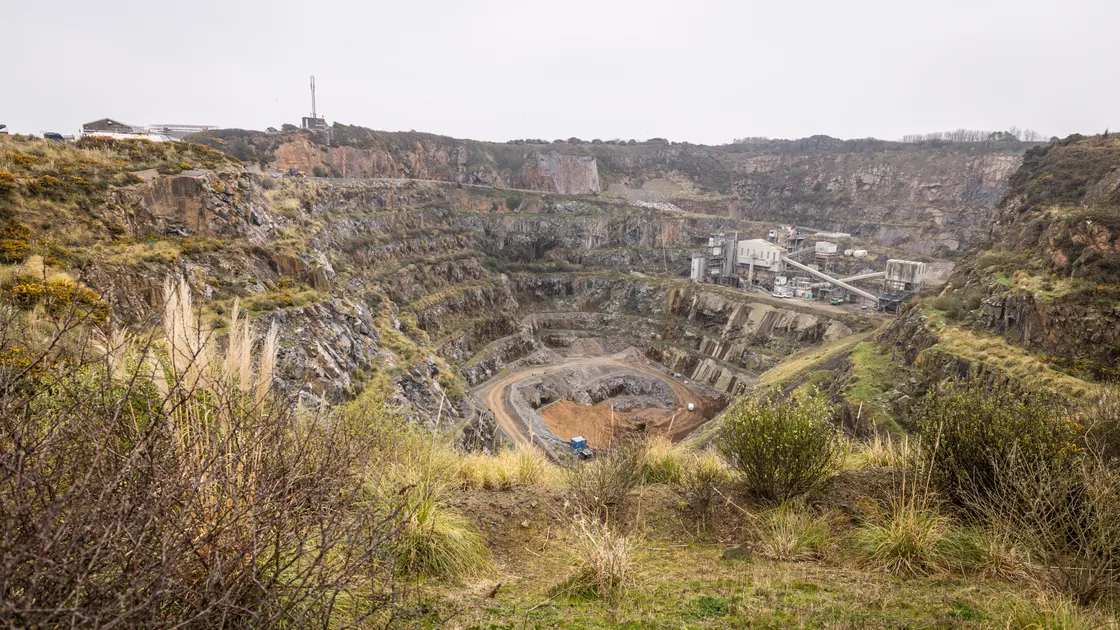
So, sorry Deputy Sloan, but I think that your observation that after a wet winter all of our reservoirs are full is a clinching argument in favour of Les Vardes being given over for water storage and not the opposite. After all a householder wouldn’t observe that their small fridge was so full that they couldn’t put any more into it, and conclude as a result that the last thing they needed was a bigger one.
But perhaps the biggest question is what would we do with such a precious, one-off, resource such as Les Vardes if not by using to to guarantee the island’s water security for generations to come? The only real alternative I have heard put forward is filling it with inert waste. What a squandered opportunity that would be.
It really would be like going back in time. Our industrial history of granite quarrying left us with a legacy of big holes in the ground. Over many decades many of them were used as landfill sites. That was a policy of its day, not only have things moved on, but Les Vardes will be just about the last large void space to be created by quarrying in Guernsey.
I know no one is talking about putting putrescible waste in Les Vardes but the fact that it would be (so-called) inert waste just makes it more of a madcap idea. Used correctly that is a really precious commodity. For example, one of the things that Guernsey is shortest of is land. But through land reclamation we can both manufacture more land and dispose of our inert waste at the same time.
I am not glib about the prospect of land reclamation. In most parts of the island it would be an environmental travesty, but there are places where it would definitely be acceptable. And that way you get a positive benefit from inert waste disposal, rather than sacrificing the last realistic option for increasing Guernsey’s fresh water resilience.
And one last thing. The States spent years considering the best use of Les Vardes. All options were considered in painful detail and depth. A decision was finally taken. It really is crucial that our government learns to occasional implement its decisions, and not just constantly revisit them.