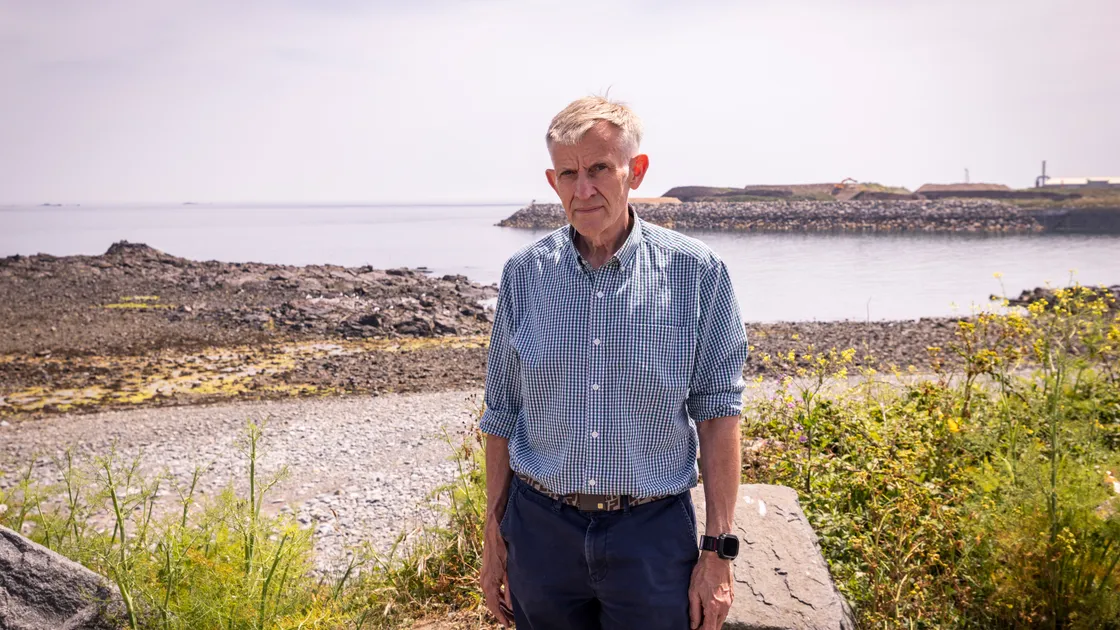
Peter Watson’s open letter resigning as chair of the Guernsey Development Agency (GDA) was emphatic: ‘I accepted this role with the understanding that the GDA would be a lean, empowered vehicle for change. Instead, it has been relegated to the status of a government quango, hamstrung by the very system it was designed to improve.’ Anyone who’s had any contact with Mr Watson in the last six months cannot say anything other than his departure is disappointing but not remotely unexpected.
The quotes attributed to Deputy Lindsay de Sausmarez in response to the resignation are revealing. Firstly, they are not expressed as having been made by Deputy de Sausmarez as president of our most senior committee, Policy & Resources, but rather as ‘chair of the Guernsey Development Agency political oversight group’. Don’t be surprised if you’ve never heard of it, but ‘Pogs’ are the flavour of the moment in government. They are an attempt to make our clunky system of government operate more effectively, but you can hear the gears grinding in their very name. The GDA Pog comprises the presidents of P&R, ED and E&I – to which the STSB has been added recently as an ‘observer.’ That’s more than enough initials for any one sentence. (They translate as Policy & Resources, Economic Development, Environment & Infrastructure and the States’ Trading Supervisory Board). Put them together with the relevant civil servants advising from each committee and the GDA themselves and you’ll need a largish room to accommodate the 15-20 people involved. That fact alone will tell many all they need to know.
Secondly, the GDA Pog chair’s opening reaction was stated as, ‘We understand and very much share the frustrations of the GDA.’ It’s surprising that this statement, accurate though it is, has not caused more of a reaction, because what it’s saying is, ‘We, the government, are unable to clear out of the GDA’s way, the very hurdles that drove the GDA’s incorporation.’ Or, as Peter Watson put it, the GDA has been ‘hamstrung by the very system it was designed to improve.’
Thirdly, the statement points out that the GDA’s vision faces many ‘interdependencies’, which is government speak for, ‘it’s hard’. And it is. Harbours, fuel farms, inert waste, the power station, sand and aggregate imports, leisure boats, flood defences, tidal flows, eel grass, scaly crickets and so much more – all need to be considered, planned and managed. Valid though these are, the risk – of course – is that while waiting for everything to fall into place, nothing at all gets done.
But we have been here before. Of course we have. In his resignation letter, Peter Watson detailed all the government-led initiatives that have taken 46 years to make no progress whatsoever on the east coast. I’ve been here before too. Between 2018 and 2020, as president of P&R, I also chaired one of the GDA’s many predecessor initiatives – the ‘seafront enhancement area group’. (Pogs hadn’t been invented then). In January 2018, the group started out life as the ‘harbour, sea and air infrastructure working party’ – quite a mouthful. By March, it had become the ‘harbour action area’ before settling on its final name in April. The rapid name changes were all it managed to achieve at speed. All the focus and a lot of energy was expended on finding short-term wins to get shovels in the ground, not least to prove both internally and to the public that action was possible. Long lists of projects were drawn up and whittled down to short lists of some very good and exciting ideas which, if acted on, would have enhanced the seafront by now. But the fear of allowing something to go ahead that would sterilise an area’s future use for something else, meant that in the end, only one – the Bathing Pools – progressed to conclusion through a partnership between government and the charity behind the proposal. But it so nearly didn’t happen at all. The team behind the project came close to walking away entirely, frustrated with the pace of government’s ability to commit. Sound familiar? We managed to salvage the situation and the rest is history. But, let’s face it, the project was considerably smaller, with fewer of those hideous ‘interdependencies’.
The GDA’s wings were clipped quite early when it was made clear it should narrow its focus to St Sampson’s. St Peter Port was off limits. As with its predecessor, the seafront enhancement area group, it felt like the GDA may have convinced itself it needed to prove that action was possible – and starting with St Sampson’s would better enable that. It seemed that the Ports team didn’t want any of the GDA’s tanks in their territory. Some of this can be rationally explained: any loss of assets by the Ports would risk their losing income. Some of it came back to those dreaded interdependencies. For example, fresh ideas for the use of Salerie Corner are stalled until the decisions are made on future harbour needs. Once again fear of the risk of sterilising the use of that site for some harbour-related use, should development of something else be allowed now. And so it goes on. My party colleague, Deputy Tom Rylatt, who worked at the GDA in early 2025, described his time there to me as highlighting ‘how difficult government often finds it letting go’.
So, what, if anything, can be done to salvage the GDA? At this juncture, there seem to be four possible outcomes. The first alternative is government keeps calm and carries on. You might describe this as BAU (business as usual) for the Pog. Another chair is found. The committees keep working on their areas of responsibility and the Pog and the GDA continue to keep an eye on it all in the hope those interdependencies start to resolve themselves. The second alternative is the GDA quietly implodes as others leave the venture. The third alternative is that the States reacts at speed to give the GDA what the outgoing chair says it needs to do its job: appropriate indemnities, land and funding. This is clearly the outcome Peter Watson would like when he wrote, ‘I hope my resignation serves as a catalyst for the States of Guernsey to provide my successor with the actual mandate and commercial independence required to move the island forward.’
While it may be called a ‘development agency,’ the GDA was not set up with the same inheritance as most other development agencies, namely a clear vision of what government wants delivered and a mandate to deliver it. Because the States doesn’t know what it wants, it can’t give a mandate to deliver anything, so the brief to the GDA, by default became, ‘Why don’t you tell us what you think could be done?’ So the fourth alternative is everyone embraces the reality that the GDA cannot for some considerable time be the delivery vehicle that was hoped. The GDA’s role could be expressly evolved to focus its energies on long-term planning and thinking strategically. In short, it becomes the catalyst for change rather than the deliverer of it. In this role, it might serve to improve the system that is frustrating both Deputy de Sausmarez and Peter Watson – and his service (and resignation) will not be in vain.
Whatever the outcome, the opportunity to redefine the GDA’s role in the future of our east coast must be seized and expectations appropriately set. What cannot continue is asking the GDA to serve as a traditional delivery agency while withholding the means for it to do so.