I have been away on some islands in the East China Sea. It was a personal pilgrimage to the site of one of the Second World War’s most atrocious but least-known war crimes. Many died a terrifying death there in 1942, but amongst the survivors were a handful who later became my brothers in arms. Hence my pilgrimage to thank the descendants of the Chinese fishermen who courageously helped to save them.
I tell you this not because I think readers have the slightest interest in my travels but in order to explain that only a matter of the highest calling could prevent me from fulfilling my principal duty to humanity, that of publicly pulling the legs of our politicians via my regular infantile sketches of our States meetings.
I was especially sorry to miss the May meeting because it featured a political assassination. I toyed with the idea of following it online, but the Chinese electronic firewall, although technically penetrable, is especially effective when it comes to preventing access to anything as seditious as Guernsey’s democracy at work. Besides, when the political daggers are out of their scabbards, there is no substitute for being a close onlooker, breathing in the tension, noting the body language of the dramatis personae and smelling the blood. Instead, I have had to make do with Hansard.
Starting at 9.30am it was close to 3pm before members effectively excluded Deputy St Pier from the Policy & Resources Committee and elected his replacement. That’s roughly the time it takes China to open yet another regional airport, extend the railway system by a hundred miles and construct a thousand tower blocks. Makes you think eh! Much of the time was spent debating whether the vote should be open or secret. To justify an open vote, some members donned the cloak of democracy complete with its familiar fancy frills and accoutrements. Preening themselves with spray-on sanctimony, and deploying the sort of high-flown, vacuous language that often dribbles from the mouths of some of our elected representatives during their occasional unseemly scrambles for the moral high ground, they nobly declared that it was all about transparency, accountability and any other virtue you cared to think of. ‘Pull the other one’, I found myself telling them. Was I the only person in Guernsey thinking that their cloaks were only too transparent and that the open vote was all about reducing the risk of an undesired outcome of the election?
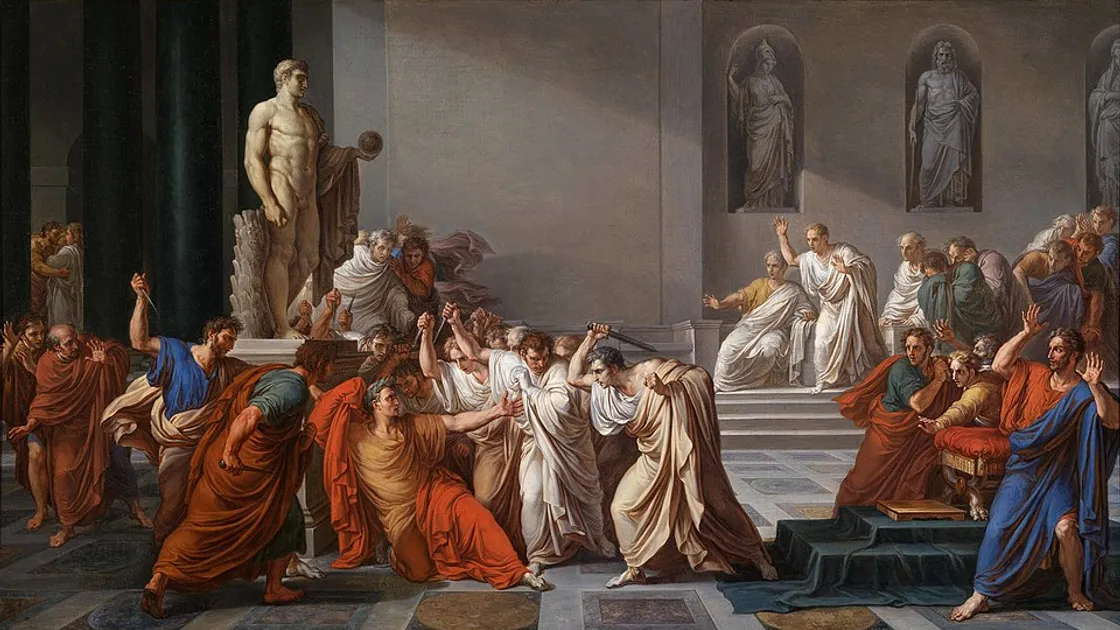
I remain neutral about who should and shouldn’t be on P&R, but I can’t help reflecting that the history of political assassinations shows that those who wield the daggers eventually come to grief themselves. Interesting thought, eh! As for Deputy St Pier, if a cry of ‘Et tu, Brute?’ escaped his lips, I didn’t hear it.*
Deputy Niles was the successful candidate, polling twice the number of his closest challenger. I think that is good news since it amounts to a strong personal mandate. It seems he was elected on the basis of being a likeable good egg and of having had a stellar career in the finance industry. I have no reason to doubt either of those credentials in his case, but I am generally wary of the habit of some Assembly members to assume that the very fact of having had a business career is evidence that the career was a successful one. I don’t make the same easy assumption. And with good reason. During the last political term, one member was frequently held up as an authoritative voice because of their business career when all the time I knew they had been sacked for being utterly useless in it. How did I know? Because the bloke who did the sacking told me.
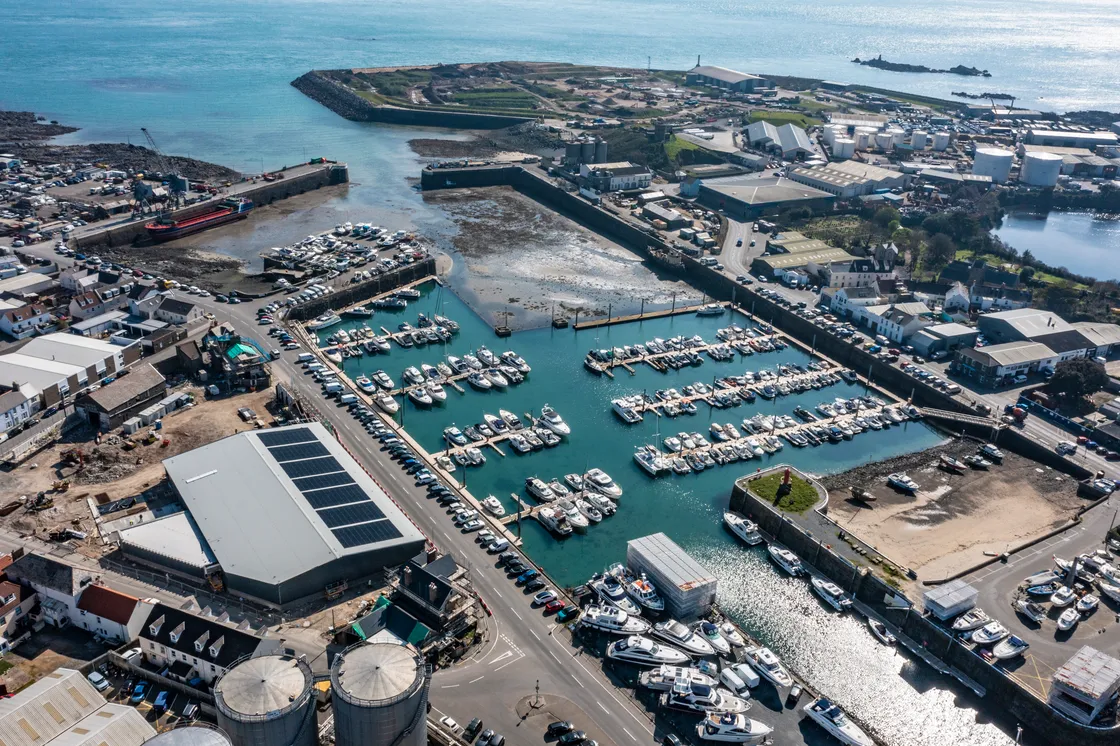
I used to reckon that irony comes dressed in two shades; one is gloriously, deliciously uplifting, the other is deeply depressing. Simple as that. But the recent resignation of the Guernsey Development Agency (GDA) chairman tugged me back to a debate in the Assembly in June 2021 which has proved to be the origin of an irony that can now be felt oppositively as both tasty and disturbing. Here’s how. It is almost five years to the day since Peter Roffey, one of the most talented, thorough and politically ungroomed of States members in recent times, stood in the Assembly as president of the States Trading & Supervisory Board (STSB) to invite members to approve his board’s recommended direction of travel for the future development of St Peter Port and St Sampson harbours. No reasonable person could deny that the STSB had done its homework. Its policy letter set out in painstaking detail the board’s preference among seven different combinations of options examined over two years by – in Deputy Roffey’s own words at the time – ‘an incredibly focused and energetic group of professionals who really understand our ports’. But reasonable persons were in short supply in that States Assembly. And in Policy & Resources (P&R) there appears to have been a total absence of the breed, because the day before the debate, without any prior warning, P&R in the persons of Deputies Helyar and Ferbrache, laid an amendment designed to scupper the STSB’s proposals and hand the future development of our lifeline ports and harbours to a bunch of unidentified blokes who would of course make the whole thing go faster and better. These boys, we were led to believe, did port development for fun. I remember groaning out loud as I listened. The outcome was all too predictable, even then. P&R had already introduced a form of irony of its own by loudly braying its laughably empty slogan ‘Action this day’ whilst simultaneously providing clear evidence that it couldn’t make any decision on anything more difficult than choosing between rubber bands and paper clips. Had STSB prevailed in the debate, an eight to 10-year project would by now be five years into its life. Alas, P&R won the day and the project’s only sign of subsequent life and activity has been the recent resignation of the GDA chairman who is clearly fed up with being in charge of a cold corpse.
I hear you ask, ‘So where’s the irony?’ First there is the wholly conventional irony that all but one of that self-congratulatory but self-delusional P&R Committee (Deputies Ferbrache, Soulsby, Le Tocq and Mahoney) have joined the club of political has-beens, albeit for various reasons that reflect better on some than on others. Hence the absence now of any collective mea culpa. But the irony of ironies, the irony that is both sweet and bitter, is that Deputy Helyar, the principal wielder of P&R’s 2021 wrecking-ball, is now the president of STSB, charged with keeping our ageing and under-invested lifeline ports running. For all our sakes, let’s wish him good fortune, deserved or not.
I end this parliamentary sketch with some thoughts that will reinforce my reputation for contributing nothing more than drivelous trivia by way of commentary on our political scene.
I write these sketches using my desk-top computer. It is so anxious to help me that it can’t resist slipping occasionally into predicted text mode. This has its dangers, and I have to keep a watchful eye in case it gets me into inadvertent trouble. This time, I noticed that whenever I began to type ‘Deputy St Pier’, my eager-to-please computer wrote ‘Deputy Steve Pier’. I don’t know about you, but I just can’t imagine Deputy St Pier as a Steve. The very idea is preposterous. Which sent me off down one of those downright childish paths that old men are prone to stumble down, in this case one lined with examples of names that just don’t fit the person. Readers might care to amuse themselves by ambling down the same path and thinking of their own examples of names that just don’t click together. As for me, I can’t imagine our Bailiff as a Pete or our Deputy Bailiff as a Mavis. Our chief minister couldn’t possibly be a Brenda or a Beryl, and as for Rupert Inder, I can scarcely manage to type the letters.
* Shakespeare’s The Tragedy Of Julius Caesar, Act 3, Scene 1.