I have no idea. History teaches us that past technological revolutions have wreaked havoc on society before a new order emerges. But that needn’t be the case if we learn from the past and focus on the key question: what is the technology actually for?
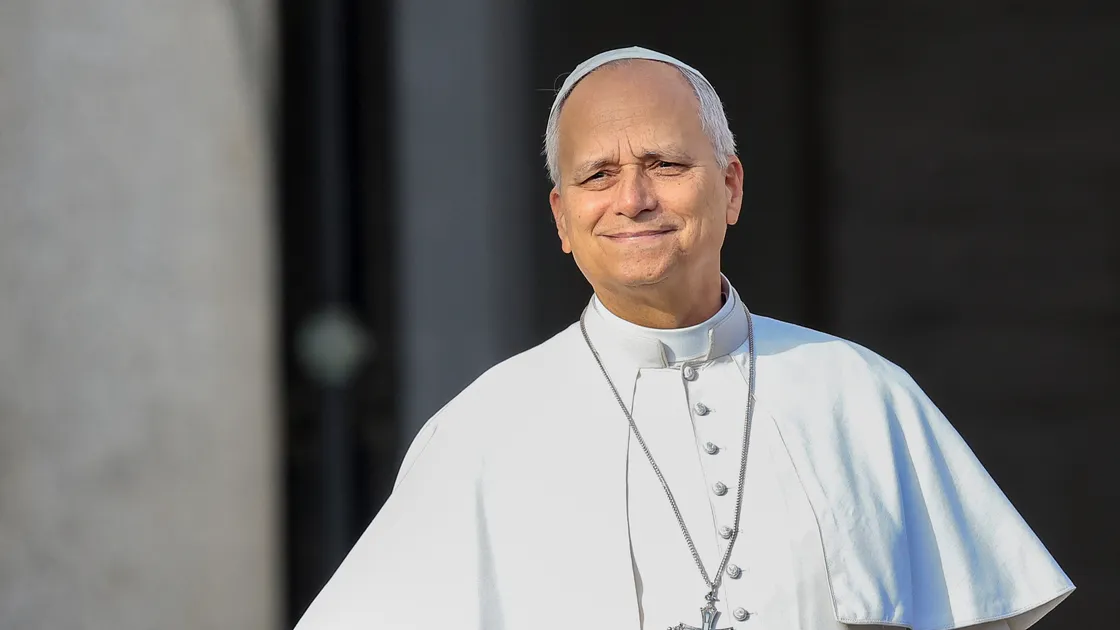
Pope Leo XIV’s first encyclical, Magnifica Humanitas (Magnificent Humanity) tries to answer the question. He places the focus squarely on the human person.
I can’t begin to do justice to this remarkable document, but it is worth reading. If Papal encyclicals aren’t really your ‘thing’, then jump ahead to chapters three, four and five where he deals with technological dominance, safeguarding humanity and the culture of power.
We all know that artificial intelligence is advancing at remarkable speed. Alarmingly, no one really knows how it works. This is because the large language models (LLMs) develop their own logic based on their architecture, training material and such like. They might be programmed at a high level, but they aren’t deterministic like Excel and Google Chrome which give a set answer to a set question. LLMs will give different results to the same question depending on variables such as the time of day and the phrasing of the question itself.
It is easy to become alarmed – I am! – but Pope Leo shifts the focus away from the technology to the place of humanity within it. He refuses to see AI as either a villain or a saviour. He recognizes its potential to improve our lives from healthcare to education, but since technology is never neutral, we need to think carefully about who it is for. After all, technology reflects – and will continue to reflect – the values and priorities of the people who create it (and control it).
This is important. We need to be asking who benefits, who bears the risks, and whether the gains are shared fairly across all humanity. At the moment, it feels a bit like the Wild West with a handful of powerful players galloping ahead, unconstrained.
That’s why human dignity is at the heart of Pope Leo’s message. We are not, he argues, mere consumers or information sources; we are not statistics or a market value; we have inherent worth by the very nature of being human. And human beings are magnificent because we are ‘shaped by life and grow over time through choices, mistakes, forgiveness and fidelity.’ We are not simulations. Nor do we wish to be transhuman, that is, a human-machine hybrid.
If we start with human dignity (rather than with AI itself), we can design systems that will serve people rather than maximise profits or consolidate power. Decisions can be judged by whether they help individuals flourish rather than whether the automation and data collection work.
The encyclical warns against the concentration of power. A handful of corporations and governments now control vast amounts of data and computational resources. As AI becomes more influential, these institutions gain greater ability to shape economies and public discourse. Elon Musk’s personal wealth exceeds the GDP of Singapore. His company, SpaceX, controls two-thirds of all active satellites in orbit and his removing and reinstating Ukraine’s access to StarLink directly impacted the battlefield independent of any governmental control.
Most public discussion focuses on whether machines will become smarter than humans, but Pope Leo reminds us that the more immediate concern is how we govern these technologies so that they are both transparent and accountable, not just in the abstract but in real policies. The challenge is ensuring human responsibility in the face of machine intelligence. Technological progress should strengthen the common good and social justice. It should enhance human creativity and contribution, not render us items to be disposed of in the pursuit of efficiency.
And it is this, perhaps, which makes Magnifica Humanitas such an important encyclical. It brings morality back into a conversation that is dominated by technology and economics. It reminds us that progress is not merely about building more powerful tools; it is about ensuring that those tools help create a just and flourishing society for all.
You don’t have to be religious to appreciate this. Most of us, I am sure, want the future of AI to be about our values and our institutions. We want it to enhance humanity not normalise an anti-human vision where relationships and community come second to a ‘fullness of life is equated with having more, reducing weakness, eliminating uncertainty and exerting total control.’
Throughout the encyclical, the Pope offers us two opposing approaches that come from the Bible. There is the temptation to construct something amazing from power and pride (the Tower of Babel) and there is the invitation to rebuild the walls of Jerusalem through community and cooperation.
If we build slowly and carefully, if we focus on social justice and love, we needn’t fear the future. But it requires us all to be involved. ‘The danger of humanity becoming a victim of its own achievements’ is a warning we can yet avoid.