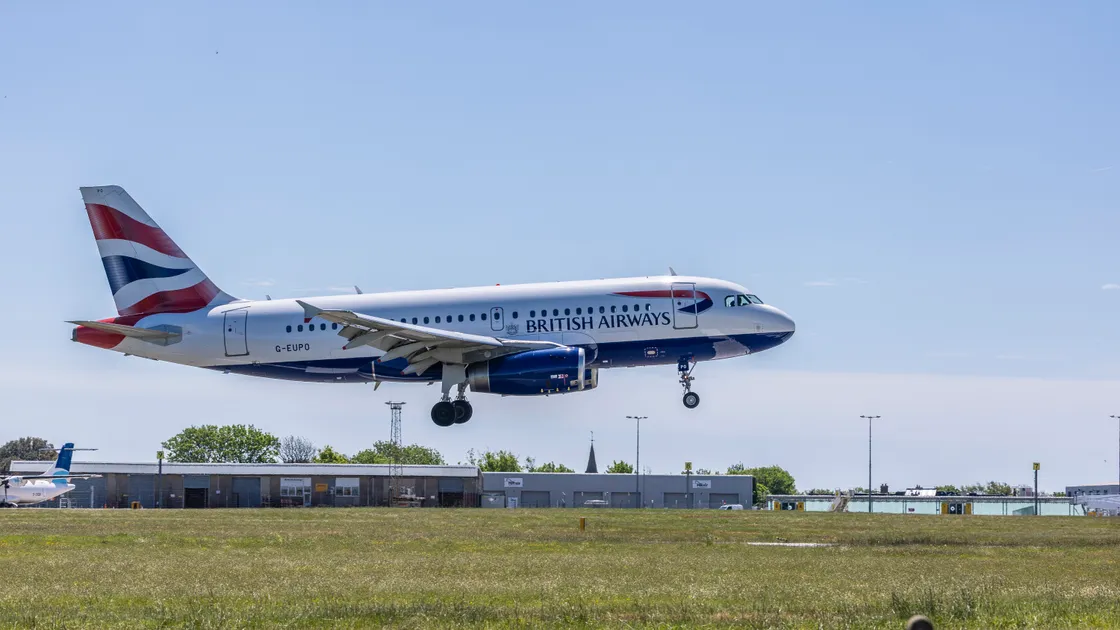
There is an American expression about putting lipstick on a pig. It’s an odd phrase which refers to people about making something look much better than it really is. It’s definitely a phrase that could be applied to last week’s statement from the Economic Development Committee about the impact of the new, taxpayer-subsidised, air route to Heathrow.
I am certainly not describing British Airways’ service as a pig. It is anything but. More than 7,600 locals and visitors chose to use it during May – its first full month of operation. Hardly surprising when both the direct and indirect subsidies it receives from the States often made it the cheapest way to fly between Guernsey and the UK. So the taxpayer stumped up part of the cost of each of those flights, but it is still definitely not any sort of pig.
So where is the lipstick being applied by Economic Development? It’s in respect of the impact that the new service is having on other UK air routes. Its statement made it sound like the collateral damage was so minor as to be inconsequential. ‘Don’t worry chaps, Gatwick is only down by 3%, so it’s a complete win-win.’
When I read that, I didn’t doubt that particular statistic but I found it hard to believe it was telling the full story. After all if the new, subsidised, competition meant fewer people wanted to fly to London with Aurigny then they would have been forced to reduce their capacity to the capital. Why? Because flying half-empty planes is commercial suicide. But they wouldn’t want to reduce flights to Gatwick, except as a very last throw of the dice, because slots at the airport are owned on a ‘use them or lose them’ basis.
So any big reduction on their London carryings would almost certainly be on their London City route, about which the Economic Development statement was silent.
Likewise what was the impact on other South of England routes like Southampton?
It left me thinking that the only statistic which would really mean anything would be the total number of passengers flying between the UK and Guernsey, on all routes combined, during May. I waited patiently for those figures, which have now been released.
Those figures are striking in their contrast to the tenor of the Economic Development statement.
They show total passenger numbers on all UK routes are up by just 511. With Southampton traffic down 10%, Bristol down 25%, Exeter down a whopping 44% and London City down a staggering 52%.
Very sadly it makes one wonder how long London City will still be regarded as a viable route, even with reduced frequency.
I don’t want to be entirely negative. The 511 increase in total passengers is a small move in the right direction. But those extra 511 passengers have cost the island taxpayer deep in the purse. Just how deep we are not allowed to know, but it will be triple whammy.
The first is the confidential direct payment from the Economic Development budget. The second is the discounted airport fees at a time when the taxpayer is underwriting losses at the ports.
But probably the biggest will be the consequential losses for Aurigny. Just as the airline owned by Guernsey’s taxpayers was starting to trim its losses, the impact of the new, subsidised competition on its core London route will almost certainly have turned its finances sharply south. Not just because they have carried fewer passengers. But because commercial logic suggests they are likely to have been selling tickets at lower price points in order to mitigate the scale of the migration to Heathrow.
So back to where I started. To my mind last week’s media release from Economic Development was deeply misleading in tone. Not to mention the fact that there was another claim in it which looks quite dodgy once you see the total passenger numbers.
It said that the advent of the Heathrow route had increased the mix of visitors coming through Guernsey’s airport from 45% to 60%. Now we know total passenger numbers for the month we can work out that that means just over 10,000 extra tourists. Hurrah!
But logically the only way the claim about the big leap in visitor numbers can be correct – given that the total number of passengers is almost flat – is if many locals have suddenly, and mysteriously, stopped travelling off-island. That is conceivable I suppose, but it really doesn’t seem very likely.
So what would I have preferred from Economic Development in the way of a statement?
Well, certainly it could have heralded the positive contribution of the new Heathrow link. No problem there. But did it really need to soft-soap us over the collateral impact?
I am all in favour of the States, and its committees, being ‘glass half full’ rather than ‘glass half empty’, but within reason. That statement was about as close to fake news as you could get without actually fibbing.