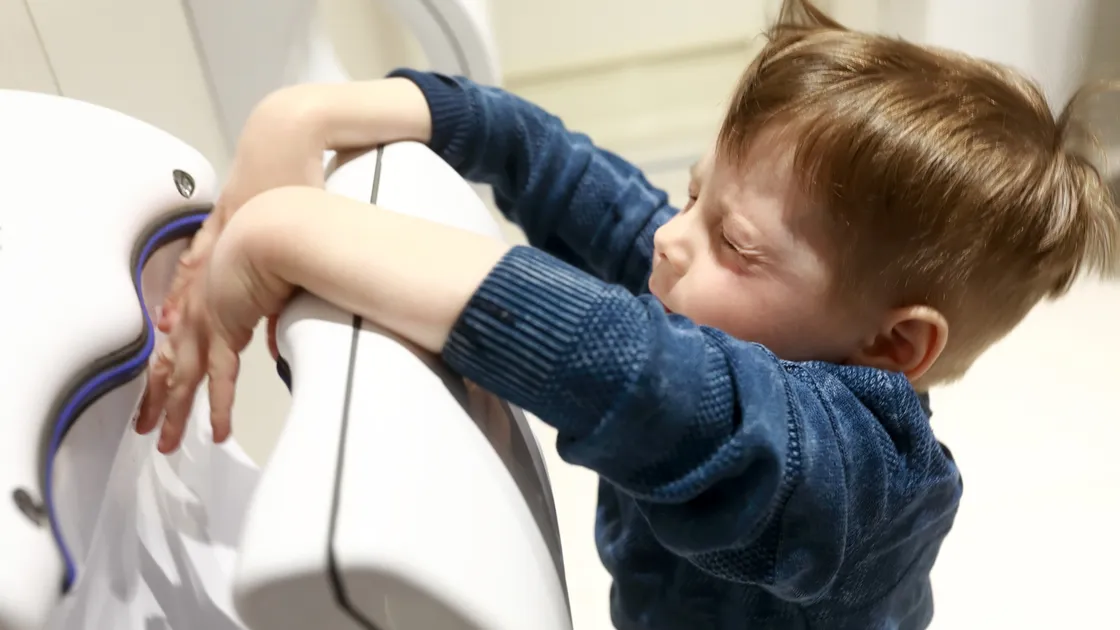
There are some subjects that rarely make it into polite conversation, and until recently I would have thought public hand dryers were safely among them. However, over the past few months I have found myself taking rather more notice than I ever expected of the extraordinary variety of equipment provided in Guernsey’s public conveniences.
I should perhaps make clear that this isn’t the result of extensive research. I haven’t been travelling around the island with a clipboard, inspecting facilities and awarding marks out of 10. I have simply begun to notice things, and once you notice them, it’s difficult to stop.
The greatest challenge seems to be the increasingly popular all-in-one machine, which promises to dispense soap, provide water and dry your hands without requiring you to move more than a few inches. In theory, it’s a triumph of modern engineering and exactly the sort of progress we should welcome. In practice, it can be something of an adventure.
You place your hands underneath and wait. Nothing happens, so you move them slightly to the left. Still nothing. You try the right, then back to the middle, by which time it looks as though you’re attempting some form of complicated hand signal. Then, just as you’re beginning to wonder whether the machine is actually switched on, it suddenly belches out enough soap to wash the hands of several families living in the Vale. There is no going back now.
The next task is to persuade the machine to provide some water. Having been extremely generous with the soap, the machine suddenly becomes considerably more cautious. You wave your hands beneath various sensors until eventually water appears and, once it does, seems determined to continue for considerably longer than necessary. So far, so good.
Then comes the drying. After the generosity of the soap and the leisurely approach to the water, you might reasonably expect the drying cycle to finish the job properly. Instead, you’re sometimes rewarded with two or three seconds of warm air. And then it stops. Your hands are still wet. This is the moment when one of life’s great decisions has to be made. Do you put your hands back underneath and risk beginning the entire process again because you know what might happen. More soap.
The situation becomes more complicated if someone is waiting behind you. You can almost feel them watching as you consider your options. Do you make another attempt, potentially committing yourself to a second complete wash cycle, or accept defeat and quietly dry your hands on a piece of your clothing? Suddenly the handkerchief, an item which sometimes seems to belong to another generation, begins to look like one of humanity’s greatest inventions.
Of course, the all-in-one machine is only one member of the hand-drying family. There are plenty of others, each with its own personality. There is the traditional wall-mounted dryer with a large button on the front. You press it and immediately hear a reassuring roar. Unfortunately, the noise bears very little relationship to the amount of air being produced. It sounds as though one of Aurigny’s ATRs is preparing for take-off, while your hands are being gently warmed by something resembling the breath of a slightly tired hamster.
At the other end of the scale is the high-powered version, which produces enough air to rearrange the skin on the back of your hands. You insert them and watch in fascination as everything moves in directions you hadn’t previously thought possible. It is extremely effective, although you occasionally emerge wondering whether you’ve dried your hands or undergone a minor medical procedure.
Then there are the dryers into which you lower your hands, usually accompanied by instructions telling you to move them slowly up and down. These can work very well, provided you manage to insert your hands at precisely the correct angle and don’t accidentally touch the sides, at which point you begin wondering how many other people have done exactly the same thing. Perhaps even more mysterious than the dryers themselves, is the decision about where to place them.
Some are mounted so low that drying your hands requires a manoeuvre somewhere between touching your toes and preparing for a rugby scrum. You find yourself bending further and further down, wondering whether the original installer had been given instructions to make the machine accessible exclusively to primary school children.
Others are positioned so high on the wall that they are clearly not designed for the average Guernsey person. You approach with wet hands, look upwards and realise that successful drying is going to require either standing on tiptoe or developing considerably longer arms.
Presumably, at some stage somebody stood back, looked at the position and said, ‘Yes, that’s perfect.’ I’d quite like to meet him.
The more I’ve noticed all this, the more I’ve realised that hand washing is simply one example of a curious feature of modern life – some of the things designed to make everything easier occasionally seem to require more thought than the task they replaced.
Automatic taps are another example. Most work perfectly well, but every so often you encounter one that refuses to acknowledge your existence. You place your hands underneath. Nothing. You withdraw them and try again. Nothing. You wave them around, change the angle, move closer and eventually begin to wonder whether everybody else has been issued with instructions you somehow missed. Then, without warning, the water starts just as you’re removing your hands.
Automatic doors can behave similarly. Most open obligingly as we approach, but occasionally one remains firmly closed, leaving us standing in front of it wondering whether we need to step backwards, forwards or perform a small dance to attract the attention of the sensor.
After my experiences with parking machines in Cornwall last month, we should perhaps be rather relieved, and grateful, that Guernsey has not gone down the route of paid parking. The current and previous Policy & Resources committees have resisted that particular technological headache, and perhaps we should count our blessings. I may tell you more about my adventures with Cornish parking machines, and the remarkable lengths to which some people have gone to defeat them, in a future article.
None of this is a complaint about technology. Most of it makes life considerably easier, and I’m certainly not advocating a return to the days when every public washroom contained a single roller towel. It’s simply an observation that progress can sometimes have a sense of humour.
Perhaps the problem is that we’ve become accustomed to everything being intuitive. We expect to walk up to a machine and immediately understand what it wants us to do. When it doesn’t respond, we don’t initially blame the machine; we assume we’re doing something wrong.
There is also a strange sense of achievement when we finally succeed. The water flows, the dryer starts and for a fleeting moment we feel we’ve solved something. Nobody applauds, of course, although on particularly difficult machines I sometimes think some appreciation from those waiting behind would be appropriate.
These days, whenever I enter a public convenience and approach the hand-washing area, I find myself wondering what awaits me. Will there be separate soap, a tap and a dryer? Will I need to wave, press, pull or simply stand there hopefully? Will the soap arrive before I’m ready? Will the water recognise my hands? Will the dryer provide enough time to complete the task? Most importantly, will I leave with dry hands? Perhaps one day somebody will design the perfect system. Until then, I’m keeping a handkerchief in my pocket.